Who Is Goddess Lakshmi?
Goddess Lakshmi, also known as Maa Lakshmi, Shri and Mahalakshmi, is revered in Hindu tradition as the divine embodiment of wealth, prosperity, fortune, beauty, abundance and auspiciousness. She is traditionally worshipped by devotees seeking material well-being, nourishment, harmony, good fortune and a balanced and fulfilling life.
Her significance extends far beyond money. Lakshmi represents the many resources that allow life to flourish — food, prosperity, beauty, family well-being, success, courage, recognition, nourishment and the ability to pursue worthy goals. In this sense, her blessings are traditionally understood as a complete form of abundance rather than financial wealth alone.
Meaning of Lakshmi, Shri and Mahalakshmi
The name Lakshmi is traditionally connected with the Sanskrit idea of a goal, objective or worthy aim. This provides an important dimension to understanding the Goddess: prosperity is not merely possession, but also the resources, opportunities and auspicious circumstances through which worthy purposes can be fulfilled.
She is also called Shri, a name associated with splendour, beauty, prosperity and auspiciousness. The name Mahalakshmi expresses the great or expansive form of Lakshmi and is widely used in devotional traditions.
Traditional descriptions therefore present Lakshmi as a gentle, generous and radiant divine presence. Her worship reflects an appreciation of prosperity while reminding devotees that abundance carries responsibility.
Goddess Lakshmi and Lord Vishnu
Goddess Lakshmi is traditionally described as the divine consort of Lord Vishnu, the preserver and sustainer. Their association carries an important symbolic meaning: preservation and prosperity exist together, with abundance being protected, sustained and directed toward harmonious living.
Traditional accounts also associate Lakshmi with different earthly manifestations alongside the incarnations of Vishnu. She is described as Padma with Vamana, Kamala with Varaha, Dharani with Parashurama, Sita with Rama and Rukmini with Krishna.
This recurring association between Vishnu and Lakshmi is one of the central themes in their devotional understanding. Vishnu represents preservation and order, while Lakshmi represents the prosperity, nourishment and auspiciousness that support a flourishing life.
Origin of Goddess Lakshmi in Indian Mythology
Traditions surrounding Goddess Lakshmi developed through Hindu sacred literature and mythology. The word Shri occurs in the Rigveda in connection with ideas of prosperity and good fortune, while later traditions prominently describe Lakshmi as the divine consort of Vishnu.
One of the most celebrated accounts of her manifestation is linked with Samudra Manthan, the great churning of the Ocean of Milk. In this cosmic episode, Lakshmi emerged from the celestial ocean and chose Lord Vishnu as her divine consort.
The story is traditionally understood at more than one level. Her emergence from the cosmic ocean represents the appearance of auspiciousness, beauty, abundance and divine order. Her union with Vishnu expresses the relationship between prosperity and preservation: abundance is most meaningful when it is sustained and guided by righteous conduct.
Different Forms and Manifestations of Lakshmi
Goddess Lakshmi is understood through numerous names and forms. These names highlight different dimensions of prosperity and the circumstances in which her blessings are traditionally experienced.
Associated with the auspicious presence, nourishment and prosperity of the home.
Associated with the prosperity, authority and dignity of a kingdom or position of leadership.
Associated with good fortune, favourable circumstances and auspicious outcomes.
Associated with victory, achievement and success.
Associated with fame, recognition, honour and reputation.
The great form of Lakshmi, expressing expansive divine prosperity and auspiciousness.
Goddess Lakshmi Iconography and Symbolism
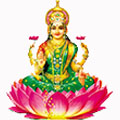
Lakshmi is traditionally depicted as a beautiful, radiant and compassionate goddess with a golden complexion. She is commonly shown wearing red or golden garments, adorned with jewellery and associated with blooming lotus flowers.
Her visual form is not merely decorative. The lotus, coins, elephants, garments, ornaments, hands and other attributes are traditionally interpreted as symbols of different dimensions of prosperity and spiritual awareness.
Purity, beauty, spiritual awakening and growth.
Material abundance, resources and the generous flow of prosperity.
The expansive presence of the Goddess and traditional associations with the four directions.
Beauty, purity and auspiciousness.
Strength, dignity, abundance, auspiciousness and ceremonial honour.
Activity, auspicious energy and dynamic worldly participation.
Splendour, abundance, prosperity and divine radiance.
A symbol with multiple traditional interpretations, including awareness and the consuming side of material wealth.
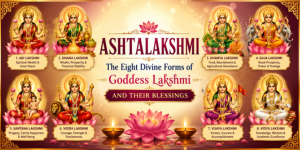
Ashtalakshmi — The Eight Forms of Prosperity
Ashtalakshmi represents eight traditionally celebrated forms or dimensions of Lakshmi. The concept provides an important reminder that prosperity is not restricted to money. A complete and meaningful life also requires nourishment, courage, family continuity, achievement, dignity and foundational well-being.
How Is Goddess Lakshmi Worshipped?
Lakshmi worship is traditionally performed with devotion, cleanliness, sincerity and gratitude. Devotees may maintain a clean and welcoming home, light lamps, offer flowers and fruits, burn incense and recite prayers or mantras associated with the Goddess.
The underlying spirit of Lakshmi worship is not limited to requesting wealth. Traditional practice also emphasizes appreciation for food, livelihood, family, resources, beauty and the opportunities already present in life. Generosity and responsible use of wealth are meaningful expressions of this principle.
Fridays are traditionally regarded as an important day for Lakshmi worship, while full moon observances are considered auspicious in several traditions. Devotional practices may vary according to family, regional and sampradaya traditions.
Lakshmi Puja During Diwali and Dhanteras
Diwali is one of the most important festive periods associated with Goddess Lakshmi. Homes are traditionally cleaned, decorated and illuminated with lamps before Lakshmi Puja. Devotees pray for prosperity, happiness, auspiciousness and the well-being of the household.
Dhanteras is another important occasion within the Diwali festival cycle. It is traditionally associated with wealth, auspicious beginnings and the worship of Dhanvantari. Astroshastra also provides educational resources on Dhanteras, Diwali Puja procedures and traditional remedies.
Goddess Lakshmi and the Deeper Meaning of Prosperity
The traditional symbolism of Lakshmi encourages devotees to think about prosperity in a complete way. Wealth can provide comfort and opportunity, but food, knowledge, courage, family, health of relationships, achievement, reputation, inner contentment and spiritual progress also contribute to a prosperous life.
The lotus is an especially powerful reminder of this balance. It grows from muddy water while remaining beautiful, traditionally representing the ability to participate in worldly life without allowing attachment to overwhelm inner values.
The flowing coins traditionally represent abundance, while the blessing hand expresses generosity. Her association with Vishnu reflects preservation, order and responsible stewardship. In this understanding, Lakshmi is not simply a symbol of acquiring wealth; she represents auspicious abundance, nourishment, beauty, balance and responsible prosperity.
Prosperity is most meaningful when it supports a balanced life, worthy goals, generosity, harmony and responsible living.
Astroshastra Resources Associated with Goddess Lakshmi
Astroshastra provides a collection of traditional spiritual and astrological resources associated with Lakshmi worship, prosperity and auspicious living. These include Yantras, Rudraksha, sacred pendants, Shankh, Puja services and educational articles.
Final Reflection on Maa Lakshmi
Goddess Lakshmi occupies a central place in devotional traditions concerned with prosperity, auspiciousness and well-being. Her connection with Lord Vishnu, her emergence in the Samudra Manthan tradition, her lotus symbolism and her many forms all express a broad understanding of what it means for life to flourish.
Whether worshipped as Shri, Grihalakshmi, Bhagyalakshmi, Mahalakshmi or through the eight forms of Ashtalakshmi, she represents an enduring ideal of abundance accompanied by beauty, gratitude, responsibility and balance.