
Kajari Teej – Vrat Vidhi, Katha, Puja, Significance & Traditions
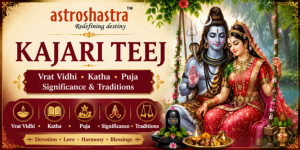
It is associated with Goddess Parvati and Lord Shiva and is especially significant for married women, who observe the Vrat and pray for the well-being, long life and prosperity of their husbands.
Unmarried women may also observe Kajari Teej with prayers for a suitable life partner.
Kajari Teej is celebrated with devotion as well as the beautiful cultural traditions of monsoon festivals, including folk songs, swings, traditional attire, mehendi and gatherings of women.
Astroshastra also has a dedicated Teej Festival article, which discusses the different forms of Teej, including Kajari Teej, and their traditional significance.
What is Kajari Teej?
Kajari Teej is one of the traditional forms of Teej, along with Hariyali Teej and Hartalika Teej.
It is generally observed during the Krishna Paksha of Bhadrapada, according to the Hindu lunar calendar.
The festival is associated with prayers to Lord Shiva and Goddess Parvati and is traditionally observed by women seeking marital happiness, harmony and family prosperity.
Kajari Teej also has a strong cultural connection with the monsoon season. Women traditionally gather together, sing folk songs and enjoy swings decorated during the rainy season.
Why is Kajari Teej Celebrated?
Kajari Teej is traditionally observed for:
- Marital happiness
- Husband's health and longevity
- Family prosperity
- Harmony in married life
- Blessings of Goddess Parvati
- A suitable life partner for unmarried women
- Spiritual devotion and discipline
The festival is therefore both a religious Vrat and a cultural celebration.
Spiritual Significance of Kajari Teej
The central spiritual theme of Kajari Teej is the devotion of Goddess Parvati toward Lord Shiva.
Goddess Parvati is traditionally regarded as an embodiment of Shakti, devotion, strength and marital harmony.
Devotees worship Shiva and Parvati and seek their blessings for peace and happiness in married life.
The Vrat also represents:
Devotion
The fast is observed with faith and dedication.
Self-Discipline
Fasting encourages control of the senses and greater spiritual concentration.
Marital Harmony
Married women traditionally pray for the well-being and longevity of their husbands.
Family Prosperity
Devotees seek blessings for happiness, peace and prosperity within the family.
Feminine Strength
Goddess Parvati represents Shakti and the strength of devotion, patience and determination.
Kajari Teej Vrat
Women traditionally observe Kajari Teej by fasting and dedicating the day to the worship of Lord Shiva and Goddess Parvati.
The nature of the fast varies according to regional and family traditions.
Some women observe a strict fast, while others follow a more moderate form of fasting.
The purpose of the Vrat is not simply abstaining from food but maintaining a devotional and disciplined state of mind.
Anyone with health concerns should avoid undertaking a strict fast without appropriate medical guidance.
Kajari Teej Puja Vidhi
A simple traditional Kajari Teej Puja can be performed at home.
1. Clean the House
Clean the home and prepare a dedicated Puja area.
2. Take a Sankalp
After bathing, take a Sankalp to observe the Kajari Teej Vrat according to your family tradition.
3. Prepare Shiva-Parvati
Place an image or idol of Lord Shiva and Goddess Parvati.
4. Light a Diya
Light a Diya and incense before the deities.
5. Offer Puja Samagri
Offer traditional items such as:
- Flowers
- Bilva leaves
- Fruits
- Akshat
- Kumkum
- Roli
- Water
- Milk
- Sweets
6. Worship Shiva and Parvati
Offer prayers to both Lord Shiva and Goddess Parvati.
7. Read the Vrat Katha
Read or listen to the traditional Kajari Teej Vrat Katha.
8. Chant Mantras
Chant Shiva and Parvati Mantras according to your tradition.
9. Perform Aarti
Complete the Puja with Aarti and prayers.
Kajari Teej Vrat Katha
Different regions preserve different versions of Teej-related traditional stories.
The broader Teej tradition is closely associated with Goddess Parvati's devotion and penance to attain Lord Shiva as her husband.
According to Hindu tradition, Parvati undertook intense spiritual practices and endured great hardship to demonstrate her devotion to Shiva.
Her devotion eventually resulted in her union with Lord Shiva.
This story forms an important spiritual foundation for Teej celebrations and represents the ideals of faith, determination, devotion and marital harmony.
Kajari Teej's regional traditions may include their own specific folk stories and songs.
Therefore, the exact Vrat Katha can vary according to regional customs and family traditions.
Kajari Teej and Lord Shiva
Lord Shiva is one of the principal deities worshipped during Kajari Teej.
Devotees may offer:
- Water
- Milk
- Bilva leaves
- Flowers
- Fruits
- Dhoop
- Deep
- Sweets
Shiva Mantras may also be recited during the Puja.
A simple and widely known Shiva Mantra is:
Om Namah Shivaya
Devotees may chant the Mantra according to their personal spiritual practice.
Kajari Teej and Goddess Parvati
Goddess Parvati has a central role in Teej traditions.
She represents:
- Shakti
- Love
- Devotion
- Marriage
- Strength
- Patience
- Family welfare
Women traditionally pray to Goddess Parvati for blessings in their married life.
Her story is also viewed as a symbol of determination and unwavering devotion.
Kajari Teej for Married Women
Kajari Teej is especially significant for married women.
Traditionally, women observe the Vrat and pray for:
- Husband's long life
- Good health
- Marital happiness
- Family prosperity
- Peace in the household
- Strong marital relationships
Women may also visit their maternal homes during the Teej season and celebrate with sisters, friends and other family members.
Astroshastra's Teej resource similarly describes Teej as a time when women traditionally pray for their husbands' health, long life and happiness.
Kajari Teej for Unmarried Women
Unmarried women may also observe Teej according to their family tradition.
Traditionally, they may pray to Goddess Parvati and Lord Shiva for:
- A suitable life partner
- A happy married life
- A compatible spouse
- Family happiness
The devotion of Goddess Parvati is often regarded as an example of steadfastness in seeking an ideal marital relationship.
Kajari Teej and Monsoon Celebrations
Kajari Teej has a beautiful connection with the monsoon season.
Traditional celebrations may include:
- Singing Kajari songs
- Decorating swings
- Wearing colourful clothes
- Applying mehendi
- Preparing traditional foods
- Visiting family
- Gathering with other women
The songs and festivities give Kajari Teej a distinct cultural identity.
Astroshastra's Teej article notes that songs, dances, swings, traditional clothing and mehendi are common elements of Teej celebrations.
Kajari Songs
Kajari songs are traditional folk songs associated with the monsoon season and the Teej celebrations.
They often express themes such as:
- Love
- Separation
- Marriage
- Longing
- Family relationships
- Monsoon beauty
- Devotion
These songs are an important part of the cultural heritage associated with Kajari Teej.
Kajari Teej and Swings
Swings are traditionally associated with Teej celebrations.
During the monsoon season, decorated swings may be placed in gardens or courtyards.
Women and girls gather together to enjoy the swings while singing traditional songs.
This tradition represents the joy and beauty of the rainy season.
Kajari Teej Traditional Dress and Mehendi
Women often wear traditional festive clothing during Kajari Teej.
Depending upon regional customs, they may wear:
- Sarees
- Lehengas
- Traditional jewellery
- Bangles
- Mehendi
Mehendi is associated with beauty, celebration and auspicious occasions.
What to Offer During Kajari Teej Puja?
Traditional Puja offerings may include:
- Bilva leaves
- Flowers
- Fruits
- Milk
- Water
- Akshat
- Kumkum
- Roli
- Sweets
- Dhoop
- Diya
The exact Puja Samagri varies according to regional and family traditions.
Kajari Teej Mantra
For Lord Shiva:
Om Namah Shivaya
For Goddess Parvati, devotees may use simple prayers dedicated to Maa Parvati according to their family tradition.
Devotees may also recite Shiva Chalisa, Parvati Stuti or other devotional texts.
What Should Be Avoided During Kajari Teej?
Those observing the Vrat traditionally try to maintain purity in thought, speech and actions.
Devotees may avoid:
- Anger
- Arguments
- Negative speech
- Unnecessary indulgence
- Non-vegetarian food
- Alcohol
- Tobacco
The emphasis should be on prayer, devotion, self-control and positive thoughts.
Kajari Teej and Astrology
Kajari Teej is primarily a religious and cultural observance rather than a specific astrological remedy.
However, from a Vedic Astrology perspective, matters concerning marriage and relationships can be studied through the individual's horoscope.
An astrologer may examine:
- 7th House
- 7th Lord
- Venus
- Jupiter
- Navamsa Chart
- Planetary Dashas
- Relevant Yogas
Therefore, if you want to understand your individual marriage prospects or relationship patterns, a personalised horoscope analysis is more meaningful than relying only on general festival remedies.
You can get your horoscope analysed by an Astro Expert at Astroshastra. Astroshastra currently offers personalised horoscope consultation and birth-chart analysis.
Kajari Teej and Marital Harmony
The spiritual message of Kajari Teej goes beyond fasting.
It encourages couples and families to value:
- Love
- Mutual respect
- Patience
- Trust
- Understanding
- Emotional support
The festival provides an opportunity for married couples to appreciate the importance of companionship and family harmony.
Charity on Kajari Teej
Charity and acts of kindness can also be incorporated into festival observances.
Devotees may donate:
- Food
- Clothes
- Fruits
- Sweets
- Money
- Essential household items
The most important aspect is the intention behind the charity.
Helping someone in need can make the festival spiritually more meaningful.
How to Celebrate Kajari Teej at Home
A simple celebration can follow these steps:
Morning:
Take a bath, wear clean clothes and take a Vrat Sankalp.
During the Day:
Observe your chosen form of fasting and spend time in prayer.
Evening:
Perform Shiva-Parvati Puja and offer traditional Puja Samagri.
After Puja:
Read or listen to the Kajari Teej Vrat Katha and perform Aarti.
Throughout the Festival:
Spend time with family, sing traditional songs and maintain a positive devotional atmosphere.
Kajari Teej – Important Symbols
| Symbol | Traditional Meaning |
|---|---|
| Lord Shiva | Divine consciousness and strength |
| Goddess Parvati | Shakti, devotion and marital harmony |
| Mehendi | Beauty and celebration |
| Bangles | Auspiciousness and married life |
| Swings | Joy of the monsoon |
| Kajari Songs | Folk tradition and emotional expression |
| Vrat | Devotion and self-discipline |
| Diya | Divine light |
Frequently Asked Questions About Kajari Teej
What is Kajari Teej?
Kajari Teej is a Hindu festival traditionally observed during the month of Bhadrapada. It is associated with Lord Shiva and Goddess Parvati and is especially significant for married women.
Why is Kajari Teej celebrated?
Kajari Teej is traditionally observed for marital happiness, the well-being and longevity of the husband, family prosperity and the blessings of Lord Shiva and Goddess Parvati.
Who can observe Kajari Teej?
Married women traditionally observe Kajari Teej, while unmarried women may also observe the Vrat according to their family tradition.
What is worshipped on Kajari Teej?
Lord Shiva and Goddess Parvati are the principal deities worshipped during Kajari Teej.
What is the Kajari Teej Vrat?
It is a traditional fast observed with prayer and devotion to Lord Shiva and Goddess Parvati. The exact form of fasting varies according to regional and family traditions.
What is the main Kajari Teej Mantra?
A simple and widely used Shiva Mantra is:
Om Namah Shivaya.
What should be offered to Lord Shiva on Kajari Teej?
Devotees may traditionally offer water, milk, Bilva leaves, flowers, fruits and other appropriate Puja offerings.
Can unmarried girls observe Kajari Teej?
Yes. Unmarried women may observe Teej according to their family tradition and pray for a suitable life partner and happy married life.
What is the connection between Kajari Teej and monsoon?
Kajari Teej is celebrated during the monsoon season and is traditionally associated with folk songs, swings, greenery and women's gatherings.
Is Kajari Teej an astrological remedy?
Kajari Teej is primarily a religious and cultural Vrat rather than a specific astrological remedy. Personal marriage and relationship matters can be studied through an individual's horoscope.
Kajari Teej is a beautiful combination of devotion, marital prayers, cultural traditions and monsoon celebrations.
The festival reminds devotees of the deep spiritual bond between Lord Shiva and Goddess Parvati and the importance of love, commitment, patience and mutual respect in relationships.
From fasting and Shiva-Parvati Puja to Kajari songs, swings, mehendi and traditional celebrations, Kajari Teej preserves a rich cultural heritage while offering devotees an opportunity for prayer and spiritual reflection.
The deeper message of Kajari Teej is not simply the observance of a fast, but faith, devotion, love and the desire to nurture harmonious relationships.