
Navratri Puja Vidhi at Home – Complete Step-by-Step Guide
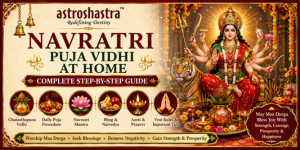
During these nine days, devotees worship the Divine Mother, observe fasting, perform daily Puja, chant Mantras and seek blessings for strength, prosperity, protection and spiritual growth.
Performing Navratri Puja at home does not necessarily require elaborate arrangements. What matters most is cleanliness, devotion, sincerity and following the traditional rituals according to one's family customs and local Panchang.
This guide explains the Navratri Puja Vidhi at Home step by step, including Puja Samagri, Ghatasthapana, Kalash Sthapana, daily worship, Mantras, Bhog, Aarti and the concluding rituals.
What is Navratri?
Navratri literally means nine nights. It is a sacred period dedicated to Shakti, the Divine Feminine.
During Navratri, devotees worship different manifestations of Goddess Durga. The nine forms are commonly known as the Navadurga:
- Maa Shailputri
- Maa Brahmacharini
- Maa Chandraghanta
- Maa Kushmanda
- Maa Skandamata
- Maa Katyayani
- Maa Kalaratri
- Maa Mahagauri
- Maa Siddhidatri
Each form represents a different aspect of divine feminine energy.
You can also explore Astroshastra's Navratri resources for additional information about the festival and its spiritual significance.
Why is Navratri Puja Performed?
Navratri Puja is traditionally performed to seek the blessings of Goddess Durga for:
- Strength and courage
- Protection from negativity
- Prosperity and abundance
- Wisdom and knowledge
- Family happiness
- Spiritual growth
- Removal of obstacles
- Inner peace
The festival also represents the victory of Dharma over Adharma and the triumph of divine consciousness over negative forces.
Navratri Puja Samagri
Before beginning the Puja, prepare the required items.
Basic Puja Samagri
- Maa Durga idol or picture
- Kalash
- Clean water
- Mango leaves
- Coconut
- Roli
- Kumkum
- Akshat
- Moli or Kalawa
- Flowers
- Garland
- Durga Puja Chunari
- Incense sticks
- Dhoop
- Diya
- Ghee or oil
- Camphor
- Fruits
- Sweets
- Naivedya
- Betel leaves
- Supari
- Cloves
- Cardamom
- Sandalwood
- Panchamrit ingredients
- Rice or grains for the Kalash
- Barley seeds for Jawara, where traditionally used
The exact Puja Samagri may vary according to regional and family traditions.
Step 1 – Clean the House and Puja Area
Before starting Navratri Puja, clean the house and especially the area where the Puja will be performed.
The Puja space should be:
- Clean
- Peaceful
- Well organised
- Free from unnecessary clutter
Devotees traditionally take a bath before beginning the Puja and wear clean clothes.
Step 2 – Prepare the Puja Chowki
Place a clean Puja Chowki in the selected worship area.
Cover it with a clean red, yellow or other auspicious-coloured cloth according to your family tradition.
Place the image or idol of Maa Durga on the Chowki.
You may decorate the area with flowers and a traditional Toran.
Step 3 – Perform Ghatasthapana
Ghatasthapana, also known as Kalash Sthapana, is one of the most important rituals performed at the beginning of Navratri.
The Kalash represents abundance, auspiciousness and divine presence.
Place the Kalash on a bed of grains or barley according to the traditional procedure.
Fill the Kalash with clean water and add appropriate Puja items according to your tradition.
Place mango leaves around the mouth of the Kalash and a coconut wrapped or decorated with red cloth on top.
Tie Moli around the Kalash.
The exact Ghatasthapana Muhurat should be determined according to the local Panchang.
For auspicious Tithi, Nakshatra and Muhurat information, you can refer to the Astroshastra Panchang.
Step 4 – Sankalp
After preparing the Kalash, take the Navratri Puja Sankalp.
Sit comfortably before Maa Durga and mentally express your intention to observe Navratri with devotion.
You may pray for:
- Family well-being
- Health
- Prosperity
- Peace
- Spiritual progress
- Fulfilment of righteous wishes
The Sankalp should be taken with a sincere mind.
Step 5 – Invoke Lord Ganesha
Before worshipping Maa Durga, it is traditional to remember Lord Ganesha, the remover of obstacles.
You may chant:
Om Gam Ganapataye Namah
After Ganesha Puja, proceed with the Navratri Puja.
Step 6 – Worship Maa Durga
Now worship Maa Durga with devotion.
Offer:
- Roli
- Kumkum
- Akshat
- Flowers
- Garland
- Chunari
- Dhoop
- Deep
- Fruits
- Sweets
- Naivedya
Apply Kumkum or sandalwood according to your tradition.
Light the Diya and Dhoop and invoke the blessings of the Goddess.
Step 7 – Navratri Mantra
One of the widely recited Mantras dedicated to Goddess Durga is:
Om Dum Durgayai Namah
Devotees may chant the Mantra with concentration and devotion.
You can explore more traditional prayers and spiritual practices through the Astroshastra Mantra section.
Step 8 – Recite Durga Stotra or Durga Saptashati
During Navratri, devotees may read or listen to sacred texts dedicated to Goddess Durga.
These may include:
- Durga Saptashati
- Devi Mahatmya
- Durga Chalisa
- Argala Stotra
- Keelak Stotra
- Devi Kavach
The choice of scripture depends upon one's spiritual tradition and level of familiarity.
Those performing an elaborate Durga Saptashati Path should follow the prescribed traditional procedure rather than treating it as an ordinary reading.
Step 9 – Offer Bhog to Maa Durga
Prepare a sattvic Bhog and offer it to the Goddess.
Common offerings may include:
- Fruits
- Halwa
- Kheer
- Coconut
- Dry fruits
- Sweets
- Milk
- Panchamrit
During Navratri fasting, devotees may prepare Vrat-friendly food according to their tradition.
After offering the Bhog, it becomes Prasad and may be distributed among family members.
Step 10 – Perform Maa Durga Aarti
Complete the Puja by performing Maa Durga Aarti.
Light the Aarti Diya and move it respectfully before the deity while singing or reciting the traditional Aarti.
The family may participate together.
After Aarti, offer prayers and seek Maa Durga's blessings.
Daily Navratri Puja at Home
After Ghatasthapana, devotees may perform a simple daily Puja throughout the nine days.
A daily routine can include:
- Take a bath.
- Clean the Puja area.
- Light the Diya.
- Light Dhoop.
- Offer flowers.
- Offer water or traditional Naivedya.
- Chant Maa Durga Mantra.
- Read Durga Stotra or another devotional text.
- Perform Aarti.
- Pray for the well-being of the family.
The daily Puja does not have to be extremely elaborate. Consistency and devotion are more important than complexity.
Worship of the Nine Forms of Maa Durga
Each day of Navratri is traditionally associated with one form of Goddess Durga.
Day 1 – Maa Shailputri
Maa Shailputri represents strength, stability and purity.
Day 2 – Maa Brahmacharini
She represents penance, devotion and spiritual discipline.
Day 3 – Maa Chandraghanta
She represents courage, peace and divine protection.
Day 4 – Maa Kushmanda
She is associated with creative energy, vitality and abundance.
Day 5 – Maa Skandamata
She represents motherhood, compassion and protection.
Day 6 – Maa Katyayani
She is associated with courage, strength and victory.
Day 7 – Maa Kalaratri
She represents the powerful aspect of Shakti that destroys negativity and fear.
Day 8 – Maa Mahagauri
She represents purity, peace and spiritual illumination.
Day 9 – Maa Siddhidatri
She represents spiritual accomplishment, wisdom and divine grace.
Navratri Vrat
Many devotees observe fasting during Navratri.
However, fasting practices differ considerably according to family tradition and region.
Some devotees observe:
- Complete fasting
- Fruit-based fasting
- One meal a day
- Sattvic Vrat food
- Partial fasting
Commonly consumed Vrat foods may include fruits, milk, Sabudana, Samak rice, Kuttu and certain root vegetables, depending on one's tradition.
People with health conditions, children, elderly individuals and pregnant women should follow appropriate dietary guidance rather than undertaking a strict fast.
What Should Be Avoided During Navratri?
Devotees who observe Navratri according to traditional practices may avoid:
- Alcohol
- Tobacco
- Non-vegetarian food
- Excessive indulgence
- Anger and unnecessary arguments
- Negative speech
- Deliberate harmful actions
The deeper purpose is to maintain a sattvic and disciplined lifestyle.
Navratri Puja at Home – Important Points
While performing Navratri Puja, keep the following points in mind:
Keep the Puja Area Clean
Cleanliness is traditionally considered important for spiritual worship.
Maintain the Diya
If you are following a tradition of maintaining an Akhand Jyoti, follow the prescribed safety precautions and never leave a burning lamp unattended.
Follow Your Family Tradition
Different regions and communities follow different Navratri rituals.
Check the Local Panchang
Festival dates, Tithis and Muhurats can vary according to location.
Focus on Devotion
Navratri is ultimately a spiritual observance. Sincerity is more important than elaborate decoration.
Navratri and Kanya Pujan
Kanya Pujan, also called Kanjak Puja in some regions, is traditionally performed particularly towards the end of Navratri.
Young girls are respectfully worshipped as manifestations of the Divine Feminine.
They may be offered:
- Food
- Fruits
- Sweets
- Gifts
- Clothes
- Dakshina
The exact day and procedure varies according to regional tradition.
Navratri Ashtami and Navami Puja
Ashtami and Navami are especially important days during Navratri.
Many devotees perform special Puja, Havan or Kanya Pujan on these days.
Some families conclude their Navratri observance on Ashtami, while others continue through Navami and perform the concluding rituals according to their tradition.
Navratri Havan
Some devotees perform a Navratri Havan after completing their devotional recitations or Durga Saptashati Path.
Havan is traditionally performed with sacred fire and prescribed offerings.
Because fire rituals involve specific procedures and safety considerations, an elaborate Havan should ideally be performed under the guidance of a knowledgeable priest.
Navratri Puja and Spiritual Benefits
Navratri worship is traditionally associated with several spiritual benefits.
It can encourage:
- Greater self-discipline
- Devotion
- Mental focus
- Positive thinking
- Inner strength
- Courage
- Spiritual awareness
- Gratitude
- Faith
The festival also provides an opportunity to step away from excessive material distractions and spend more time in prayer and contemplation.
Navratri and Vedic Astrology
Navratri is primarily a spiritual and religious observance, but the festival is also connected with the broader Hindu calendar and Panchang traditions.
The exact date of Navratri, Ghatasthapana and other important rituals depends on Tithi and location.
Those interested in understanding their individual planetary influences can also explore Vedic Astrology at Astroshastra.
For personal horoscope analysis, you can also explore Astroshastra Horoscope Consultation.
Navratri Puja at Home – Simple Daily Schedule
For devotees who want a simple routine, the following schedule can be followed according to their family tradition:
Morning
Bath → Clean Puja Area → Diya → Dhoop → Maa Durga Puja → Mantra
During the Day
Sattvic lifestyle → Vrat → Prayer → Scripture Reading
Evening
Diya → Flowers → Naivedya → Durga Mantra → Aarti → Prayer
This simple routine can help maintain continuity throughout the nine days.
Frequently Asked Questions About Navratri Puja at Home
Can Navratri Puja be performed at home?
Yes. Devotees can perform Navratri Puja at home with a clean Puja area, Maa Durga's image or idol, traditional Puja Samagri, Mantra chanting, offerings and Aarti.
What is Ghatasthapana?
Ghatasthapana is the traditional installation of the sacred Kalash at the beginning of Navratri. It symbolically represents divine presence, auspiciousness and abundance.
Which Mantra is good for Navratri Puja?
A commonly recited Durga Mantra is:
Om Dum Durgayai Namah.
Devotees may also recite Durga Saptashati, Durga Chalisa or other prayers according to their tradition.
What should be offered to Maa Durga during Navratri?
Flowers, fruits, coconut, sweets, Chunari, Kumkum, Akshat, Dhoop and other traditional offerings may be offered according to family and regional customs.
Is fasting compulsory during Navratri?
No single fasting practice applies to everyone. Fasting traditions differ by family, region and spiritual practice. Devotees should observe a form of fasting appropriate for their health and circumstances.
Can Navratri Puja be performed without Ghatasthapana?
Ghatasthapana is an important traditional ritual at the beginning of Navratri, but individual home worship practices can differ. Those following a specific tradition should follow the prescribed procedure.
What is worshipped on the nine days of Navratri?
The nine forms of Goddess Durga, collectively known as Navadurga, are traditionally worshipped during the nine days.
When is Kanya Pujan performed?
Kanya Pujan is commonly performed on Ashtami or Navami, although the exact day varies according to regional and family traditions.
Can children participate in Navratri Puja?
Yes. Children can participate in simple devotional activities such as offering flowers, attending Aarti, listening to stories and chanting suitable Mantras under adult supervision.
How can I find the correct Navratri Puja Muhurat?
The correct Muhurat depends upon the year and location. Check the local Hindu Panchang for the exact Tithi and Muhurat. You can use the Astroshastra Panchang for Panchang information.
Navratri Puja at home is a beautiful opportunity to connect with Maa Durga through devotion, prayer, discipline and spiritual reflection.
From Ghatasthapana and Kalash Sthapana to daily Mantra chanting, Bhog, Aarti and Kanya Pujan, every ritual carries its own spiritual symbolism.
The most important aspect of Navratri is not the complexity of the Puja but the purity of intention and devotion with which it is performed.
May Maa Durga bless you and your family with strength, wisdom, protection, prosperity, peace and spiritual progress.
Jai Mata Di!