
Navratri in Hinduism – Why Nine Nights Are Spiritually Important
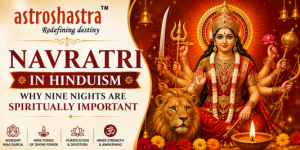
The word Navratri comes from two Sanskrit words: Nava, meaning nine, and Ratri, meaning night. The festival therefore represents nine nights of devotion, spiritual purification, inner transformation and worship of the Divine Feminine.
Navratri is traditionally dedicated to Maa Durga and her various manifestations of Shakti, the divine feminine power that represents strength, protection, wisdom, compassion and transformation.
Although Navratri is celebrated several times during the Hindu calendar year, Sharad Navratri, observed around September–October, is the most widely celebrated form in many parts of India.
What Is the Spiritual Meaning of Navratri?
Navratri is much more than a religious celebration. Spiritually, the nine nights can be understood as a journey of self-purification and awakening.
The festival encourages devotees to move away from negative tendencies such as anger, greed, attachment, jealousy and ego and cultivate qualities such as:
- Purity
- Courage
- Self-discipline
- Compassion
- Wisdom
- Devotion
- Inner strength
- Spiritual awareness
The worship of Shakti reminds us that divine energy exists within every individual. Navratri provides an opportunity to connect with that inner power.
Why Are There Nine Nights in Navratri?
The number nine has profound significance in Hindu traditions. During Navratri, devotees worship different forms of Goddess Durga on each of the nine days.
These nine forms are collectively known as Navadurga:
- Maa Shailputri – Strength and stability
- Maa Brahmacharini – Devotion and spiritual discipline
- Maa Chandraghanta – Courage and protection
- Maa Kushmanda – Creative energy and vitality
- Maa Skandamata – Motherly love and compassion
- Maa Katyayani – Courage and victory
- Maa Kalaratri – Destruction of negativity and fear
- Maa Mahagauri – Purity and peace
- Maa Siddhidatri – Spiritual accomplishment and divine blessings
Together, these forms represent different dimensions of Shakti.
The Deeper Meaning Behind the Nine Nights
The nine nights can also be understood as an inner spiritual journey.
The first stage involves purification — becoming aware of negative thoughts, habits and attachments.
The middle stage represents strength and transformation — developing courage to overcome inner and outer obstacles.
The final stage represents wisdom, peace and spiritual awakening.
Thus, Navratri symbolically takes a devotee from impurity to purification, weakness to strength and ignorance towards wisdom.
Navratri and the Victory of Good Over Evil
One of the most important themes of Navratri is the triumph of Dharma over Adharma.
According to Hindu tradition, Goddess Durga fought the powerful demon Mahishasura, who represented arrogance, uncontrolled power and destructive tendencies. Her victory symbolizes the triumph of divine consciousness over negative forces.
The story carries an important spiritual message: evil is not always something outside us. Negative tendencies can also exist within us and must be conquered through awareness, discipline and divine grace.
Why Is Goddess Durga Worshipped During Navratri?
Goddess Durga represents the protective and transformative power of Shakti.
She is traditionally depicted with multiple arms carrying divine weapons and riding a lion or tiger. These symbols represent courage, divine authority and the ability to overcome different forms of negativity.
Devotees worship Durga for:
- Protection from negative influences
- Courage during difficult circumstances
- Mental and spiritual strength
- Removal of obstacles
- Family harmony
- Prosperity
- Spiritual growth
The deeper purpose, however, is not simply to ask the Goddess for material benefits but to awaken Shakti within oneself.
Fasting During Navratri
Fasting, or vrat, is an important practice for many devotees during Navratri.
The purpose of fasting is traditionally understood as more than simply avoiding certain foods. It encourages self-control, discipline and purification.
Devotees may choose different forms of fasting according to their traditions and health circumstances. Some observe a complete fast, while others consume permitted foods such as fruits, milk and vrat-friendly preparations.
The spiritual principle is restraint of the senses and greater concentration on prayer and devotion.
Navratri Puja and Spiritual Practices
Devotees commonly perform various spiritual practices during Navratri, including:
Daily Puja
Lighting a diya and worshipping Maa Durga creates a devotional atmosphere and provides an opportunity for daily prayer.
Mantra Japa
Chanting Durga mantras or Navarna Mantra is traditionally practiced by devotees seeking spiritual protection and divine blessings.
Offering Flowers
Flowers, especially those associated with Devi worship, are offered as an expression of devotion.
Havan
Many families and temples perform Havan or Yajna, particularly toward the end of Navratri.
Devi Scriptures
Devotees may read or listen to texts such as Durga Saptashati (Devi Mahatmya) during the festival.
Kanya Puja on Ashtami or Navami
Kanya Puja, also called Kanjak Puja, is an important Navratri tradition in several regions of India.
Young girls are respectfully worshipped as manifestations of the Divine Feminine. They are traditionally offered food, gifts and blessings.
The practice reflects the Hindu understanding that Shakti exists in feminine creation and innocence.
Navratri and the Power of the Divine Feminine
One of the most profound messages of Navratri is the recognition of feminine divine energy.
In Shakta traditions, Shakti is not considered merely an aspect of divinity but the fundamental cosmic power through which creation, preservation and transformation take place.
This makes Navratri especially significant as a period for reflecting upon:
Strength → Compassion → Wisdom → Transformation → Spiritual Awakening
How Navratri Can Help in Modern Life
The spiritual teachings of Navratri remain relevant even in modern life.
The festival encourages us to pause from everyday distractions and examine our thoughts, habits and priorities.
During these nine days, one can consciously practice:
- Speaking positively
- Avoiding unnecessary arguments
- Practising self-discipline
- Helping those in need
- Spending time in prayer or meditation
- Controlling negative thoughts
- Practising gratitude
- Maintaining cleanliness in the home and surroundings
In this way, Navratri becomes a period of inner renewal rather than simply a festival of external celebration.
Navratri, Garba and Dandiya
In Gujarat and several other regions, Navratri is celebrated with Garba and Dandiya Raas.
Garba is traditionally associated with the Divine Feminine and the cyclical nature of life. The circular movement can symbolically represent the cosmic cycle of creation and divine energy.
Modern Navratri celebrations combine devotion, music, dance and community participation, making the festival both spiritually meaningful and socially vibrant.
The Spiritual Message of Navratri
At its heart, Navratri teaches that divine strength exists within us.
The nine nights remind us to identify the forces that weaken us and consciously develop the qualities that strengthen our body, mind and spirit.
The victory of Maa Durga over Mahishasura therefore becomes a metaphor for our own spiritual journey:
Conquer fear with courage, negativity with awareness, ignorance with wisdom and ego with devotion.
Navratri is ultimately an invitation to rediscover Shakti within ourselves.
Navratri in Hinduism is a sacred period of nine nights devoted to the worship of Shakti and the various manifestations of Maa Durga. Its spiritual importance goes far beyond fasting, rituals, Garba and celebrations.
The festival represents purification, discipline, courage, protection, wisdom and the victory of good over evil.
By observing Navratri with sincere devotion, prayer, self-discipline and compassion, devotees can use these nine nights as an opportunity for inner transformation and spiritual renewal.
FAQ
1. What is the spiritual significance of Navratri?
Navratri represents spiritual purification, devotion, self-discipline, inner transformation and the victory of divine forces over negativity.
2. Why is Navratri celebrated for nine nights?
The nine nights are traditionally dedicated to the nine manifestations of Goddess Durga, collectively known as Navadurga.
3. What are the nine forms of Maa Durga?
The nine forms are Shailputri, Brahmacharini, Chandraghanta, Kushmanda, Skandamata, Katyayani, Kalaratri, Mahagauri and Siddhidatri.
4. Why do people fast during Navratri?
Fasting is traditionally observed as a practice of self-control, discipline, purification and increased spiritual focus.
5. What is the significance of Kanya Puja?
Kanya Puja honours young girls as manifestations of the Divine Feminine and is traditionally performed during Ashtami or Navami in many Hindu communities.
6. What does Navratri teach us spiritually?
Navratri teaches us to overcome negativity, develop inner strength, cultivate wisdom and recognize the divine Shakti within ourselves.
Comments