
Indira Ekadashi: Significance, Vrat, Puja Vidhi, Mantra, Katha and Spiritual Benefits
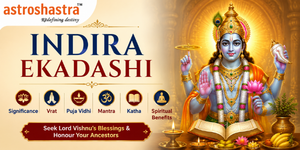
It holds special importance for devotees who wish to perform devotional practices and ancestral remembrance during Pitru Paksha.
The observance combines the spiritual discipline of Ekadashi Vrat with prayers for departed ancestors. Devotees worship Lord Vishnu, observe fasting, chant Vishnu Mantras, listen to the Indira Ekadashi Vrat Katha and perform charity and other traditional religious activities.
Indira Ekadashi is particularly associated with prayers for the spiritual welfare of ancestors. For this reason, it is considered an important Ekadashi for devotees who wish to combine Vishnu Bhakti, fasting, charity and Pitra remembrance.
What Is Indira Ekadashi?
Indira Ekadashi is one of the sacred Ekadashis observed in the Hindu tradition. It falls during the Krishna Paksha of Ashwin month and generally occurs during the period associated with Pitru Paksha.
The central deity of the Vrat is Lord Vishnu.
Devotees observe the day with:
- Ekadashi fasting
- Lord Vishnu Puja
- Vishnu Mantra Japa
- Tulsi offerings
- Reading or listening to Indira Ekadashi Katha
- Prayer for ancestors
- Charity and Annadaan
- Aarti and devotional activities
The observance is traditionally believed to support spiritual purification and devotion while also providing an opportunity to remember departed family members.
Significance of Indira Ekadashi
Indira Ekadashi is considered significant because of its association with both Lord Vishnu and ancestral remembrance.
Ekadashi is traditionally regarded as a spiritually important day for controlling the senses, reducing worldly distractions and dedicating time to prayer and devotion.
Since Indira Ekadashi generally falls during Pitru Paksha, devotees may also dedicate their prayers and charitable activities to the spiritual welfare of their ancestors.
The festival therefore brings together two important aspects of Hindu spiritual practice:
Vishnu Bhakti + Pitra Smaran
Why Is Indira Ekadashi Important for Ancestors?
Traditional accounts associate Indira Ekadashi with the story of a king who sought divine help for the spiritual welfare of his deceased father.
Lord Vishnu instructed him regarding the observance of the Ekadashi Vrat. Through the merit of the Vrat and associated devotional practices, the king was able to pray for the upliftment of his ancestor.
Because of this traditional association, Indira Ekadashi is considered especially meaningful for devotees who wish to remember and pray for departed ancestors.
It should be understood as a religious and devotional tradition, rather than as a guarantee of a particular material or supernatural result.
Indira Ekadashi and Pitru Paksha
Indira Ekadashi often occurs during the period of Pitru Paksha, which is traditionally dedicated to ancestral remembrance.
During Pitru Paksha, families may perform:
- Shraddha
- Pitra Tarpan
- Pind Daan
- Charity
- Annadaan
- Ancestral prayers
Indira Ekadashi adds the devotional practice of Vishnu worship and Ekadashi fasting to this period.
Devotees can therefore use the day to remember their ancestors while dedicating their spiritual practices to Lord Vishnu.
Indira Ekadashi Vrat
The Indira Ekadashi Vrat is traditionally observed by fasting on Ekadashi and breaking the fast on Dwadashi during the prescribed Parana period.
Different devotees follow different levels of fasting depending on their tradition and physical capacity.
Some may observe:
- Nirjala fasting
- Fruit and milk fasting
- Phalahar
- A simple Ekadashi diet
Those who cannot undertake a strict fast may still observe the spiritual aspect of the day through prayer, Mantra Japa, Vishnu Puja, charity and devotional activities.
The purpose of the Vrat is traditionally understood as self-discipline and devotion, rather than fasting merely as a physical exercise.
Indira Ekadashi Puja Vidhi
The exact procedure can vary according to family and regional traditions. A simple home Puja can be performed as follows.
1. Take a Bath
Begin the day with a bath and wear clean clothes.
2. Clean the Puja Area
Clean the place of worship and prepare a clean platform for Lord Vishnu.
3. Place Lord Vishnu's Image or Idol
Place an image or idol of Lord Vishnu on the Puja altar.
4. Light a Diya
Light a ghee or oil Diya and incense.
Take a Sankalp for observing the Indira Ekadashi Vrat.
5. Offer Puja Samagri
Offer:
- Flowers
- Tulsi leaves
- Sandalwood
- Akshat
- Incense
- Diya
- Fruits
- Sweets
- Naivedya
6. Worship Lord Vishnu
Perform Vishnu Puja with devotion and recite appropriate prayers.
7. Chant Vishnu Mantras
Chant Vishnu Mantras such as:
Om Namo Bhagavate Vasudevaya
8. Listen to Indira Ekadashi Katha
Read or listen to the traditional Indira Ekadashi Vrat Katha.
9. Remember Ancestors
Offer prayers for departed ancestors and perform appropriate ancestral observances according to family tradition.
10. Perform Aarti
Conclude the Puja with Lord Vishnu Aarti and distribute Prasad.
Indira Ekadashi Puja Samagri
The following items can be prepared for a simple Puja:
- Lord Vishnu idol or picture
- Tulsi leaves
- Flowers
- Garland
- Akshat
- Roli
- Sandalwood
- Incense sticks
- Diya
- Ghee or oil
- Cotton wick
- Fruits
- Sweets
- Panchamrit
- Coconut
- Kalash
- Water
- Naivedya
- Prasad
The exact Samagri may vary according to regional and family traditions.
Indira Ekadashi Mantra
Devotees can chant the following widely revered Vishnu Mantra:
? ??? ????? ??????????
Om Namo Bhagavate Vasudevaya
This mantra can be recited during:
- Vishnu Puja
- Meditation
- Ekadashi fasting
- Morning prayers
- Evening prayers
- Naam Japa
Another simple mantra is:
? ??????? ????
Om Vishnave Namah
Devotees may chant the mantra according to their spiritual practice and tradition.
Indira Ekadashi Vrat Katha
The traditional Indira Ekadashi Vrat Katha is associated with King Indrasena.
According to the traditional narrative, King Indrasena was a devoted and prosperous ruler who followed religious practices and worshipped Lord Vishnu.
One day, the sage Narada came to the king and informed him about the condition of his deceased father.
The king learned that his father required spiritual upliftment and that observing the Indira Ekadashi Vrat with devotion could help him fulfil his ancestral duty.
Narada Muni explained the method of observing the Vrat.
The king followed the prescribed practices, worshipped Lord Vishnu and performed the Ekadashi observance with sincerity.
According to the traditional Katha, the merit of the observance helped his father attain a better spiritual state.
The story forms an important part of the religious significance of Indira Ekadashi.
Spiritual Message of Indira Ekadashi Katha
The Katha carries several important spiritual lessons.
Faith
The story emphasizes faith in Lord Vishnu and sincere devotional practice.
Duty Towards Ancestors
It highlights the traditional importance of remembering and honouring one's ancestors.
Self-Discipline
The Ekadashi Vrat represents control of the senses and dedication to spiritual practice.
Charity
Acts of giving and service form an important part of many traditional Vrat observances.
Devotion
The story emphasizes surrender and devotion rather than material desires alone.
Indira Ekadashi and Lord Vishnu
Lord Vishnu is the principal deity worshipped on Indira Ekadashi.
Vishnu is traditionally regarded as the preserver of the universe and is associated with righteousness, protection and cosmic order.
Devotees may worship Vishnu in His various forms according to their family tradition.
Common devotional practices include:
- Vishnu Sahasranama
- Vishnu Mantra Japa
- Bhagavad Gita reading
- Tulsi Puja
- Vishnu Aarti
- Naam Sankirtan
- Temple Darshan
Importance of Tulsi on Indira Ekadashi
Tulsi holds a particularly sacred place in Vaishnava worship.
Devotees traditionally offer Tulsi leaves to Lord Vishnu during Puja.
On Indira Ekadashi, fresh Tulsi leaves may be offered while chanting Vishnu's name or Mantra.
Tulsi should be offered respectfully according to one's religious tradition.
What to Eat During Indira Ekadashi Fast?
Fasting rules differ between traditions.
Devotees who observe a Phalahar or permitted fasting diet may traditionally consume foods such as:
- Fruits
- Milk
- Curd
- Nuts
- Coconut
- Certain fasting preparations
- Water
Many Ekadashi traditions avoid:
- Grains
- Rice
- Wheat
- Beans
- Pulses
- Certain other foods
The exact food restrictions should be followed according to the devotee's family tradition or spiritual lineage.
Those who cannot safely fast should not undertake an extreme fast.
What Should Be Avoided on Indira Ekadashi?
Devotees traditionally try to maintain a peaceful and disciplined lifestyle.
They may avoid:
- Grains and prohibited foods according to their tradition
- Alcohol and intoxicants
- Anger
- Arguments
- Excessive entertainment
- Negative speech
- Unnecessary worldly distractions
The purpose is to dedicate more time to prayer, remembrance and spiritual practice.
Indira Ekadashi Parana
Parana means breaking the Ekadashi fast.
Traditionally, the fast is broken on the following Dwadashi Tithi during the prescribed Parana period.
The exact Parana timing changes from year to year and can also vary according to location.
Devotees should consult a reliable local Panchang for the correct Parana Muhurat.
Those observing a strict Vrat should follow the Parana rules prescribed by their tradition.
Indira Ekadashi and Pitra Tarpan
Because Indira Ekadashi is associated with Pitru Paksha, some devotees combine their Vishnu worship with ancestral remembrance.
Traditional ancestral practices can include:
- Pitra Tarpan
- Shraddha
- Pind Daan
- Charity
- Annadaan
- Prayers for departed family members
However, Ekadashi Vrat and formal Shraddha are distinct religious practices. Families should follow the appropriate procedure prescribed by their own tradition.
Charity on Indira Ekadashi
Charity is an important devotional practice.
Devotees may perform:
- Annadaan
- Food donation
- Donation of grains
- Donation of clothes
- Support for people in need
- Feeding animals
- Helping elderly people
- Supporting charitable activities
Charity should ideally be performed with humility and without expectation of personal reward.
Spiritual Benefits of Indira Ekadashi
According to Hindu devotional traditions, sincere observance of Indira Ekadashi is associated with several spiritual benefits.
1. Strengthens Devotion
Worshipping Lord Vishnu encourages deeper devotion and spiritual remembrance.
2. Develops Self-Control
Fasting and restraint encourage discipline.
3. Encourages Ancestral Remembrance
The observance provides an opportunity to remember departed family members.
4. Promotes Charity
The festival encourages acts of giving and Seva.
5. Supports Inner Purification
Prayer and devotional activities can help devotees reflect upon their thoughts and actions.
6. Encourages Spiritual Discipline
Regular Ekadashi observance can become part of a disciplined spiritual routine.
7. Strengthens Faith
The Vrat and Katha encourage trust in Divine guidance.
Indira Ekadashi for Family Well-Being
Families may observe Indira Ekadashi together by performing Vishnu Puja and listening to the Vrat Katha.
They can also dedicate prayers to departed ancestors and perform charity in their remembrance.
The day can become an opportunity for family members to:
- Remember their lineage
- Respect elders
- Share family traditions
- Practise charity
- Pray together
- Strengthen spiritual values
Indira Ekadashi and Spiritual Transformation
Ekadashi is traditionally a day of restraint and spiritual focus.
Indira Ekadashi adds the theme of ancestral gratitude.
This makes the festival an opportunity to reflect upon:
Where we came from, what values we inherited and what values we want to pass to future generations.
Remembering ancestors does not have to be associated only with sorrow. It can also be an expression of gratitude for their lives, sacrifices, teachings and contribution to the family.
Indira Ekadashi and Pitra Dosha
Indira Ekadashi is sometimes discussed alongside Pitra Dosha because both involve the broader subject of ancestral traditions.
However, they should not be confused.
Indira Ekadashi is a religious observance dedicated to Lord Vishnu and associated with ancestral remembrance.
Pitra Dosha is an astrological concept that is assessed from a person's birth chart.
Not every person experiencing difficulties has Pitra Dosha. A complete horoscope should be analysed before drawing such a conclusion.
Traditional practices such as Tarpan, Shraddha, charity and prayers may be recommended within certain traditions, but astrological remedies should be selected based on the individual horoscope.
How to Observe Indira Ekadashi at Home
A simple home observance can be performed with devotion:
- Clean the Puja area.
- Take a bath and wear clean clothes.
- Place Lord Vishnu's idol or picture.
- Take Sankalp for the Vrat.
- Light a Diya.
- Offer flowers and Tulsi.
- Perform Vishnu Puja.
- Chant Om Namo Bhagavate Vasudevaya.
- Read or listen to Indira Ekadashi Katha.
- Remember and pray for ancestors.
- Perform charity or Annadaan.
- Perform Vishnu Aarti.
- Observe the fast according to your tradition.
- Break the fast during the prescribed Dwadashi Parana period.
Indira Ekadashi and Vishnu Sahasranama
Devotees who wish to undertake a deeper spiritual practice may recite Vishnu Sahasranama on Indira Ekadashi.
Vishnu Sahasranama is a devotional recitation consisting of the thousand names of Lord Vishnu.
It may be included along with:
- Meditation
- Mantra Japa
- Bhagavad Gita reading
- Vishnu Puja
- Aarti
- Naam Sankirtan
The practice should be undertaken according to one's spiritual tradition and ability.
Indira Ekadashi and Moksha
Traditional Hindu literature associates Ekadashi observance with spiritual progress and liberation-oriented devotion.
Indira Ekadashi is particularly connected with prayers for the spiritual welfare of ancestors.
The concept of Moksha refers to liberation from the cycle of birth and death.
Rather than treating Moksha as a guaranteed result of a single ritual, devotees can understand the festival as an opportunity to cultivate:
- Devotion
- Detachment
- Self-control
- Compassion
- Faith
- Surrender
- Spiritual awareness
Indira Ekadashi is a sacred Vishnu Vrat associated with fasting, devotion, ancestral remembrance and charity. Observed during the Krishna Paksha Ekadashi of Ashwin month, it holds special importance because of its connection with Pitru Paksha.
The traditional story of King Indrasena and Narada Muni emphasizes the importance of devotion, ancestral duty and sincere spiritual practice.
Devotees can observe the day through Lord Vishnu Puja, Tulsi offerings, Ekadashi fasting, Mantra Japa, Indira Ekadashi Katha, charity and prayers for ancestors.
The deeper message of Indira Ekadashi is one of faith, gratitude and spiritual responsibility. It encourages devotees to remember their ancestors while strengthening their relationship with the Divine.
May Lord Vishnu bless devotees and their families with peace, wisdom, devotion, spiritual strength and well-being.
? ??? ????? ??????????
Om Namo Bhagavate Vasudevaya.
Frequently Asked Questions About Indira Ekadashi
What is Indira Ekadashi?
Indira Ekadashi is a sacred Ekadashi dedicated to Lord Vishnu and traditionally associated with prayers for the spiritual welfare of ancestors.
When is Indira Ekadashi observed?
Indira Ekadashi is observed on the Krishna Paksha Ekadashi of Ashwin month according to the Hindu lunar calendar. The corresponding Gregorian date changes every year.
Why is Indira Ekadashi important for ancestors?
Traditional accounts associate the Vrat with prayers for the spiritual upliftment of a deceased ancestor. This makes Indira Ekadashi particularly significant during the period of Pitru Paksha.
Who is worshipped on Indira Ekadashi?
Lord Vishnu is the principal deity worshipped on Indira Ekadashi.
What is the Indira Ekadashi Mantra?
A widely revered Vishnu Mantra is:
? ??? ????? ??????????
Om Namo Bhagavate Vasudevaya.
Can Indira Ekadashi Vrat be observed at home?
Yes. Devotees can observe the Vrat at home through Vishnu Puja, fasting according to their capacity, Mantra Japa, Katha, prayer and charity.
What is the Indira Ekadashi Vrat Katha?
The traditional Katha is associated with King Indrasena, Sage Narada and the king's deceased father. The story highlights devotion to Lord Vishnu and the spiritual importance of the Ekadashi observance.
What food can be eaten during Indira Ekadashi?
Fasting practices differ. Devotees following a Phalahar may consume fruits, milk, nuts and permitted fasting foods, while many traditions prohibit grains, rice, wheat, beans and pulses.
When should the Indira Ekadashi fast be broken?
The fast is traditionally broken on Dwadashi during the prescribed Parana Muhurat. The exact time changes every year and should be checked according to the local Panchang.
Can Pitra Tarpan be performed on Indira Ekadashi?
Some devotees perform ancestral prayers or Tarpan because of the festival's association with Pitru Paksha. The appropriate procedure should be followed according to family and regional tradition.
Is Indira Ekadashi a remedy for Pitra Dosha?
Indira Ekadashi is a religious observance and should not automatically be considered a remedy for Pitra Dosha. Pitra Dosha is an astrological concept that should be assessed through the complete birth chart.
What are the benefits of Indira Ekadashi?
According to Hindu tradition, sincere observance is associated with devotion, self-discipline, spiritual purification, ancestral remembrance, charity and spiritual growth.
What is the spiritual message of Indira Ekadashi?
Indira Ekadashi teaches the importance of devotion, self-control, gratitude towards ancestors and responsible spiritual practice. It encourages devotees to remember their roots while turning their attention toward Lord Vishnu.