
Among the many festivals dedicated to Goddess Lakshmi, Kojagari Lakshmi Puja holds a special place because of its association with the autumn full moon and the tradition of remaining awake during the night.
Kojagari Lakshmi Puja Significance, Traditions & Rituals
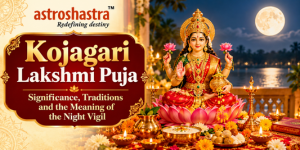
Observed on Sharad Purnima, the full-moon night of the Hindu lunar month of Ashwin, Kojagari Lakshmi Puja is particularly significant in Bengal and parts of eastern India. Devotees worship Goddess Lakshmi, the goddess of prosperity, abundance and well-being, and observe the night with prayers, offerings and family gatherings.
The festival is associated with a beautiful traditional question: “Ko J?garti?” — “Who is awake?” This question captures the central theme of the night vigil and its connection with attentiveness, devotion and spiritual awareness.
While many people associate Lakshmi Puja primarily with Diwali, Kojagari Lakshmi Puja is a distinct observance with its own seasonal significance, regional traditions and spiritual symbolism.
In this guide, we explore the Kojagari Lakshmi Puja significance, the meaning of the night vigil, traditional observances across India and the important differences between Kojagari Lakshmi Puja and Diwali Lakshmi Puja.
1. What Is Kojagari Lakshmi Puja?
Kojagari Lakshmi Puja is a Hindu religious observance associated with Sharad Purnima, the full moon that occurs during the autumn season.
The name “Kojagari” is traditionally connected with the Sanskrit expression “Ko J?garti?”, meaning “Who is awake?” According to a popular religious belief, Goddess Lakshmi blesses those who remain awake in devotion on this auspicious night.
The festival is especially prominent in West Bengal, where households worship Goddess Lakshmi with offerings, devotional prayers and traditional arrangements. It is also observed in different forms across other parts of India, although the associated customs and the deities honoured may vary.
Kojagari Lakshmi Puja is more than a ritual of seeking material prosperity. It is also an occasion to reflect on gratitude, discipline, spiritual awareness and the responsible use of wealth.
For devotees, the full-moon night offers an opportunity to pause, offer prayers and renew their commitment to a balanced and purposeful life.
2. Kojagari Lakshmi Puja Significance: Why Is This Night Special?
The spiritual importance of Kojagari Lakshmi Puja comes from the combination of the autumn full moon, worship of Goddess Lakshmi and the tradition of the night vigil.
A. The importance of the autumn full moon
Sharad Purnima marks the full moon of the autumn season. In Hindu tradition, the full moon is often associated with completeness, auspiciousness and the fullness of nature.
The bright moonlit night provides the setting for devotional activities, family gatherings and traditional observances.
In many communities, Sharad Purnima is also associated with the belief that moonlight has a special spiritual significance. Some households follow the custom of placing milk or rice pudding under the moonlight before consuming it as prasad. This is a traditional practice rather than a scientifically established health benefit.
B. Worship of Goddess Lakshmi
Goddess Lakshmi represents prosperity, good fortune, abundance and well-being. Her worship during Kojagari Purnima reflects the aspiration for prosperity accompanied by wisdom, gratitude and righteous conduct.
Devotees pray for stability in family life, success in their responsibilities, and the ability to use their resources wisely.
The festival also offers a reminder that prosperity is not limited to financial wealth. Peace at home, good health, meaningful relationships, knowledge and contentment are equally valuable aspects of a fulfilling life.
C. The meaning of “Ko J?garti?”
The traditional question “Ko J?garti?” translates to “Who is awake?”
According to popular religious tradition, Goddess Lakshmi is believed to visit or bless those who remain awake during this sacred night. This belief forms the basis of the Kojagari night vigil.
The idea of remaining awake also carries a symbolic meaning. It encourages people to be alert to their actions, responsibilities and opportunities rather than allowing life to pass through carelessness or ignorance.
The vigil may therefore be understood as an expression of both devotion and awareness.
D. Gratitude and responsible prosperity
Kojagari Lakshmi Puja encourages devotees to recognise prosperity as a blessing that comes with responsibility.
The festival provides an opportunity to reflect on how wealth is earned, managed and shared. It can also inspire acts of charity, generosity towards those in need and renewed attention to family well-being.
Through prayer and reflection, devotees seek not merely abundance, but the wisdom to preserve and use it meaningfully.
3. The Tradition of Staying Awake on Kojagari Purnima
The night vigil is one of the most distinctive features of Kojagari Lakshmi Puja.
In households that observe this tradition, family members remain awake for part or all of the night, offering prayers and participating in devotional activities.
Common practices may include:
Performing Lakshmi Puja according to family tradition.
Reciting prayers, stotras or devotional hymns dedicated to Goddess Lakshmi.
Singing bhajans and listening to religious stories.
Keeping the home and the place of worship clean and orderly.
Sharing traditional food and prasad with family members.
Spending time in prayer, reflection and gratitude.
Observing the moonlit night according to local customs.
The form of the vigil varies. Some families remain awake until late at night, while others continue their observance for longer. The practice should be understood within the context of local traditions and personal circumstances.
The deeper message: Staying awake is not simply about avoiding sleep. It symbolises remaining attentive to spiritual values, opportunities for improvement and the responsibilities that come with prosperity.
4. Traditional Kojagari Lakshmi Puja Rituals
Although rituals differ across regions and households, the following practices are commonly associated with Kojagari Lakshmi Puja.
Step 1: Clean and prepare the home
Devotees traditionally clean their homes before the festival and prepare a suitable place for worship.
In many households, the entrance and puja area are decorated with flowers, alpana or rangoli. These decorations symbolise welcome, auspiciousness and devotion.
Step 2: Arrange the puja space
A picture or idol of Goddess Lakshmi is placed in the designated worship area. Flowers, incense, lamps, water and other ritual materials are arranged according to the family's customs.
In Bengal, traditional arrangements may include alpana designs and offerings associated with the local form of Lakshmi worship.
Step 3: Offer prayers to Goddess Lakshmi
Devotees perform Lakshmi Puja using the prayers and ritual sequence followed by their household or community.
Offerings may include flowers, fruits, sweets, rice, coconut and other traditional items. The precise materials depend on regional practice and the chosen puja vidhi.
Step 4: Make traditional offerings
Many families prepare special foods for the occasion. In some traditions, rice pudding, milk-based sweets, fruits and other offerings form part of the observance.
The food is offered as bhog and subsequently shared as prasad, according to the family's customs.
Step 5: Observe the night vigil
Following the puja, devotees may continue with devotional singing, recitation, storytelling or quiet prayer.
The purpose is to honour the traditional night vigil and reflect on the spiritual values associated with Goddess Lakshmi.
Step 6: Share blessings and prasad
Families conclude different parts of their observance by sharing prasad and spending time together.
Some households follow additional customs associated with the full moon, including preparing traditional foods or viewing the moon. These practices are not identical across all communities.
Note: These steps are a general overview, not a universal ritual prescription. Follow your family's tradition or consult a knowledgeable priest for the specific procedure observed in your region.
5. Regional Traditions Associated with Sharad Purnima
Sharad Purnima is observed in different ways across India. The festival may be associated with Goddess Lakshmi, Krishna's Raas Leela, traditional food offerings or seasonal celebrations, depending on the region.
<PRIVATE_PERSON>### A. Bengal: Kojagari Lakshmi Puja
In West Bengal, Kojagari Lakshmi Puja is an important household festival observed on the full-moon night of Ashwin.
Many families worship Goddess Lakshmi with flowers, lamps, traditional offerings and alpana designs. The puja often takes place at home, and the occasion may be marked by a family gathering and a night vigil.
For many Bengali households, this observance has its own identity and is distinct from the more widely celebrated Lakshmi Puja associated with Kali Puja and Diwali in other parts of India.
B. Odisha: Kumar Purnima
In Odisha, the full-moon festival is widely known as Kumar Purnima. It is traditionally associated with unmarried girls praying for an ideal life partner and participating in regional customs and celebrations.
The festival has its own cultural significance and should not be treated as identical to Kojagari Lakshmi Puja, even though both are associated with the autumn full moon.
C. Maharashtra: Kojagiri Pournima
In Maharashtra, Sharad Purnima is commonly known as Kojagiri Pournima or Kojagiri Purnima.
The occasion is often celebrated with moonlit gatherings, family activities and the preparation or sharing of milk. Some communities observe devotional practices connected with the traditional belief in the auspiciousness of the night.
The precise customs vary, and not every household performs the same Lakshmi Puja rituals.
D. North India: Sharad Purnima and Raas Leela
In parts of North India, Sharad Purnima is associated with the worship of Lord Krishna and traditions connected with the divine Raas Leela.
Some communities prepare kheer and place it under the moonlight as part of their observance. Other customs focus on prayer, devotional singing and the spiritual significance of the full moon.
These traditions share the seasonal setting of Sharad Purnima but may have a different religious emphasis from Bengal's Kojagari Lakshmi Puja.
E. Different traditions, a shared seasonal theme
Across India, Sharad Purnima reflects the diversity of Hindu religious and cultural life.
The same full-moon occasion may be marked by Lakshmi worship, Krishna devotion, prayers for a prosperous future or community celebrations. Understanding these differences helps us appreciate the festival without assuming that every region follows an identical ritual.
6. Kojagari Lakshmi Puja vs Diwali Lakshmi Puja: What Is the Difference?
Kojagari Lakshmi Puja and Diwali Lakshmi Puja both honour Goddess Lakshmi, but they are distinct observances with different seasonal settings and regional traditions.
| Feature | Kojagari Lakshmi Puja | Diwali Lakshmi Puja |
|---|---|---|
| Occasion | Sharad Purnima, the autumn full moon | Diwali, associated with the Amavasya of the Hindu month of Kartik in widely followed traditions |
| Lunar phase | Full moon (Purnima) | New moon (Amavasya) |
| Regional association | Particularly prominent in Bengal and parts of eastern India | Widely observed across India and by Hindu communities worldwide |
| Main focus | Lakshmi worship, the night vigil and the traditional question “Ko J?garti?” | Lakshmi-Ganesh worship, prosperity, auspicious beginnings and the celebration of Diwali |
| Common customs | Lakshmi Puja, alpana in some regions, offerings and night-long devotional activities | Lighting diyas, decorating homes, Lakshmi-Ganesh Puja, sweets and festive gatherings |
| Broader significance | Spiritual alertness, prosperity and the symbolism of the autumn full moon | Light overcoming darkness, auspicious beginnings, prosperity and renewal |
Why are both festivals associated with Goddess Lakshmi?
Goddess Lakshmi is worshipped on several auspicious occasions throughout the Hindu calendar.
Kojagari Lakshmi Puja emphasises the full-moon night and the traditional vigil. Diwali Lakshmi Puja forms part of a broader festival celebrating light, auspiciousness and renewal.
The presence of the same goddess does not make the two festivals interchangeable. Their dates, customs and ritual emphases are different.
For a deeper understanding of the Diwali observance, read the [Diwali Puja Guide] on Astroshastra.
7. The Spiritual Lessons of Kojagari Lakshmi Puja
Beyond the rituals, Kojagari Lakshmi Puja offers several reflections that can be applied to everyday life.
A. Awareness creates opportunities
The question “Who is awake?” invites us to think about awareness in our daily lives.
Are we attentive to our responsibilities? Do we recognise opportunities to learn and improve? Are we mindful of the choices that affect our family and future?
The symbolism of the vigil encourages us to remain conscious and purposeful.
B. Prosperity requires wisdom
Wealth can support comfort and security, but its meaningful use requires discipline and sound judgement.
The worship of Goddess Lakshmi can serve as a reminder to earn honestly, spend thoughtfully, save responsibly and share with compassion.
C. Gratitude brings perspective
Festivals provide an opportunity to appreciate what we already have rather than focusing only on what we lack.
Expressing gratitude for family, health, knowledge and the support of others can make the celebration more meaningful.
D. Spirituality is reflected in conduct
Prayer is one aspect of religious observance. Kindness, honesty, generosity and responsibility are equally important expressions of spiritual values.
Kojagari Lakshmi Puja can inspire devotees to bring these qualities into their homes, workplaces and relationships.
8. How to Observe Kojagari Lakshmi Puja at Home
If you are observing Kojagari Lakshmi Puja at home, a simple preparation plan can help you organise the occasion.
Clean the house and prepare the worship area.
Arrange a picture or idol of Goddess Lakshmi.
Gather flowers, lamps, incense and the offerings required by your family tradition.
Confirm the local date and puja timing using a reliable regional Panchang.
Perform the puja according to your customary vidhi.
Spend time in prayer, devotional singing or reflection during the night.
Prepare traditional food offerings where customary.
Keep lamps and other sources of flame in safe locations.
Adapt the length of the vigil to your circumstances rather than compromising your health or essential responsibilities.
The observance need not be elaborate to be meaningful. Sincerity, cleanliness, devotion and thoughtful participation are central to the experience.
9. Frequently Asked Questions About Kojagari Lakshmi Puja
1. What is the significance of Kojagari Lakshmi Puja?
Kojagari Lakshmi Puja is associated with the worship of Goddess Lakshmi on Sharad Purnima, the autumn full moon. Its distinctive tradition is the night vigil linked with the question “Ko J?garti?”, meaning “Who is awake?” The festival symbolises devotion, spiritual awareness and the aspiration for prosperity.
2. What does Kojagari mean?
Kojagari is traditionally connected with the Sanskrit expression “Ko J?garti?”, which means “Who is awake?” The phrase is associated with the belief that Goddess Lakshmi blesses devotees who remain awake in prayer on Sharad Purnima.
3. When is Kojagari Lakshmi Puja celebrated?
Kojagari Lakshmi Puja is observed on Sharad Purnima, the full-moon day of the Hindu lunar month of Ashwin. The corresponding Gregorian date changes every year. Devotees should consult a reliable Panchang for the applicable date and local observance.
4. Why do people stay awake on Kojagari Purnima?
The night vigil is associated with the traditional belief that Goddess Lakshmi blesses those who remain awake on this auspicious night. Symbolically, staying awake also represents spiritual alertness, discipline and awareness of one's responsibilities.
5. Is Kojagari Lakshmi Puja the same as Diwali Lakshmi Puja?
No. Kojagari Lakshmi Puja is observed on Sharad Purnima, the autumn full moon, while Diwali Lakshmi Puja is generally performed during Diwali on Kartik Amavasya. Both honour Goddess Lakshmi, but their dates, regional traditions and ritual emphasis differ.
6. Is Kojagari Lakshmi Puja mainly celebrated in Bengal?
It is particularly prominent in Bengal, where households traditionally worship Goddess Lakshmi on Sharad Purnima. Other regions observe the same full-moon occasion through different customs, such as Kojagiri Pournima in Maharashtra and Kumar Purnima in Odisha.
7. What food is traditionally offered during Kojagari Lakshmi Puja?
Offerings vary by household and region. Fruits, sweets, rice-based preparations and milk-based foods may be included. Some families prepare kheer or other traditional foods associated with Sharad Purnima.
8. Is staying awake all night compulsory?
The night vigil is an important traditional feature of Kojagari observance, but practices differ among households. Devotees can follow their family's customs while taking their health, age and personal circumstances into account.
9. Can Kojagari Lakshmi Puja be performed at home?
Yes. Many families perform the puja at home using a traditional arrangement of the deity, flowers, lamps and suitable offerings. The ritual sequence can be followed according to family custom or guidance from a knowledgeable priest.
Remain Awake to Devotion, Gratitude and Opportunity
Kojagari Lakshmi Puja is a beautiful reminder that prosperity and spiritual awareness are closely connected in Hindu tradition.
The autumn full moon, the worship of Goddess Lakshmi and the traditional question “Ko J?garti?” give this observance a distinctive identity. Whether celebrated through an elaborate household puja or a simple night of prayer, the festival encourages devotees to cultivate gratitude, responsibility and awareness.
Its distinction from Diwali Lakshmi Puja also reveals the richness of India's religious traditions, in which the same deity may be honoured through different festivals and regional customs.
This Sharad Purnima, let the spirit of Kojagari inspire you to remain attentive to your responsibilities, grateful for your blessings and thoughtful in your pursuit of prosperity.
May Goddess Lakshmi bless your home with peace, wisdom, abundance and well-being.