
Story of Shaligram and Tulsi Vivah: The Sacred Marriage of Lord Vishnu and Tulsi
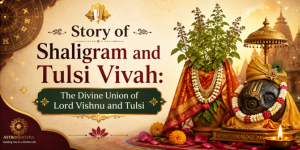
The story behind this sacred union is deeply rooted in Hindu mythology and teaches lessons of devotion, purity, and divine grace.
Who is Shaligram?
Shaligram is a sacred stone found mainly in the Gandaki River of Nepal. It is worshipped as a direct manifestation of Lord Vishnu and is considered one of the most powerful and self-manifested forms of the deity. Unlike idols that require consecration, Shaligrams are naturally divine and are worshipped in homes and temples across the world.
The Legend of Vrinda and Jalandhar
The story of Tulsi Vivah begins with a devoted woman named Vrinda (also known as Brinda), an ardent devotee of Lord Vishnu.
Vrinda was married to a powerful demon king named Jalandhar. Despite being born among demons, Jalandhar possessed immense strength because of the unwavering chastity and devotion of his wife. Her purity created a protective shield around him, making him invincible even to the gods.
As Jalandhar's power grew, he began troubling the Devas (celestial beings) and challenged their authority. Unable to defeat him in battle, the gods sought help from Lord Vishnu.
Lord Vishnu's Divine Intervention
To protect the universe from Jalandhar's growing tyranny, Lord Vishnu devised a plan. He assumed the appearance of Jalandhar and appeared before Vrinda while her husband was away at war.
Believing the disguised Vishnu to be her husband, Vrinda unknowingly broke the spiritual vow that protected Jalandhar. At that very moment, the shield around Jalandhar vanished, enabling Lord Shiva to defeat and kill him in battle.
When Vrinda discovered the truth, she was heartbroken and deeply distressed. Although she recognized that Lord Vishnu acted for the welfare of the universe, she felt betrayed.
The Curse of Vrinda
In her grief, Vrinda cursed Lord Vishnu to become a stone. Respecting the power of her devotion and accepting her curse, Lord Vishnu transformed into the sacred Shaligram stone.
Soon after, Vrinda gave up her mortal body. Lord Vishnu, moved by her unwavering devotion and purity, granted her a divine blessing. He declared that she would be reborn as the sacred Tulsi plant and would forever be worshipped alongside him.
Thus, Vrinda became Tulsi, the most sacred plant in Hinduism.
The Divine Marriage: Tulsi Vivah
To honor Vrinda's devotion, Lord Vishnu promised that every year he would ceremonially marry Tulsi in his Shaligram form. This divine wedding came to be known as Tulsi Vivah.
The ceremony is traditionally performed on the Ekadashi or Dwadashi of the bright fortnight (Shukla Paksha) in the month of Kartik, usually after Diwali.
During the ritual:
- The Tulsi plant is decorated as a bride.
- Shaligram is adorned as Lord Vishnu, the groom.
- Sacred mantras and wedding rituals are performed.
- Devotees offer sweets, flowers, and prayers.
- The event marks the beginning of the Hindu wedding season.
Spiritual Significance of Tulsi Vivah
1. Symbol of Divine Love
The union of Tulsi and Shaligram represents eternal devotion, faithfulness, and divine love.
2. Blessings for Marriage
Many devotees perform Tulsi Vivah seeking harmony, prosperity, and happiness in married life.
3. Removal of Negative Karma
Participating in or witnessing the ceremony is believed to cleanse past karmas and attract divine blessings.
4. Prosperity and Spiritual Growth
Worshipping Tulsi and Shaligram together is said to bring peace, prosperity, and spiritual progress to the household.
Importance of Keeping Shaligram with Tulsi
According to Hindu scriptures, worship of Shaligram is considered incomplete without offering Tulsi leaves. Likewise, Tulsi worship attains greater significance when performed in the presence of Shaligram.
Benefits traditionally associated with their worship include:
- Divine protection of the home
- Increased spiritual energy
- Prosperity and abundance
- Harmony among family members
- Blessings of Lord Vishnu and Goddess Lakshmi
How Tulsi Vivah is Celebrated
Families decorate the Tulsi plant with colorful cloth, ornaments, flowers, and sugarcane. A Shaligram stone is placed beside the Tulsi plant, and a symbolic wedding ceremony is conducted with traditional Hindu rituals.
Devotional songs, Vishnu mantras, and prayers are recited as devotees celebrate the sacred union. The atmosphere resembles a joyous wedding celebration filled with devotion and gratitude.
The story of Shaligram and Tulsi Vivah beautifully illustrates the power of devotion, sacrifice, and divine grace. The transformation of Vrinda into Tulsi and Lord Vishnu into Shaligram symbolizes an eternal bond that continues to inspire millions of devotees. Their sacred union reminds us that true devotion transcends sorrow and ultimately leads to divine blessings and spiritual fulfillment.
By worshipping Tulsi and Shaligram together, devotees honor one of Hinduism's most cherished legends and invite the blessings of Lord Vishnu into their homes.
Comments