
What is Pitra Paksha? Meaning, Significance, Rituals & Remedies
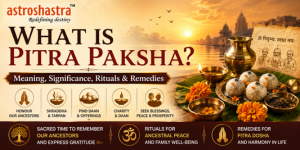
It is traditionally observed as a period for performing Shraddha, Tarpan, Pind Daan, charity and prayers in remembrance of departed family members.
Astroshastra's detailed Pitra Paksha – Significance, Rituals & Observances explains Pitra Paksha as an important period dedicated to ancestors and describes Shraddha and Tarpan as important traditional observances during this time.
The word "Pitra" refers to ancestors, while "Paksha" refers to a fortnight. Thus, Pitra Paksha can broadly be understood as a sacred fortnight dedicated to ancestral remembrance and offerings.
It is not simply a period associated with rituals. For many devotees, it is also a time for expressing gratitude towards parents, grandparents and forefathers whose lives contributed to the family's existence and lineage.
What is the Meaning of Pitra Paksha?
The deeper meaning of Pitra Paksha lies in gratitude, remembrance, duty and spiritual connection with one's ancestors.
In Hindu traditions, ancestors are remembered through rituals and offerings as an expression of respect and gratitude.
During Pitra Paksha, families traditionally perform Shraddha and Tarpan and may offer food, water, sesame seeds and other traditional offerings.
Astroshastra describes Pitra Paksha as a period for honouring ancestors, seeking their blessings and performing traditional rituals intended to bring peace to departed souls.
The period therefore provides an opportunity to remember one's family lineage and acknowledge the contribution of previous generations.
Why is Pitra Paksha Spiritually Important?
Pitra Paksha has a deep spiritual significance in Hindu tradition.
It reminds individuals that life is connected across generations and that gratitude towards one's ancestors is an important aspect of Dharma.
The traditional observances during Pitra Paksha are intended to:
- Honour departed ancestors
- Express gratitude towards forefathers
- Pray for the peace of departed souls
- Perform Shraddha and Tarpan
- Remember family traditions and lineage
- Perform acts of charity
- Seek ancestral blessings
- Address traditional Pitra Dosha remedies where astrologically appropriate
According to Astroshastra, Shraddha performed during Pitra Paksha is regarded as spiritually significant and is traditionally associated with ancestral peace, positive karma and family well-being.
Pitra Paksha and Ancestral Blessings
In traditional Hindu belief, ancestors hold an important place within the family lineage.
Pitra Paksha provides an opportunity to remember ancestors who are no longer physically present.
Many families perform rituals and prayers with the intention of seeking their blessings for peace, prosperity, health and harmony within the family.
The purpose is not necessarily to fear ancestors or ancestral karma. Instead, Pitra Paksha can be understood as a time for gratitude, remembrance and fulfilling traditional duties towards one's lineage.
What is Shraddha During Pitra Paksha?
Shraddha is one of the principal rituals performed for ancestors.
The ritual generally involves offerings and prayers made in remembrance of departed family members.
Traditional Shraddha may involve offerings such as:
- Pind or rice offerings
- Water
- Sesame seeds
- Food
- Fruits
- Flowers
- Other offerings according to family tradition
Astroshastra's Pitra Paksha article describes Shraddha as the central ritual of Pitra Paksha and explains that traditional offerings may include Pinda, water, sesame seeds and food.
The exact procedure can vary according to regional customs, family traditions, priestly guidance and the specific Shraddha being performed.
What is Pitra Tarpan?
Tarpan is a traditional offering of water to the ancestors.
During Pitra Paksha, devotees may perform Tarpan while remembering their departed ancestors and seeking their peace and blessings.
Traditionally, water may be offered along with sesame seeds or other prescribed materials.
According to Astroshastra, Tarpan is one of the key rituals associated with Pitra Paksha and is traditionally performed as an offering to ancestors.
The ritual is ultimately an expression of respect and remembrance.
What is Pind Daan?
Pind Daan is another traditional ancestral ritual.
Pind refers to an offering traditionally prepared from rice and other prescribed ingredients. The offering is made as part of ancestral rites according to Hindu traditions.
Pind Daan is particularly associated with sacred pilgrimage locations and traditional Shraddha ceremonies.
The exact procedure and significance can differ according to the tradition being followed. Therefore, families performing Pind Daan should follow the guidance of an experienced priest familiar with the relevant rituals.
Pitra Paksha and Charity
Charity, or Daan, is traditionally considered an important spiritual practice during Pitra Paksha.
People may donate food, clothes, grains, money or other essential items to those in need.
Astroshastra's article on Donation for Pitra Dosha explains that Daan is traditionally viewed as an expression of gratitude, compassion and selfless service and may be combined with Shraddha, Pitra Tarpan and other spiritual practices.
Charity should ideally be performed with sincerity rather than with the expectation of an immediate material reward.
Pitra Paksha and Annadaan
Food donation or Annadaan is another meaningful way to practise charity during Pitra Paksha.
Feeding people in need is traditionally considered a meritorious act of service.
Astroshastra provides a dedicated Food Daan Service for devotees who wish to contribute towards feeding poor and needy people.
For someone observing Pitra Paksha, charity can become a meaningful way of expressing compassion and remembering the values taught by one's ancestors.
What is Pitra Dosha?
Pitra Dosha is a concept in Vedic astrology associated with ancestral karmic influences.
Astrologers may examine the Sun, ninth house, ninth lord, Rahu, Ketu, Saturn and other horoscope factors when assessing possible Pitra Dosha.
Astroshastra's Pitra Dosha in Horoscope discusses Pitra Dosha, its traditional causes, possible effects and methods used to identify it in a horoscope.
A more recent Astroshastra article, Pitra Dosha Symptoms & Remedies, also emphasises that Pitra Dosha should not simply be viewed as a curse, but as an indication of ancestral or karmic influences that may be addressed through appropriate spiritual practices and remedies.
Importantly, Pitra Paksha and Pitra Dosha are related topics but they are not the same thing.
Pitra Paksha is a traditional period for ancestral remembrance and rituals.
Pitra Dosha is an astrological concept assessed from a person's birth chart.
Can Pitra Paksha Remedies Help with Pitra Dosha?
According to traditional Vedic astrology, performing Shraddha, Tarpan and other ancestral rituals during Pitra Paksha is considered an important remedy for ancestral concerns.
Astroshastra's Pitra Dosha Remedies discusses traditional remedies including Shraddha, Tarpan, charity, food donation, worship and other practices.
However, not everyone should assume that every difficulty in life is caused by Pitra Dosha.
A proper horoscope analysis is important before concluding that Pitra Dosha exists.
How to Know if You Have Pitra Dosha?
Pitra Dosha is determined through analysis of the birth chart.
Astroshastra discusses several factors that astrologers traditionally examine, including:
- The Sun
- Ninth house
- Ninth lord
- Rahu
- Ketu
- Saturn
- Ninth house from the Moon
- Planetary influences and combinations
Astroshastra's Pitra Dosha in Horoscope article provides more detailed information about these traditional astrological indicators.
If you want to know whether Pitra Dosha is actually present in your Kundli, it is better to have your horoscope professionally analysed rather than relying on generic symptoms.
Pitra Paksha Remedies
Traditional Pitra Paksha remedies can include:
Shraddha
Performing Shraddha for departed ancestors according to family tradition.
Tarpan
Offering water and prescribed materials to ancestors.
Pind Daan
Performing traditional Pind Daan rituals where appropriate.
Charity
Donating food, clothes, grains or other essential items.
Feeding the Needy
Performing Annadaan or helping people who require food and support.
Feeding Animals
Some traditions include feeding cows, birds, dogs or other animals as acts of charity and spiritual service.
Worship and Mantra
Devotees may perform prayers and mantra chanting according to their family tradition or priestly guidance.
Respecting Parents and Elders
Living respectfully and fulfilling one's duties towards parents and elders is also an important expression of gratitude towards one's lineage.
Pitra Dosha Nivaran Yantra
For individuals who have been specifically advised to perform Pitra Dosha remedies, Astroshastra offers the Pitradosh Nivaran Navgrah Yantra.
Astroshastra describes this Yantra as a sacred geometric representation combining Navagraha symbolism with prayers for ancestral peace.
The product page also states that it may be worshipped during Pitra Paksha, Amavasya, Mahalaya Amavasya and other ancestral observances.
It is important to understand that a Yantra should be viewed as a complementary spiritual practice and not as a replacement for Shraddha, Tarpan or other traditional ancestral rituals.
Pitra Paksha and Mahalaya Amavasya
Mahalaya Amavasya holds particular importance in traditional ancestral worship.
It marks the Amavasya associated with the conclusion of Pitru Paksha in many Hindu calendar traditions.
Devotees traditionally perform ancestral prayers, Tarpan, Shraddha and charity on this occasion.
If performing rituals for ancestors, the exact date and procedure should be checked according to the local Hindu calendar and family tradition because lunar dates can vary by location.
What Should You Donate During Pitra Paksha?
There is no single universal donation that applies to every individual.
Traditional charitable practices may include:
- Food
- Grains
- Clothes
- Essential household items
- Money
- Support for the needy
- Annadaan
Astroshastra's Daan Services provides several charitable options, including food donation and other forms of service.
If Daan is being prescribed specifically as an astrological remedy, the appropriate donation can depend on the individual's horoscope.
Pitra Paksha and Spirituality
The deeper spiritual message of Pitra Paksha is not simply about performing rituals.
It is also about remembering where we come from.
Our parents, grandparents and earlier generations form the lineage through which our family continues.
Pitra Paksha provides an annual opportunity to pause, remember them, express gratitude and perform acts of charity and prayer in their memory.
This makes the period meaningful even beyond its astrological interpretations.
Things to Avoid During Pitra Paksha
Traditional practices vary between families and regions, but devotees commonly maintain a more disciplined and spiritually focused lifestyle during Pitra Paksha.
This may include:
- Avoiding unnecessary extravagance
- Maintaining cleanliness during rituals
- Following family Shraddha traditions
- Performing charity with sincerity
- Avoiding disrespect towards elders
- Maintaining a peaceful atmosphere
- Following the guidance of the family priest for specific rituals
Different communities may follow different restrictions, so local and family traditions should be respected.
Pitra Paksha: A Time for Gratitude
Pitra Paksha reminds us that our lives are connected to generations that came before us.
Whether one approaches it through religion, spirituality or Vedic astrology, the central message is one of gratitude, remembrance and responsibility.
Shraddha, Tarpan, Pind Daan, charity and prayer provide traditional ways to honour ancestors.
For those concerned about Pitra Dosha, the period can also be used to perform appropriate remedies after proper horoscope analysis.
Pitra Paksha is one of the most significant periods in the Hindu calendar for remembering and honouring ancestors.
It is traditionally associated with Shraddha, Tarpan, Pind Daan, charity, prayer and ancestral remembrance.
The spiritual significance of Pitra Paksha goes beyond seeking material benefits. It encourages gratitude towards our forefathers, respect for family lineage and compassion towards others.
If you are concerned about Pitra Dosha, do not rely only on general symptoms found online. A detailed Kundli analysis can determine whether the astrological combinations associated with Pitra Dosha are actually present.
You can explore Astroshastra's Pitra Dosha remedies or seek professional horoscope guidance before choosing a specific remedy.
Want to Know if Pitra Dosha is Present in Your Horoscope?
Pitra Dosha should be assessed from the complete birth chart rather than assumed from general life problems.
Get your horoscope analysed by an experienced astrologer and understand whether Pitra Dosha is present, its possible intensity and which traditional remedies may be appropriate for your Kundli.
Get Your Horoscope Analysed by Astroshastra
You can also explore Astroshastra's Pitra Dosha Remedies and the Pitradosh Nivaran Navgrah Yantra for additional information about traditional remedies.
Frequently Asked Questions – Pitra Paksha
1. What is Pitra Paksha?
Pitra Paksha is a traditional Hindu period dedicated to remembering and honouring ancestors. During this period, families traditionally perform Shraddha, Tarpan, Pind Daan, prayers and charity for the peace and remembrance of departed ancestors.
2. Why is Pitra Paksha important?
Pitra Paksha is considered important because it provides an opportunity to express gratitude towards ancestors, perform traditional ancestral rituals and seek their blessings. It is also traditionally regarded as an appropriate period for Shraddha and Tarpan.
3. What is the difference between Pitra Paksha and Pitra Dosha?
Pitra Paksha is a sacred period dedicated to ancestral remembrance and rituals. Pitra Dosha is an astrological concept that is assessed through specific planetary combinations in a person's birth chart. They are related in traditional practice but are not the same thing.
4. What is performed during Pitra Paksha?
Common traditional observances include Shraddha, Tarpan, Pind Daan, prayers, charity and feeding people in need. The exact ritual depends on family tradition, regional customs and the specific ancestral ceremony.
5. What is Pitra Tarpan?
Pitra Tarpan is a traditional ritual in which water and prescribed offerings are made in remembrance of ancestors. It is performed with prayers for the peace and well-being of departed ancestors.
6. What is Shraddha?
Shraddha is a traditional ancestral ritual involving prayers and offerings made in remembrance of departed family members. It is one of the principal rituals performed during Pitra Paksha.
7. Is Pind Daan performed during Pitra Paksha?
Yes. Pind Daan is traditionally performed as part of ancestral rites and is associated with Pitra Paksha in many traditions. The exact procedure and location may depend on family tradition and priestly guidance.
8. Can Pitra Paksha remedies reduce Pitra Dosha?
Traditional Vedic astrology considers Shraddha, Tarpan, charity and other ancestral remedies important for addressing Pitra Dosha. However, Pitra Dosha should first be properly identified through horoscope analysis, and no remedy should be treated as a guaranteed result.
9. How can I know if I have Pitra Dosha?
Pitra Dosha is traditionally assessed by examining the birth chart, including the Sun, ninth house, ninth lord, Rahu, Ketu, Saturn and other relevant planetary influences. A detailed horoscope analysis is preferable to relying on general symptoms.
10. What should I donate during Pitra Paksha?
Traditional donations may include food, grains, clothes, essential items and financial support for people in need. Annadaan is also considered a meaningful form of charity. The appropriate Daan may vary according to the individual's tradition or astrological guidance.
11. Can I perform Pitra Paksha rituals at home?
Yes, many families perform simple ancestral prayers and offerings at home according to their family traditions. More elaborate Shraddha or Pind Daan ceremonies may require the guidance of a qualified priest.
12. Is Pitra Dosha a curse?
Astroshastra's recent discussion of Pitra Dosha specifically advises against viewing it simply as a curse. It is better understood within the traditional framework of ancestral and karmic influences and addressed through appropriate spiritual practices, righteous conduct and remedies.