
Why Do We Perform Shradh During Pitra Paksha? Meaning & Significance
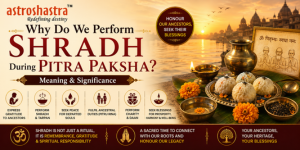
During these days, Hindu families perform Shradh, Pitra Tarpan, Pind Daan, prayers and charity in remembrance of departed parents, grandparents and forefathers.
But an important question arises:
Why do we perform Shradh specifically during Pitra Paksha?
According to Hindu tradition, Pitra Paksha is considered an especially significant period for performing ancestral rites and expressing gratitude towards the departed members of one's lineage. Astroshastra's dedicated Pitra Paksha – Significance, Rituals & Observances explains that Shradh and Tarpan are central practices of this period and are traditionally performed to honour ancestors and seek their blessings.
Shradh is therefore not merely a ritual. It represents remembrance, gratitude, duty and spiritual connection with one's ancestors.
What Does Shradh Mean?
The word Shraddha is connected with faith, devotion and reverence.
Shradh is a traditional ceremony performed in memory of a deceased ancestor. Through prayers and offerings, family members express their respect and gratitude towards those who came before them.
Traditional Shradh may involve:
- Pind offerings
- Water offerings
- Sesame seeds
- Food
- Fruits
- Flowers
- Prayers
- Charity
Astroshastra describes Shradh as the central ritual of Pitra Paksha and explains that traditional offerings can include Pinda, water, sesame seeds and food.
The exact method may differ according to regional customs, family traditions and the particular Shradh being performed.
Why is Shradh Performed During Pitra Paksha?
There are several traditional reasons for performing Shradh during Pitra Paksha.
1. To Remember Our Ancestors
The first and most important purpose of Shradh is remembrance.
Our parents, grandparents and earlier generations form an important part of our family lineage. Pitra Paksha gives families a dedicated period to remember them and acknowledge their contribution to the family.
It is a time to pause from everyday life and express gratitude towards those who came before us.
2. To Express Gratitude
Shradh is an expression of thankfulness towards one's ancestors.
Whatever we inherit from previous generations — family traditions, values, knowledge, property, culture and even our very existence — creates a connection between generations.
Performing Shradh symbolically acknowledges this connection.
This is one reason Astroshastra describes Pitra Paksha as a period for honouring forefathers and seeking their blessings.
3. To Pray for the Peace of Departed Souls
Traditional Hindu belief places importance on performing appropriate rites for departed family members.
Shradh and Tarpan are traditionally performed with prayers for the peace and spiritual well-being of ancestors.
The intention is to remember the departed with respect rather than fear.
This makes Pitra Paksha a period of prayer, remembrance and spiritual reflection.
4. To Fulfil Ancestral Duties
In Hindu philosophy, individuals have certain responsibilities towards their family and ancestors.
These responsibilities are traditionally understood through the concept of Pitru Rina, or the debt owed to one's ancestors.
Shradh is one of the traditional ways through which descendants acknowledge this responsibility.
The ritual therefore represents more than an offering. It represents the fulfilment of a traditional family and spiritual duty.
5. To Seek Ancestral Blessings
Traditional Hindu belief considers ancestral blessings important for the well-being and continuity of the family.
During Pitra Paksha, families perform Shradh and Tarpan while praying for:
- Peace
- Family harmony
- Prosperity
- Health
- Success
- Protection
- Spiritual well-being
Astroshastra similarly associates Pitra Paksha with ancestral blessings, spiritual merit and family harmony.
6. To Perform Pitra Tarpan
Tarpan is another important part of ancestral worship.
It traditionally involves offering water to the ancestors along with prescribed materials such as sesame seeds.
Tarpan is performed with prayers and remembrance of departed family members.
Astroshastra's Pitra Paksha resource identifies Tarpan as one of the principal rituals performed during this period.
7. To Perform Pind Daan
Pind Daan is another traditional ancestral ritual.
Pind offerings are generally prepared using rice and other prescribed ingredients and offered as part of Shradh ceremonies.
The ritual symbolically represents an offering to the departed ancestors and is traditionally performed for their peace and spiritual welfare.
The exact Pind Daan procedure can vary according to family tradition, location and the specific ritual being performed.
8. To Perform Charity in Memory of Ancestors
Charity is an important part of many Pitra Paksha traditions.
Families may donate:
- Food
- Grains
- Clothes
- Money
- Essential items
- Other useful materials
Astroshastra's Donation for Pitra Dosha explains Daan as a traditional practice associated with gratitude, compassion, selfless service and ancestral remembrance.
The spiritual value of charity lies particularly in the sincerity behind the act rather than the monetary value of the donation.
9. To Feed the Needy
Annadaan, or food donation, is traditionally considered an important form of charity.
Feeding people in need during Pitra Paksha can be performed as an act of compassion and remembrance.
Astroshastra also provides a Food Daan Service for people who wish to support food distribution to those in need.
Charity can therefore become a meaningful way to commemorate one's ancestors through service to others.
10. To Remember Family Lineage
Modern life can sometimes distance people from their family history.
Pitra Paksha provides an opportunity to remember:
- Parents
- Grandparents
- Great-grandparents
- Family elders
- Earlier generations
The ritual creates a connection between past, present and future generations.
In this sense, Shradh is also a reminder that every generation has a responsibility to preserve values and pass them forward.
Shradh and Pitra Dosha – Are They Connected?
Shradh and Pitra Dosha are related in traditional Vedic astrology, but they are not the same thing.
Pitra Paksha is a period for ancestral remembrance and rituals.
Pitra Dosha is an astrological concept associated with particular planetary combinations in a birth chart.
Astroshastra's Pitra Dosha in Horoscope discusses traditional astrological factors associated with Pitra Dosha, including the Sun, ninth house, ninth lord, Rahu, Ketu and Saturn.
Therefore, a person should not assume that simply having problems in life means that Pitra Dosha is present.
A proper horoscope analysis is required.
Does Shradh Remove Pitra Dosha?
According to traditional Vedic astrology, performing Shradh and Tarpan during Pitra Paksha is considered one of the important remedies associated with Pitra Dosha.
Astroshastra's Pitra Dosha Remedies specifically lists Shradh-related ancestral practices, charity, food donation and Pitra Dosha remedies among the traditional approaches used to address ancestral influences.
A recent Astroshastra article on Pitra Dosha Symptoms & Remedies similarly recommends Shradh and Tarpan during Pitru Paksha as traditional remedies and describes Pitra Dosha as an ancestral karmic influence rather than simply a curse.
However, it is better to view Shradh as a spiritual and ancestral duty, rather than performing it solely out of fear of Pitra Dosha.
Who Should Perform Shradh?
Traditions regarding who should perform Shradh differ between families and communities.
Traditionally, the eldest son or another appropriate family member may perform the ceremony.
In modern practice, families may follow their own customs regarding who performs the ritual.
Because Shradh Vidhi can vary considerably, families should follow their family tradition and the guidance of a knowledgeable priest.
What is Offered During Shradh?
Traditional Shradh offerings can include:
Pind
Rice-based offerings prepared according to the prescribed ritual.
Water
Water is offered during Tarpan.
Black Sesame Seeds
Til is traditionally associated with ancestral offerings.
Food
Food is prepared and offered according to the ritual tradition.
Fruits and Flowers
Fresh fruits and flowers may be used as offerings.
Charity
Food, clothing, grains or other useful items may be donated to people in need.
The exact ingredients and procedure can differ between traditions.
Simple Shradh Vidhi
A simplified traditional structure of Shradh may include:
Step 1 – Cleanliness
Clean the place where the ritual will be performed.
Step 2 – Sankalp
Take a Sankalp remembering the departed ancestor.
Step 3 – Ancestral Invocation
Remember and invoke the ancestors according to the prescribed ritual.
Step 4 – Pind Daan
Offer the prescribed Pind.
Step 5 – Tarpan
Offer water and sesame seeds according to the traditional procedure.
Step 6 – Food Offering
Prepare and offer food as prescribed.
Step 7 – Charity
Donate food or other useful items.
Step 8 – Prayer
Pray for the peace of the ancestors and the well-being of the family.
A formal Shradh ceremony should preferably be performed according to the family's tradition and with guidance from a qualified priest.
Why is Pitra Paksha Considered Spiritually Powerful?
Astroshastra describes Pitra Paksha as a significant period for ancestral worship and states that Shradh performed during this period is traditionally regarded as spiritually auspicious and associated with positive karma.
The spiritual importance comes from the combination of:
Faith + remembrance + ritual + charity + gratitude
The period encourages people to turn their attention towards family lineage and spiritual responsibility.
Shradh is About Gratitude, Not Fear
One of the most important aspects of Shradh is the attitude with which it is performed.
Shradh should not be approached simply with fear that something bad will happen if a ritual is missed.
Instead, it can be approached as an opportunity to:
- Remember ancestors
- Express gratitude
- Perform charity
- Serve others
- Respect parents and elders
- Continue family traditions
- Pray for peace and well-being
Astroshastra's recent Pitra Dosha article similarly advises viewing ancestral influences as an opportunity to honour one's forefathers and perform positive actions rather than simply treating Pitra Dosha as a curse.
Pitra Paksha and Respect for Parents
One of the simplest ways of honouring ancestors is to respect and care for living parents and elders.
Astroshastra's Pitra Dosha remedies article includes respect for parents and elders among traditional approaches for strengthening ancestral blessings.
Thus, ancestral remembrance should not be limited to a few ritual days each year.
Respect, compassion and service towards parents and elders can become a part of everyday life.
Should You Perform Shradh Every Year?
Traditional Hindu practice generally recommends performing annual Shradh for departed ancestors according to their death Tithi.
Pitra Paksha provides a particularly significant period for these ancestral observances.
Families should maintain a record of the relevant Tithis and follow their established family tradition.
When the death Tithi is unknown, many traditions give special importance to Sarva Pitru Amavasya for ancestral remembrance.
Pitra Paksha and Spiritual Responsibility
Shradh reminds us that our relationship with our family lineage does not end with physical separation.
The ceremony creates a symbolic bridge between generations.
It teaches:
Remember where you came from.
Be grateful for what you received.
Serve others.
Live responsibly.
Pass good values to the next generation.
This is the deeper spiritual message behind ancestral worship.
Why do we perform Shradh during Pitra Paksha?
Because according to Hindu tradition, it is a sacred period specifically associated with remembering ancestors, expressing gratitude, performing ancestral duties, offering Tarpan and Pind Daan, giving charity and seeking peace and blessings for the family.
Shradh is therefore much more than a ritual.
It represents our connection with our ancestors and reminds us that every generation is part of a larger family lineage.
If you are concerned about Pitra Dosha, however, it is important to distinguish between traditional ancestral worship and astrological diagnosis.
Pitra Dosha should be determined from the horoscope rather than assumed from general difficulties in life. Astroshastra provides a detailed Pitra Dosha in Horoscope resource and also provides information about Pitra Dosha Remedies.
Want to Know Whether Pitra Dosha is Present in Your Kundli?
Don't assume that every obstacle in life is caused by Pitra Dosha.
A detailed horoscope analysis can help determine whether the relevant planetary combinations are actually present and which traditional remedies may be appropriate.
Get Your Horoscope Analysed by an Astro Expert at Astroshastra.
Get Your Horoscope Analysed by Astroshastra
You can also explore:
Pitradosh Nivaran Navgrah Yantra
Frequently Asked Questions – Why Do We Perform Shradh During Pitra Paksha?
1. Why is Shradh performed during Pitra Paksha?
Shradh is performed during Pitra Paksha because this period is traditionally considered especially significant for honouring ancestors, performing Tarpan and making ancestral offerings.
2. What is the main purpose of Shradh?
The main purpose is to remember departed ancestors, express gratitude, perform traditional ancestral duties and pray for their peace and blessings.
3. Is Shradh performed only for Pitra Dosha?
No. Shradh is a traditional ancestral duty and is not performed only by people who have Pitra Dosha in their horoscope.
4. What is offered during Shradh?
Traditional offerings can include Pind, water, black sesame seeds, food, fruits and flowers. Charity is also an important part of many Shradh traditions.
5. What is the difference between Shradh and Tarpan?
Shradh is the broader ancestral ceremony involving prayers and offerings. Tarpan specifically refers to the traditional offering of water to the ancestors.
6. What is Pind Daan?
Pind Daan is a traditional ancestral offering in which Pind, generally prepared using rice and other prescribed ingredients, is offered as part of ancestral rites.
7. Can Shradh be performed at home?
Simple ancestral prayers and offerings may be performed at home according to family tradition. Formal Shradh ceremonies should preferably be performed according to the guidance of a knowledgeable priest.
8. Who should perform Shradh?
Traditions vary. Traditionally, the eldest son or another appropriate family member may perform Shradh. Families should follow their own customs and priestly guidance.
9. Does performing Shradh remove Pitra Dosha?
Traditional Vedic astrology considers Shradh and Tarpan important remedies for Pitra Dosha. However, Pitra Dosha should first be properly assessed through horoscope analysis. Astroshastra discusses Shradh and Tarpan among its traditional Pitra Dosha remedies.
10. What if the ancestor's death Tithi is unknown?
In many traditional practices, Sarva Pitru Amavasya is considered particularly significant for remembering ancestors when their exact death Tithi is unknown.
11. Is Pitra Paksha only about rituals?
No. It is also a period of remembrance, gratitude, charity, family responsibility and spiritual reflection.
12. Is Pitra Dosha a curse?
Astroshastra's recent discussion recommends understanding Pitra Dosha as an ancestral karmic influence rather than simply viewing it as a curse. Traditional remedies include Shradh, Tarpan, charity, righteous conduct and respect for parents and elders.