
Pitra Paksha Shradh Vidhi at Home – Complete Guide & Rituals
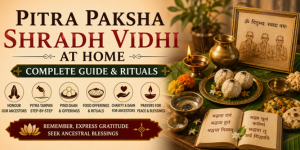
During this time, Hindu families perform Shradh, Pitra Tarpan, Pind Daan, prayers and charity for their ancestors.
While elaborate Shradh ceremonies may be performed with the assistance of a qualified priest, many families also wish to know how they can perform a simple Pitra Paksha Shradh Vidhi at home according to their family traditions.
The most important aspect of Shradh is faith, remembrance, respect and gratitude towards one's ancestors.
Astroshastra's Pitra Paksha – Significance, Rituals & Observances discusses the traditional importance of Shradh, Tarpan, ancestral offerings and charity during Pitra Paksha.
Important: Shradh procedures can vary according to family tradition, region, Sampradaya and the specific Tithi of the ancestor. A simple home observance should not be considered a substitute for a formal Shraddha ceremony when one is required.
What is Shradh During Pitra Paksha?
Shradh is a traditional Hindu ancestral ritual performed in remembrance of departed family members.
The ritual is traditionally performed with offerings, prayers and acts of charity.
The word Shraddha is associated with faith and reverence. Therefore, the spirit behind Shradh is not simply the physical offering but the devotion and gratitude with which it is performed.
During Pitra Paksha, families traditionally remember:
- Parents
- Grandparents
- Great-grandparents
- Other departed family members
- Ancestors of the family lineage
Astroshastra's Pitra Paksha article explains the traditional importance of Shradh and Tarpan during this period.
Can Shradh Be Performed at Home?
Yes, a simple ancestral prayer and offering can be performed at home according to one's family tradition.
However, formal Shradh ceremonies can involve detailed procedures, mantras, Pind Daan and specific ritual requirements. For such ceremonies, it is advisable to consult a knowledgeable priest.
If you are performing Shradh at home, the emphasis should be on:
Cleanliness + Sankalp + Ancestral remembrance + Tarpan + Offerings + Charity + Prayer
When Should Shradh Be Performed During Pitra Paksha?
Traditionally, Shradh is performed according to the Pitra Tithi corresponding to the date on which the ancestor passed away.
For example, if an ancestor's death occurred on Krishna Panchami, the Shradh may traditionally be performed on Panchami during Pitra Paksha.
If the exact death Tithi is unknown, Sarva Pitru Amavasya is traditionally considered an important day for ancestral remembrance.
For 2026, Sarva Pitru Amavasya falls on October 10, 2026.
Because Tithi timings vary according to location, the exact Muhurat should be checked for your city.
Materials Required for Simple Shradh at Home
Depending on your family tradition, the following items may be used:
- Clean cloth
- Copper or brass vessel
- Clean water
- Black sesame seeds
- Kusha/Darbha grass, where traditionally used
- Rice
- Barley, where prescribed
- Flowers
- Fruits
- Sandalwood
- Incense
- Diya
- Ghee
- Cooked food
- Pind ingredients
- Cow's milk, where prescribed
- Tulsi leaves, according to tradition
- Dakshina or items for charity
You do not need to make the ritual unnecessarily complicated. Follow your family's established practice wherever possible.
Step-by-Step Pitra Paksha Shradh Vidhi at Home
Step 1: Clean Yourself and the Puja Area
Take a bath and wear clean clothes before beginning the ritual.
Clean the area where you will perform the ancestral prayer.
The space should be peaceful and free from unnecessary distractions.
Step 2: Prepare the Shradh Area
Place a clean cloth or suitable traditional seat in the designated area.
Keep the required vessels and offerings ready.
If your family tradition prescribes a particular direction or seating arrangement, follow that tradition.
Do not improvise complicated ritual procedures if you are unfamiliar with them.
Step 3: Remember the Ancestor
Before beginning the offerings, mentally remember the ancestor for whom the Shradh is being performed.
Recall their name, relationship and lineage if known.
The intention can be expressed simply:
"I perform these prayers and offerings with devotion and gratitude in remembrance of my departed ancestor."
This is the Sankalp or intention behind the observance.
For a formal Sankalp, use the wording prescribed by your priest or family tradition.
Step 4: Light a Diya
Light a diya using ghee or oil according to your tradition.
You may also light incense.
The purpose is to create a clean and peaceful devotional atmosphere.
Step 5: Offer Water – Pitra Tarpan
Pitra Tarpan is one of the most important practices associated with ancestral worship.
Traditionally, water is offered while remembering the ancestors.
Black sesame seeds are commonly associated with Pitra Tarpan.
Astroshastra identifies Tarpan as one of the important traditional practices performed during Pitra Paksha.
If you are unfamiliar with the exact hand position, mantra or procedure, it is better to follow the instructions of your family priest rather than invent a procedure.
Step 6: Offer Pind
Pind Daan is traditionally performed using Pind prepared from prescribed ingredients, commonly including rice.
The exact ingredients and procedure differ according to the tradition being followed.
If your family normally performs Pind Daan, follow the established method.
For a formal Pind Daan ceremony, priestly guidance is recommended.
Step 7: Offer Food
Prepare fresh vegetarian food according to your family tradition.
Traditional Shradh offerings can include foods such as:
- Rice
- Dal
- Vegetables
- Roti
- Kheer
- Fruits
- Other traditional preparations
The specific food varies from region to region.
The food should be prepared with cleanliness and devotion.
Step 8: Offer Food to Those in Need
Food donation is an important form of charity associated with Pitra Paksha.
If possible, offer food to people who genuinely need it.
Astroshastra also provides a Food Daan Service for devotees who wish to support food distribution to people in need.
This can be a meaningful way to combine ancestral remembrance with Seva and charity.
Step 9: Perform Daan
Charity can be performed in memory of one's ancestors.
Traditional forms of Daan can include:
- Food
- Grains
- Clothes
- Money
- Essential items
- Support for the needy
Astroshastra's Donation for Pitra Dosha discusses Daan as a traditional practice associated with ancestral remembrance, compassion and selfless service.
The amount donated is less important than the sincerity behind the act.
Step 10: Pray for Your Ancestors
After completing the offerings, sit quietly and pray for the peace of your departed ancestors.
You may pray in your own words.
For example:
"May our ancestors attain peace. May their blessings remain with our family. May we continue the good values and traditions passed down by them."
A sincere prayer can be a meaningful conclusion to the ritual.
Simple Pitra Tarpan at Home
If your family tradition permits a simple Tarpan practice, you can prepare clean water and traditionally prescribed offerings such as black sesame seeds.
Remember your ancestors and make the offering with devotion.
However, the exact Tarpan procedure should be learned from a knowledgeable priest, particularly if you are performing a formal Shradh ceremony.
Different traditions prescribe different mantras, directions and methods.
What Food is Offered During Shradh?
Food traditions vary throughout India.
A simple traditional Shradh meal may include:
- Rice
- Dal
- Seasonal vegetables
- Roti
- Kheer
- Fruits
- Other sattvic preparations
Some families have specific dishes that have been traditionally prepared in their household for ancestral ceremonies.
Following your family's tradition is generally preferable to adopting a completely different procedure from an online article.
Should Food Be Offered to Cows, Dogs and Crows?
Some Hindu traditions associate ancestral observances with feeding animals, particularly cows, dogs and crows.
The practice and its significance vary among regional and family traditions.
If your family tradition includes these practices, they can be incorporated respectfully.
The emphasis should be on compassion and service rather than fear or superstition.
Should Brahmins Be Fed During Shradh?
In many traditional Shradh practices, feeding Brahmins and offering Dakshina is an established custom.
However, practices differ among communities.
If this is part of your family's Shradh tradition, it can be performed according to the guidance of your family priest.
Alternatively, charity and food can also be offered to people genuinely in need.
What Mantra Should Be Chanted During Shradh?
Shradh ceremonies can involve specific Vedic mantras and ancestral invocations.
The correct mantras can vary according to the ritual and family tradition.
For this reason, a formal Shradh ceremony should use the mantras prescribed by a qualified priest.
If you are simply praying at home, you can respectfully remember your ancestors and pray for their peace rather than chanting a mantra whose pronunciation or application you are unsure about.
Pitra Paksha Shradh and Pitra Dosha
Shradh is also relevant to people who have been advised to perform traditional remedies for Pitra Dosha.
Pitra Dosha is an astrological concept that is assessed through the birth chart.
Astroshastra's Pitra Dosha in Horoscope discusses traditional astrological factors associated with Pitra Dosha.
Astroshastra also provides a dedicated Pitra Dosha Remedies resource discussing traditional remedies including Shradh, Tarpan, charity and other spiritual practices.
However, Pitra Paksha Shradh should not be performed only because someone has told you that every problem in your life is caused by Pitra Dosha.
A proper horoscope analysis should be performed before concluding that Pitra Dosha is present.
Pitra Dosha Nivaran Yantra
For those who have specifically been advised to use a Yantra as part of their traditional remedy, Astroshastra offers the Pitradosh Nivaran Navgrah Yantra.
The Yantra is traditionally associated with Pitra Dosha remedies and ancestral worship.
It can be considered a complementary spiritual practice alongside appropriate Shradh, Tarpan, charity and prayer.
What Should You Avoid During Shradh?
Specific restrictions vary according to family and regional traditions.
Generally, devotees may choose to maintain a simple and disciplined lifestyle.
During Shradh observance, avoid:
- Performing the ritual casually
- Disrespecting the ceremony
- Wasting food
- Unnecessary extravagance
- Disrespecting parents and elders
- Treating the ritual purely as a superstition
Most importantly, do not perform ancestral rituals from a place of fear.
The deeper purpose is remembrance, gratitude and spiritual responsibility.
Can Women Perform Shradh?
There are different traditions regarding who can perform specific Shradh rituals.
Some traditions traditionally assign particular rituals to male family members, while other families permit women to perform ancestral prayers and offerings.
Therefore, there is no need to apply one family's custom universally.
Follow your family tradition, Sampradaya and priestly guidance for formal rituals.
Can Shradh Be Performed Without a Priest?
For a simple prayer and remembrance at home, many families may choose to pray for their ancestors, offer water and perform charity.
However, formal Shradh ceremonies can involve detailed procedures and specific mantras.
If you intend to perform a complete traditional Shradh Vidhi, particularly Pind Daan or a prescribed Pitra Dosha ritual, it is advisable to consult a qualified priest.
What is the Most Important Part of Shradh?
The most important element is Shraddha – sincere faith and reverence.
A ritual performed with expensive materials but without respect defeats the deeper spiritual purpose.
Likewise, a simple act of remembrance, prayer and charity performed sincerely can carry deep personal meaning.
Shradh teaches us to remember our roots and acknowledge the generations that came before us.
Pitra Paksha Shradh at Home – Simple Checklist
Before beginning, keep this checklist ready:
? Take a bath and wear clean clothes
? Clean the ritual area
? Prepare water for Tarpan
? Keep black sesame seeds if prescribed
? Prepare Pind if required
? Prepare traditional food
? Remember the ancestor
? Perform Sankalp
? Perform Tarpan
? Offer Pind according to tradition
? Offer food
? Perform charity
? Pray for ancestral peace
? Seek blessings of elders and ancestors
Pitra Paksha Shradh – The Deeper Meaning
Shradh is not simply about performing a ritual on a particular day.
It is a reminder that our lives are connected to generations that came before us.
Our ancestors gave us life, family traditions, knowledge, values and cultural heritage.
Pitra Paksha gives us an opportunity each year to stop and acknowledge that connection.
Remembering our ancestors is also a way of remembering our roots.
Pitra Paksha Shradh can be performed at home in a simple and respectful manner, provided it is consistent with one's family tradition.
The basic spirit is:
Remember → Offer → Pray → Serve → Give Thanks
If a formal Shradh ceremony is required, it is better to take guidance from a knowledgeable priest rather than attempting complicated rituals without understanding their procedure.
And if you are performing Shradh because of a concern about Pitra Dosha, first have your Kundli properly analysed.
Astroshastra provides resources on Pitra Dosha in Horoscope, Pitra Dosha Remedies and Pitra Paksha rituals.
Need Guidance About Pitra Dosha or Shradh?
If you are unsure whether Pitra Dosha is present in your horoscope or which traditional remedy is appropriate for you, don't rely on generic remedies.
Get your Kundli analysed by an Astro Expert at Astroshastra.
Get Your Horoscope Analysed by Astroshastra
You can also explore:
Pitra Dosha Nivaran Navgrah Yantra
Frequently Asked Questions
1. Can Shradh be performed at home?
Yes, a simple ancestral prayer, Tarpan and charity may be performed at home according to one's family tradition. For a formal Shradh ceremony involving detailed rituals and Pind Daan, priestly guidance is recommended.
2. What is the best time to perform Shradh at home?
Traditionally, Shradh is performed during the appropriate Tithi for the departed ancestor. The exact ritual timing should be calculated for your location.
3. What should I offer during Shradh?
Traditional offerings may include water, black sesame seeds, Pind, rice, food, fruits and flowers. The exact offerings depend upon family tradition.
4. Can I perform Pitra Tarpan at home?
Yes, many families perform simple Tarpan at home. However, formal Tarpan procedures should be learned from a knowledgeable priest.
5. What if I don't know the death Tithi of my ancestor?
Sarva Pitru Amavasya is traditionally considered an important day for ancestral Shradh when the exact death Tithi is unknown.
6. Can women perform Shradh at home?
Traditions differ. Some families permit women to perform ancestral prayers and offerings, while others follow specific traditional rules regarding who performs formal Shradh. Follow your family tradition.
7. Does Shradh remove Pitra Dosha?
Traditional astrology considers Shradh and Tarpan among the remedies associated with Pitra Dosha. However, Pitra Dosha should first be confirmed through proper horoscope analysis.
8. Is Pind Daan compulsory for home Shradh?
Not necessarily. Formal Pind Daan has specific procedures, and whether and how it is performed depends on the particular Shradh tradition. For a formal ceremony, consult a qualified priest.
9. Can I donate food during Pitra Paksha?
Yes. Food donation or Annadaan is a traditional form of charity and can be performed in remembrance of ancestors.
10. What is the most important thing in Shradh?
The most important aspect is sincere Shraddha, remembrance and gratitude towards one's ancestors. The ritual should be performed respectfully rather than from fear.