
Sulemani Hakik Gemstone: Benefits, Astrology, Uses and Protection from Negative Energy
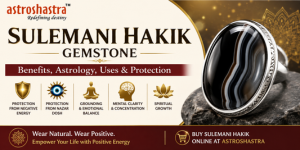
Sulemani Hakik is a popular semi-precious gemstone traditionally associated with protection, grounding, concentration and spiritual practices. Also known as Hakik or Agate, it is widely used as a ring, pendant, bracelet and other forms of jewellery.
In Indian spiritual traditions, Sulemani Hakik is particularly popular among people seeking protection from negative influences and Nazar Dosh. Astroshastra's Sulemani Hakik Gemstone page provides information about the stone, its traditional benefits and its astrological associations.
If you are looking for a natural Sulemani Hakik for personal or spiritual use, you can explore the Sulemani Hakik collection at Astroshastra.
If you are considering Sulemani Hakik specifically as an astrological remedy, it is better to analyse your complete horoscope before choosing a gemstone.
What is Sulemani Hakik?
Sulemani Hakik is a variety of Agate valued for its natural patterns, colours and distinctive appearance. Agate belongs to the chalcedony family and is widely used as a decorative and spiritual gemstone.
The natural patterns found in Hakik make each stone visually distinctive. It can be used in rings, pendants, bracelets and other forms of jewellery.
Sulemani Hakik is also traditionally used as a personal talisman by people interested in protection, grounding and spiritual practices.
Sulemani Hakik Gemstone Benefits
Sulemani Hakik is traditionally associated with several spiritual and metaphysical benefits. These associations come from traditional gemstone and spiritual practices and should not be considered scientifically established medical effects.
1. Protection from Negative Energy
Sulemani Hakik is traditionally regarded as a protective stone. It is believed to help shield a person from unwanted negative influences and encourage a sense of stability and peace.
This traditional protective association is one of the main reasons people choose Hakik as a personal gemstone.
2. Protection from Nazar Dosh
One of the most popular traditional uses of Sulemani Hakik is protection from Nazar Dosh or the evil eye.
Many people wear Hakik as a pendant, bracelet or ring as a symbolic protective talisman.
For people specifically looking for a traditional evil-eye protection product, Astroshastra also offers an Evil Eye Protection Pendant.
3. Mental Clarity and Concentration
Sulemani Hakik is traditionally associated with concentration, intellect and mental clarity.
This makes it popular among students, professionals and people interested in meditation and focused spiritual practices.
4. Grounding and Stability
Sulemani Hakik is traditionally associated with grounding and stability.
It is believed to help a person remain centred and balanced during periods of uncertainty or emotional pressure.
5. Spiritual Growth
Hakik is also used in meditation and spiritual practices.
Traditionally, it is believed to encourage inner exploration, awareness and spiritual development.
For people following a spiritual path, Sulemani Hakik can be used as a symbolic reminder of inner balance and self-awareness.
6. Emotional Balance
Sulemani Hakik is traditionally regarded as a grounding stone associated with emotional stability and tranquillity.
It is often selected by people who want a natural stone representing calmness, balance and protection.
Sulemani Hakik in Astrology
Sulemani Hakik has several traditional associations in astrology.
Astroshastra discusses Sulemani Hakik in connection with concentration, grounding, protection and traditional planetary remedies.
However, gemstone selection should not be based only on a person's zodiac sign.
In Vedic astrology, the suitability of a gemstone can depend on planetary ownership, house placement, dignity, aspects, conjunctions and the current Mahadasha and Antardasha.
If you are unsure which gemstone is suitable for your horoscope, you can explore the Astroshastra Favorable Gemstone Recommendation service.
A personalised gemstone recommendation can be particularly useful when you are deciding between a traditional remedial stone and a principal Vedic gemstone.
Sulemani Hakik for Rahu
Rahu is traditionally associated with sudden changes, confusion, unconventional experiences, obsession and illusion in Vedic astrology.
Sulemani Hakik is sometimes used in traditional remedial practices when protection, grounding and stability are desired.
However, Sulemani Hakik should not automatically be considered a replacement for Gomed or Hessonite when a traditional Rahu gemstone is being considered.
Astroshastra's Gomed Hessonite Gemstone page provides information about Gomed and its traditional association with Rahu.
Therefore, if your purpose is an astrological Rahu remedy, the choice between Gomed and Sulemani Hakik should ideally be made after analysing the complete birth chart.
Sulemani Hakik and Nazar Dosh
Nazar Dosh or the evil eye is a traditional spiritual concept.
Sulemani Hakik is popularly used as a protective stone against Nazar Dosh and unwanted negative influences.
It may be worn as a pendant or bracelet, depending on personal preference.
For a dedicated traditional protective product, you can also explore the Evil Eye Protection Pendant from Astroshastra.
Sulemani Hakik for Mental Peace and Concentration
Sulemani Hakik is traditionally associated with mental clarity, concentration and grounding.
Students, professionals and people involved in meditation may choose Hakik as a symbolic grounding stone.
Its traditional associations with intellect and concentration make it particularly interesting for people exploring gemstones connected with mental focus and analytical abilities.
However, Sulemani Hakik should not be presented as a medical treatment for anxiety, depression, insomnia or other health conditions.
How to Wear Sulemani Hakik?
Sulemani Hakik can traditionally be worn as a ring, bracelet or pendant.
If you are wearing Sulemani Hakik simply as a spiritual or protective stone, the choice of jewellery can be based on personal preference.
If you are wearing it as an astrological remedy, the appropriate finger, metal, weight and timing should ideally be determined after analysing your Kundli.
For personalised guidance, you can get your Horoscope Analysed by an Astro Expert.
How to Cleanse and Charge Sulemani Hakik?
Traditional crystal and spiritual practices recommend periodically cleansing and charging gemstones.
Sulemani Hakik may traditionally be cleansed with clean water and placed in sunlight or moonlight.
Some practitioners also use prayers, mantras or crystals as part of their personal spiritual routine.
These practices belong to traditional spiritual systems and should not be considered scientifically established methods of changing the physical properties of the gemstone.
Who Can Wear Sulemani Hakik?
Sulemani Hakik is commonly chosen by people interested in protection, grounding, meditation, spiritual practices and traditional remedies.
It may also appeal to people who simply appreciate the natural appearance of Agate and want to wear it as jewellery.
For astrological purposes, however, it is better not to select Sulemani Hakik solely according to your Sun sign or Moon sign.
A complete horoscope analysis can help determine whether Sulemani Hakik or another gemstone is more appropriate.
Sulemani Hakik vs Gomed
Sulemani Hakik and Gomed should not automatically be considered interchangeable.
Gomed, or Hessonite, is traditionally associated with Rahu in Vedic astrology.
Sulemani Hakik has broader traditional associations with protection, grounding and spiritual practices.
Therefore, if you are looking for a gemstone specifically for an astrological Rahu remedy, do not simply choose between Sulemani Hakik and Gomed without considering your horoscope.
You can learn more about Gomed through the Astroshastra Gomed Hessonite Gemstone page.
How to Choose Natural Sulemani Hakik?
When purchasing Sulemani Hakik, look for a natural stone with an attractive pattern, good finish and suitable size for your intended use.
If you are purchasing the gemstone for spiritual or astrological purposes, authenticity and quality are important considerations.
You can explore the complete Astroshastra Gemstore, which offers natural and certified gemstones across different categories.
If you specifically want a gemstone recommendation according to your birth chart, you can also Order a Favorable Gemstone Report.
Sulemani Hakik for Spiritual Protection
For people interested in spiritual protection, Sulemani Hakik is traditionally valued as a protective and grounding gemstone.
It is often selected by people who want a symbolic protective stone against negative influences, Nazar Dosh and unwanted energies.
However, these are traditional spiritual beliefs and should not be presented as scientifically proven effects.
Sulemani Hakik continues to be a popular gemstone because of its attractive natural appearance and its traditional associations with protection, grounding, concentration and spiritual growth.
It can be worn as jewellery, used during meditation or selected as a traditional protective stone.
However, if your primary purpose is Vedic astrology, gemstone selection should ideally be based on your complete horoscope rather than on a general recommendation.
Astroshastra provides Horoscope Consultation for people who want personalised guidance based on their birth chart.
Is Sulemani Hakik Right for Your Horoscope?
Not sure whether you should wear Sulemani Hakik, Gomed, Emerald or another gemstone?
Don't choose an astrological gemstone simply because it is popular or because it is recommended for your zodiac sign.
Your birth chart should be considered before selecting a gemstone as an astrological remedy.
Get Your Horoscope Analysed By Astro Expert
Astroshastra Horoscope Consultation
Order Your Favorable Gemstone Report
Astroshastra Gemstone Recommendation
Explore Natural Sulemani Hakik
Buy Sulemani Hakik from Astroshastra
FAQ – Sulemani Hakik Gemstone
1. What is Sulemani Hakik gemstone?
Sulemani Hakik is a variety of Agate traditionally used as a semi-precious gemstone and spiritual stone. It is popularly associated with protection, grounding, concentration and spiritual practices.
2. What are the main benefits of Sulemani Hakik?
Traditionally, Sulemani Hakik is associated with protection from negative influences, Nazar Dosh, grounding, mental clarity, concentration, emotional balance and spiritual growth.
3. Is Sulemani Hakik good for Nazar Dosh?
Sulemani Hakik is traditionally considered a protective stone for Nazar Dosh or the evil eye. Many people wear it as a pendant or other personal talisman for this purpose.
4. Can Sulemani Hakik be used for Rahu?
Sulemani Hakik is used in some traditional remedial practices associated with Rahu. However, it should not automatically replace Gomed, which is traditionally associated with Rahu. The appropriate gemstone depends on the individual's horoscope.
5. How should Sulemani Hakik be worn?
Sulemani Hakik may traditionally be worn as a ring, bracelet or pendant. If it is being used as an astrological remedy, the appropriate finger, metal, weight and timing should ideally be determined from the individual's Kundli.
6. Who can wear Sulemani Hakik?
People interested in traditional protection, grounding, meditation and spiritual practices commonly choose Sulemani Hakik. For astrological use, its suitability should be checked against the individual's horoscope.
7. Can Sulemani Hakik protect against negative energy?
Traditionally, Sulemani Hakik is regarded as a protective stone believed to help shield the wearer from unwanted negative influences. This is a traditional spiritual belief and is not a scientifically established effect.
8. Is Sulemani Hakik a Vedic planetary gemstone?
Sulemani Hakik is generally considered a semi-precious or remedial gemstone rather than one of the principal Navaratna gemstones. Its suitability as an astrological remedy should be assessed according to the individual's horoscope.
9. What is the difference between Sulemani Hakik and Gomed?
Gomed, or Hessonite, is traditionally associated with Rahu in Vedic astrology. Sulemani Hakik has broader traditional associations with protection, grounding and spiritual practices. They should not automatically be considered substitutes for one another.
10. Where can I buy natural Sulemani Hakik online?
You can explore and purchase Sulemani Hakik through the Astroshastra Sulemani Hakik. You can also browse the complete Astroshastra Gemstore for other natural and certified gemstones.
11. Should I wear Sulemani Hakik based only on my zodiac sign?
No. For an astrological remedy, it is better to consider the complete horoscope rather than selecting a gemstone solely from your zodiac sign.
12. How can I know whether Sulemani Hakik is suitable for me?
The best approach is to have your birth chart analysed and then select the gemstone according to your astrological requirements. You can Order a Favorable Gemstone Report from Astroshastra.


Comments