
Onam Festival – History, Significance, Rituals, Pookalam & Onam Sadya
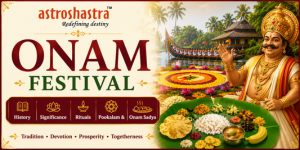
It is traditionally associated with King Mahabali, whose annual return to visit his people is celebrated with joy, devotion, feasting and cultural festivities.
Onam is also closely connected with the harvest season, prosperity, abundance and the cultural heritage of Kerala. The celebrations traditionally extend over several days and include beautiful floral decorations, traditional clothing, elaborate feasts, cultural performances, games and boat races.
Astroshastra also has a dedicated Onam Festival article covering its traditions, celebrations and significance.
What is Onam?
Onam is a major festival of Kerala celebrated during the Malayalam month of Chingam, generally falling around August–September.
The festival is associated with the legendary return of King Mahabali, a beloved ruler remembered for his generosity and prosperous kingdom.
According to tradition, Mahabali's reign was marked by happiness, prosperity and equality. His popularity eventually became a concern to the gods, leading to the appearance of Lord Vishnu in His Vamana Avatar.
The story of Mahabali and Vamana forms the spiritual foundation of the Onam celebration.
The Story of King Mahabali and Lord Vamana
According to Hindu tradition, King Mahabali was a powerful and generous ruler.
Although he belonged to the Asura lineage, he was known for his devotion, charity and commitment to his people.
Lord Vishnu appeared before Mahabali as Vamana, a young Brahmin, and requested three paces of land.
Mahabali agreed.
Vamana then assumed a cosmic form. With one step He covered the Earth, and with the second He covered the heavens. There was nowhere left for the third step.
Mahabali offered his own head for the final step.
Pleased with Mahabali's devotion and humility, Lord Vishnu granted him permission to return and visit his beloved people once every year.
Onam is traditionally celebrated as the joyous occasion of King Mahabali's annual return.
This story gives Onam a deeper spiritual message about humility, devotion, sacrifice and righteous conduct.
Spiritual Significance of Onam
Onam is more than a harvest festival. It carries several important spiritual and cultural values.
1. Prosperity and Abundance
The harvest connection makes Onam a celebration of abundance, gratitude and prosperity.
2. Humility
The story of Mahabali and Vamana reminds devotees that even great power should be accompanied by humility.
3. Devotion
Mahabali's willingness to surrender himself to Lord Vishnu is traditionally viewed as an example of devotion and surrender.
4. Unity
Onam brings families and communities together irrespective of social differences.
5. Gratitude
The festival provides an opportunity to express gratitude for nature, food, family, prosperity and the blessings of life.
Onam Celebrations and Traditions
Onam is traditionally celebrated through numerous cultural and religious activities.
Pookalam
One of the most beautiful Onam traditions is Pookalam, a decorative floral arrangement created at the entrance of homes.
Families traditionally create increasingly elaborate floral designs during the days leading up to Thiruvonam.
Pookalam represents beauty, celebration and the welcoming spirit associated with the return of King Mahabali.
Onam Sadya
Onam Sadya is the traditional vegetarian feast served during Onam.
The meal is traditionally served on a banana leaf and can include numerous dishes such as:
- Avial
- Sambar
- Olan
- Kalan
- Thoran
- Pachadi
- Pickles
- Rice
- Payasam
The exact dishes vary according to region and family tradition.
Onam Sadya represents hospitality, abundance and togetherness.
Vallam Kali – Snake Boat Race
Vallam Kali, or the traditional snake boat race, is one of Kerala's most famous cultural traditions associated with the Onam season.
Long traditional boats are rowed by teams in highly coordinated races accompanied by songs and celebrations.
The boat races reflect Kerala's rich maritime and cultural heritage and have become one of the most recognizable symbols of Onam.
Traditional Onam Clothing
Wearing new clothes is another important Onam tradition.
The practice is commonly known as Onakkodi.
Traditional Kerala attire, including Kasavu sarees and mundu, is commonly worn during the celebrations.
New clothing symbolises renewal, happiness and a fresh beginning.
Pulikali and Traditional Performances
Onam celebrations also feature colourful traditional performances.
One of the best known is Pulikali, or the Tiger Dance, in which performers paint their bodies and perform traditional dances.
Other cultural performances and activities associated with Onam include:
- Thiruvathira
- Kathakali
- Kummattikali
- Traditional songs
- Folk dances
- Community games
These traditions preserve Kerala's cultural heritage and bring communities together.
The Ten Days of Onam
Traditional Onam celebrations are associated with a sequence of days beginning with Atham and culminating in Thiruvonam, the principal day of celebration.
Different communities and regions may follow different customs and schedules.
The days leading to Thiruvonam are traditionally marked by:
- Pookalam
- Cultural activities
- Temple visits
- Traditional games
- Family gatherings
- Preparations for Onam Sadya
The main celebrations reach their peak on Thiruvonam.
For current festival dates and other Hindu observances, you can visit Astroshastra's Festivals of the Month and Vedic Calendar.
Onam Puja and Worship
Onam is primarily a cultural and harvest celebration, and worship practices can differ among families and communities.
Devotees may:
- Clean and decorate their homes
- Create Pookalam
- Visit temples
- Offer prayers
- Remember King Mahabali
- Worship Lord Vishnu
- Prepare traditional food
- Share food with family and community
The spiritual focus is on gratitude, generosity, harmony and devotion.
Lord Vishnu and Onam
Lord Vishnu has an important place in the traditional story of Onam because of His Vamana Avatar.
The Vamana story illustrates an important spiritual principle: divine power can appear in humble form, and true greatness is ultimately connected with dharma, humility and surrender.
Devotees interested in Vishnu-related traditions can also explore Astroshastra's Vishnu Puran Stories.
What Does King Mahabali Represent?
King Mahabali is remembered as a ruler who cared deeply for his people.
His story represents:
- Generosity
- Good governance
- Devotion
- Equality
- Sacrifice
- Humility
- Love for one's people
The annual celebration of his return therefore carries a powerful emotional meaning for Malayali communities.
Onam and the Harvest
Onam is also connected with Kerala's agricultural cycle.
The festival traditionally coincides with the harvest season and provides an opportunity to celebrate the abundance provided by nature.
Food, flowers and agricultural prosperity therefore play a central role in Onam celebrations.
The festival reminds people to express gratitude for the Earth, farmers, food and natural abundance.
How to Celebrate Onam at Home
A simple Onam celebration at home can include:
Clean the Home
Clean and decorate the house before the festival.
Create a Pookalam
Make a traditional floral design at the entrance.
Wear Traditional Clothes
Wear new or traditional Kerala attire.
Prepare Onam Sadya
Prepare a vegetarian festive meal and share it with family.
Offer Prayers
Offer prayers according to your family tradition.
Remember Mahabali
Reflect on the story and values associated with King Mahabali.
Practice Charity
Share food, clothes or other necessities with people who may need them.
The Spiritual Message of Onam
The story of Onam carries a profound message.
Mahabali had enormous power and prosperity, but his greatest quality was his willingness to surrender before the Divine.
The story reminds us that true greatness is not merely measured by wealth or power but by humility, generosity and devotion.
Onam also teaches the importance of welcoming others, sharing abundance and maintaining harmony within the community.
Onam, Astrology and Spirituality
Onam is primarily a cultural, religious and harvest festival rather than an astrological remedy.
However, people may use the festive period for:
- Prayer
- Charity
- Spiritual reflection
- Temple visits
- Mantra chanting
- Family blessings
- Beginning positive spiritual practices
If you are interested in understanding how planetary influences affect your personal life, you can get your horoscope analysed by an Astro Expert at Astroshastra.
Onam and Charity
Generosity is one of the strongest themes associated with King Mahabali.
During Onam, people may choose to practise Daan and Seva by sharing:
- Food
- Clothes
- Educational materials
- Essential items
- Money
- Other necessities
The spirit of charity should be based on compassion rather than expectation of reward.
You can also explore Astroshastra's Daan Services for traditional charitable and spiritual services.
Onam Festival – Important Symbols
| Symbol | Significance |
|---|---|
| King Mahabali | Generosity, good governance and devotion |
| Lord Vamana | Divine intervention, humility and dharma |
| Pookalam | Beauty and welcoming spirit |
| Onam Sadya | Abundance and togetherness |
| Vallam Kali | Kerala's cultural heritage |
| Onakkodi | Renewal and celebration |
| Harvest | Prosperity and gratitude |
Frequently Asked Questions About Onam
What is Onam?
Onam is a major festival of Kerala associated with King Mahabali, the harvest season, prosperity and Kerala's rich cultural traditions.
Why is Onam celebrated?
Onam is traditionally celebrated to welcome the annual return of King Mahabali to his people and to celebrate prosperity, harvest and community.
Who is King Mahabali?
King Mahabali is a legendary ruler remembered for his generosity, prosperity and love for his people.
What is the connection between Lord Vishnu and Onam?
According to tradition, Lord Vishnu appeared as Vamana and requested three paces of land from King Mahabali. The story forms the spiritual foundation of Onam.
What is Pookalam?
Pookalam is a traditional floral decoration created during the Onam celebrations.
What is Onam Sadya?
Onam Sadya is a traditional vegetarian feast served on a banana leaf during Onam.
What is Thiruvonam?
Thiruvonam is the principal and most important day of the traditional Onam celebrations.
What is Vallam Kali?
Vallam Kali is Kerala's traditional snake boat race and one of the most famous cultural events associated with Onam.
Is Onam a Hindu festival?
Onam has deep roots in Kerala's Hindu tradition and the story of King Mahabali and Vamana. Today, it is also widely celebrated as a cultural festival by people across Kerala and Malayali communities, making it an important expression of Kerala's shared heritage.
What is the spiritual message of Onam?
Onam teaches values of generosity, humility, devotion, unity, gratitude and compassion.
Onam is a celebration of prosperity, harvest, family, culture and devotion.
The story of King Mahabali and Lord Vamana gives the festival a deeper spiritual meaning, reminding us that generosity and humility are greater than material power.
From the colourful Pookalam and traditional Onam Sadya to the excitement of Vallam Kali, Onam beautifully brings together spirituality, culture and community.
For devotees, it is also an opportunity to pray, practise charity, express gratitude and welcome positive energy into the home.
Celebrate Onam with devotion, share your abundance with others and remember the timeless values of Mahabali — generosity, humility and love for all.
Comments