
Durga Puja at Home During Navratri – Vidhi, Samagri & Mantras
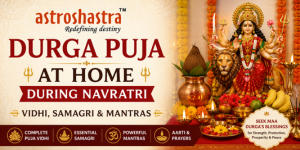
The nine-day festival is dedicated to the Divine Mother and is traditionally observed through prayer, fasting, mantra chanting, meditation, devotional singing and daily worship.
Performing Durga Puja at home during Navratri does not necessarily require elaborate arrangements. With devotion, cleanliness, a suitable place of worship and the essential puja samagri, a family can perform a simple and meaningful Navratri puja at home.
The most important aspect of the worship is shraddha, bhakti and sincerity. The external rituals provide a disciplined framework, while devotion gives the worship its spiritual meaning.
Why Is Durga Puja Performed During Navratri?
Navratri is traditionally associated with the worship of Shakti, the divine feminine power. Maa Durga represents strength, protection, courage, wisdom and the power to overcome negativity.
During these nine days, devotees may worship different forms of the Goddess, collectively known as the Navadurga:
- Maa Shailputri
- Maa Brahmacharini
- Maa Chandraghanta
- Maa Kushmanda
- Maa Skandamata
- Maa Katyayani
- Maa Kalaratri
- Maa Mahagauri
- Maa Siddhidatri
Devotees may perform daily puja according to their family tradition or worship Maa Durga as a whole throughout Navratri.
Durga Puja Samagri for Navratri
Before beginning the puja, keep the required items ready. The exact list may vary according to regional and family traditions.
Basic Navratri Puja Samagri
- Maa Durga idol or picture
- Clean red cloth
- Chowki
- Kalash
- Clean water
- Mango leaves
- Coconut
- Roli or kumkum
- Akshat or rice
- Turmeric
- Sandalwood
- Flowers
- Durva where traditionally used
- Garland
- Incense sticks
- Dhoop
- Diya
- Ghee or oil
- Cotton wicks
- Fruits
- Sweets or bhog
- Panchamrit
- Betel leaves and supari
- Moli or kalava
- Mata Chunri
- Shringar items, if desired
- Camphor
- Bell
For Kalash Sthapana, devotees may also keep grains or barley according to their family tradition.
How to Prepare Your Home for Durga Puja
Clean the home and especially the area where the puja will be performed.
Choose a peaceful and clean location for the puja altar. Place a chowki and cover it with a clean cloth, traditionally red or another auspicious colour according to the family tradition.
Place the image or idol of Maa Durga on the altar.
If you are performing Ghatasthapana or Kalash Sthapana, prepare the Kalash according to the traditional procedure followed in your family or region.
The puja area should remain clean throughout the nine days.
Step-by-Step Durga Puja Vidhi at Home
1. Begin With Sankalp
Sit comfortably before the puja altar and calm your mind.
Take some water in your hand and make a Sankalp, stating your intention to perform Navratri Durga Puja with devotion and sincerity.
You may pray in simple words if you do not know the traditional Sanskrit Sankalp.
For example:
“I worship Maa Durga with devotion and seek Her blessings for peace, strength, wisdom, protection and the well-being of my family.”
2. Light the Diya
Light a diya before Maa Durga.
The diya symbolizes divine light, purity and the removal of darkness.
You may also light incense or dhoop and offer it before the Goddess.
3. Invoke Lord Ganesha
Traditionally, puja begins with the remembrance of Lord Ganesha.
Chant:
Om Gam Ganapataye Namah
Chant the mantra with concentration and then proceed with the Durga Puja.
4. Invoke Maa Durga
Offer flowers before Maa Durga and respectfully invoke Her presence.
A simple and widely used mantra is:
Om Dum Durgayai Namah
You may chant this mantra 11, 21, 51 or 108 times according to your ability and tradition.
5. Offer Water and Other Puja Upacharas
Offer water, akshat, flowers, kumkum, sandalwood and other appropriate items to Maa Durga.
If you have a properly consecrated idol and follow a traditional puja paddhati, you may perform the prescribed upacharas according to that tradition.
For a simple home puja, sincere prayer and basic offerings are sufficient.
6. Offer Flowers to Maa Durga
Flowers are an important part of devotional worship.
Offer fresh flowers or a garland while remembering Maa Durga.
You may say:
“Om Dum Durgayai Namah.”
Offer the flowers respectfully at the feet of the Goddess or at the appropriate place on the altar.
7. Offer Bhog
Prepare a simple sattvic bhog according to your family's tradition.
Fruits, sweets, kheer, halwa and other vegetarian preparations may be offered.
During fasting, devotees can follow the food restrictions traditionally observed in their family or regional practice.
After offering the bhog, distribute it as Prasad.
8. Chant Durga Mantras
Mantra chanting is an important part of Navratri Sadhana.
Durga Beej Mantra
Om Dum Durgayai Namah
This simple mantra can be incorporated into daily worship.
Sarva Mangala Mangalye
This traditional prayer is offered in devotion to the Divine Mother.
Ya Devi Sarva Bhuteshu
This prayer honours the Divine Mother as the Shakti present in all beings.
9. Read Durga Saptashati or Durga Chalisa
Devotees who are comfortable with longer recitations may read Durga Saptashati, also known as Devi Mahatmya, during Navratri according to their tradition.
Others may recite:
- Durga Chalisa
- Durga Kavach
- Argala Stotra
- Keelaka Stotra
- Devi Suktam
- Lalita Sahasranama, according to their spiritual tradition
It is better to choose a practice that you can perform consistently rather than attempting an elaborate ritual without understanding or completing it properly.
10. Perform Durga Aarti
At the conclusion of the puja, perform Maa Durga's Aarti.
Rotate the lit diya respectfully before the Goddess while singing the traditional Aarti followed in your family or region.
Family members can participate in the Aarti together.
11. Pray for the Family
After Aarti, sit quietly for a few moments and offer your prayers.
You may pray for:
- Peace in the family
- Good health
- Strength and courage
- Wisdom
- Protection from negativity
- Spiritual growth
- Prosperity
- Harmony and happiness
The prayer should be sincere rather than merely ritualistic.
Daily Durga Puja Routine During the Nine Days
A simple daily routine can make Navratri spiritually meaningful.
Morning
- Bathe and wear clean clothes
- Clean the puja area
- Light the diya
- Offer flowers
- Chant the Durga mantra
- Perform daily prayer
- Read a selected Durga Stotra or scripture
Evening
- Light the diya
- Offer incense
- Chant Maa Durga's mantra
- Perform Aarti
- Offer bhog or fruit
- Spend a few minutes in meditation or prayer
Devotees observing a fast should follow the fasting rules appropriate to their health, family tradition and religious practice.
Navadurga Worship During Navratri
Many devotees worship one form of Maa Durga on each of the nine days.
| Day | Form of Maa Durga |
|---|---|
| Day 1 | Maa Shailputri |
| Day 2 | Maa Brahmacharini |
| Day 3 | Maa Chandraghanta |
| Day 4 | Maa Kushmanda |
| Day 5 | Maa Skandamata |
| Day 6 | Maa Katyayani |
| Day 7 | Maa Kalaratri |
| Day 8 | Maa Mahagauri |
| Day 9 | Maa Siddhidatri |
The exact rituals, colours, offerings and traditions associated with each day may differ according to regional and family practices.
What Should You Avoid During Navratri Puja?
Devotees traditionally try to maintain a disciplined and sattvic lifestyle during Navratri.
Depending on personal and family tradition, this may include avoiding:
- Intoxicants
- Non-vegetarian food
- Unnecessary arguments
- Excessive anger
- Negative thoughts and behaviour
- Impurity or lack of cleanliness around the puja area
The purpose of these disciplines is to create an atmosphere conducive to devotion, prayer and spiritual focus.
Can Durga Puja Be Performed Without Fasting?
Yes, devotees who cannot fast may still perform Durga Puja with devotion.
Fasting is a spiritual discipline, but it should not be undertaken at the expense of health. People with medical conditions, children, elderly people and those who need regular nutrition should follow appropriate dietary guidance.
One can participate in Navratri through prayer, mantra chanting, meditation, reading devotional texts and Aarti even without observing a strict fast.
How Long Should Durga Puja at Home Take?
There is no single mandatory duration for a simple home Durga Puja.
A short daily puja may include:
Sankalp → Ganesha prayer → Maa Durga mantra → Flowers → Bhog → Aarti → Prayer
Those following a detailed traditional procedure may spend considerably more time on the worship.
Consistency and devotion are more important than performing an unnecessarily complicated ritual.
Navratri Durga Puja: The Spiritual Significance
Navratri provides an opportunity to turn attention inward.
The worship of Maa Durga is traditionally associated with Shakti, the divine power that removes negativity and gives strength to face difficulties.
The nine days can therefore be used not only for external rituals but also for:
- Self-discipline
- Meditation
- Mantra Japa
- Charity
- Self-reflection
- Devotional reading
- Positive habits
- Service to others
In this way, Navratri becomes a period of both devotion and inner transformation.
Performing Durga Puja at home during Navratri can be simple, devotional and meaningful. Begin by keeping the puja space clean, prepare the essential samagri, invoke Maa Durga with a sincere Sankalp, offer flowers and bhog, chant appropriate mantras, read devotional texts and conclude with Aarti.
Whether your family follows an elaborate Navratri tradition or a simple daily prayer routine, the essence remains the same — faith, devotion, discipline and remembrance of the Divine Mother.
May Maa Durga bless your home with strength, peace, prosperity and spiritual wisdom.
Comments