
Tuesday Astrological Remedies – Mangal, Mars & Powerful Tuesday Remedies
Discover powerful Tuesday remedies for Mars and Mangal including Hanuman Puja, Mangal Mantra, Red Coral, Three Mukhi Rud...
Read More
Discover Lord Hanuman, the supreme devotee of Lord Rama and a timeless symbol of courage, devotion, humility, wisdom, discipline and limitless strength. Explore Hanuman Mantras, Hanuman Chalisa, Hanuman Aarti, Hanuman Yantra, Bajrang Yantra, traditional Puja, Abhishek and astrological remedies connected with Mars and Saturn.
Explore the Astroshastra Hanuman Knowledge Hub — including Hanuman Yantra, Bajrang Yantra, Hanuman Chalisa, Hanuman Aarti, Mantras, worship practices, Tuesday and Saturday remedies and traditional astrological applications.
Lord Hanuman, also known as Bajrang Bali, Anjaneya, Maruti, Pavan Putra and Mahaveer, is one of the most revered deities in Hinduism. He is celebrated as the supreme devotee of Lord Rama and represents devotion, courage, humility, wisdom, discipline and extraordinary strength. Astroshastra's Hanuman Yantra resource uses these qualities as the foundation of Hanuman worship.
Hanuman Ji is traditionally worshipped for protection from fear, negativity and obstacles. His devotion to Lord Rama represents selfless service and unwavering faith.
The greatest lesson associated with Lord Hanuman is that strength becomes truly meaningful when it is guided by humility, devotion, discipline and service.
A popular devotional name highlighting Hanuman's extraordinary strength.
A name associated with his mother Anjana.
A name associated with Hanuman's connection with Vayu, the wind deity.
Another traditional name of Lord Hanuman.
A name emphasizing his courage and heroic strength.
A devotional title expressing Hanuman's role as one who helps devotees face difficulties and fear.
Hanuman's devotion to Lord Rama is central to his spiritual identity. His actions in the Ramayana are traditionally remembered as examples of selfless service, loyalty, courage and complete dedication.
Hanuman did not seek personal glory. His strength was always placed in service of Lord Rama and the protection of Dharma.
Hanuman represents immense physical and spiritual strength. His traditional stories remind devotees that inner strength can overcome fear and adversity.
Hanuman's unwavering devotion to Lord Rama is one of the most important aspects of his worship.
Hanuman is traditionally invoked for courage and fearlessness when facing difficult situations.
Although famous for his strength, Hanuman is equally associated with intelligence, wisdom and discrimination.
Despite his extraordinary abilities, Hanuman remained humble and devoted to service.
Hanuman's life represents dedication, self-control and purposeful action.
These two Hanuman mantras are currently listed on Astroshastra's Hanuman Yantra page. Devotees may recite them with faith and concentration according to their tradition.
The Hanuman Chalisa is a sacred forty-verse devotional hymn traditionally attributed to Goswami Tulsidas. It praises Lord Hanuman's strength, wisdom, courage and devotion to Lord Rama.
Astroshastra's Hanuman Chalisa resource provides the complete Chalisa in Hindi and discusses traditional recitation practices, including Tuesday and Saturday devotion.
Hanuman Aarti is a devotional hymn sung in praise of Lord Hanuman. Astroshastra's current Hanuman Aarti resource recommends practices such as lighting a diya, offering incense, red flowers and sindoor and concluding with prayer for strength, protection and guidance.
Hanuman Aarti is commonly performed after Hanuman Chalisa or during Hanuman Puja, particularly on Tuesdays and Saturdays.
The Hanuman Yantra is a sacred geometric representation dedicated to Lord Hanuman. Astroshastra describes it as a traditional spiritual focal point for courage, protection, confidence, success, devotion and inner strength.
The Yantra may traditionally be installed in a home, office, factory or place of worship as part of devotional practice.
The Bajrang Yantra is another sacred Yantra dedicated to Lord Hanuman. Astroshastra describes it as a traditional devotional focus for courage, protection, confidence, strength, fearlessness and positive spiritual energy.
It may be meaningful for students, professionals, entrepreneurs, business owners, travelers, families and devotees seeking greater courage and confidence.
Students may traditionally worship Lord Hanuman while seeking courage, concentration, determination and confidence.
Astroshastra's Bajrang Yantra resource specifically mentions students and situations such as examinations, competitive examinations and interviews as contexts where devotees may use the Yantra as a devotional focus.
Business owners and professionals may worship Hanuman while seeking courage, stability, confidence and strength when facing professional challenges.
The traditional qualities associated with Hanuman — discipline, dedication and perseverance — can serve as spiritual inspiration for entrepreneurs and professionals.
Lord Hanuman is traditionally revered as a powerful protector of devotees. Hanuman worship is therefore often associated with courage, fearlessness and protection from negative influences.
These are traditional spiritual beliefs and should not be understood as scientifically proven guarantees. Astroshastra similarly presents the spiritual benefits of Hanuman Yantra within a traditional devotional framework.
Traditional Hanuman worship may include a clean Puja space, a diya, incense, red flowers, sindoor and devotional chanting.
These materials are among those listed in Astroshastra's current Hanuman Yantra worship guidance.
Tuesday and Saturday are traditionally regarded as important days for Hanuman worship. Astroshastra's Hanuman Yantra page specifically identifies both days as auspicious for worship.
Hanuman worship has a strong traditional association with courage, strength, determination and disciplined action — qualities also associated with Mars in Vedic astrology.
Astroshastra's current Tuesday remedies article recommends Hanuman worship for traditional Mars-related concerns, including situations where Mars is considered malefic or Manglik Dosha is being considered.
A traditional Tuesday practice may include Hanuman Puja, Hanuman Chalisa, a sindoor offering and Prasad.
Astroshastra's Manglik Dosha resource includes daily Hanuman Chalisa, Hanuman Yantra and Hanuman Abhishek among its traditional spiritual remedies.
The exact remedy should be selected after examining the complete horoscope rather than treating every Mars placement in the same way.
Lord Hanuman is also traditionally worshipped during difficult Saturn periods. Astroshastra's Hanuman Yantra resource specifically mentions traditional worship during challenging Saturn influences such as Shani Sade Sati and Dhaiya.
The traditional reasoning is connected with Hanuman's qualities of courage, discipline, devotion and protection.
In Vedic devotional and astrological traditions, Hanuman worship may be incorporated into remedies associated with Mars and Saturn. The appropriate practice should be considered according to the individual horoscope and one's spiritual tradition.
Hanuman Abhishek is a traditional devotional practice in which sacred substances are offered to the deity while prayers and mantras are recited.
Astroshastra's Manglik Dosha material specifically mentions performing Hanuman Abhishek on Tuesdays as one traditional spiritual remedy.
Devotees may establish a clean and respectful place for Hanuman worship at home. A picture, Murti or Hanuman Yantra may be placed in the dedicated Puja space.
Astroshastra's Hanuman Yantra resource notes that devotees may also recite the Hanuman Chalisa, Bajrang Baan or Sundar Kand according to their tradition.
The choice of devotional text may depend on the devotee's family tradition, spiritual practice and guidance.
Hanuman's stories repeatedly emphasize courage in the face of seemingly impossible challenges.
For devotees, this symbolism can serve as a reminder to replace fear with faith, hesitation with disciplined action and pride with humility.
One of the most powerful teachings associated with Lord Hanuman is Seva — selfless service.
His devotion to Lord Rama demonstrates that spiritual strength is not merely personal power. It is strength used for a higher purpose.
True strength is accompanied by humility. True courage is guided by wisdom. True devotion expresses itself through service.
Anyone with faith in Lord Hanuman may follow a simple devotional practice. Hanuman worship is traditionally popular among students, professionals, business owners, athletes, travelers, families and spiritual seekers.
Astroshastra's Hanuman Yantra page specifically lists students, professionals, business owners, security personnel, athletes and spiritual seekers among people for whom Hanuman Yantra may be meaningful.
Simple prayer, Hanuman Chalisa and basic devotional worship can be incorporated into one's regular spiritual routine.
Specialized Tantric practices, specific initiations or advanced Sadhana should be undertaken only under the guidance of an appropriate Guru or qualified traditional practitioner.
Explore Hanuman Yantra, Bajrang Yantra, Hanuman Chalisa, Hanuman Aarti and other Astroshastra resources dedicated to courage, devotion, protection, strength and spiritual discipline.
Explore Hanuman YantraLord Hanuman, also known as Bajrang Bali, Anjaneya, Maruti and Pavan Putra, is revered as the supreme devotee of Lord Rama and as a symbol of strength, courage, devotion, wisdom and humility.
Lord Hanuman traditionally represents strength, courage, devotion, discipline, wisdom, humility, selfless service and fearlessness.
Two simple mantras currently listed by Astroshastra are Om Ham Hanumate Namah and Om Shri Hanumate Namah.
Hanuman Yantra is a sacred geometric representation dedicated to Lord Hanuman and is traditionally worshipped for courage, protection, confidence, success and spiritual strength.
Bajrang Yantra is a sacred Yantra associated with Lord Hanuman and traditionally worshipped for courage, strength, confidence, protection and fearlessness.
Tuesday and Saturday are traditionally regarded as important and auspicious days for Lord Hanuman worship.
Traditional offerings may include red flowers, sindoor, jasmine oil, betel leaves, cloves, coconut, Boondi Laddoo and a diya, depending on the worship tradition.
Devotees commonly recite Hanuman Chalisa as part of their regular devotional practice. Astroshastra's Hanuman Chalisa resource provides traditional guidance for its recitation.
Yes. In traditional Vedic astrology, Hanuman worship is commonly associated with courage and Mars-related remedies. Astroshastra currently recommends Hanuman worship as part of traditional Tuesday and Mars remedial practices.
Yes. Traditional devotional and astrological practices also associate Hanuman worship with seeking relief during difficult Saturn periods such as Sade Sati and Dhaiya.
Anyone with faith in Lord Hanuman may follow simple devotional worship. Advanced spiritual practices should be performed according to the appropriate tradition and guidance.
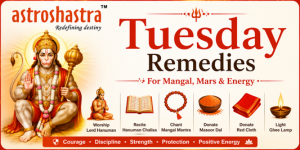
Discover powerful Tuesday remedies for Mars and Mangal including Hanuman Puja, Mangal Mantra, Red Coral, Three Mukhi Rud...
Read More
Explore planetary changes in October 2026, including Venus retrograde, Sun and Mercury transits, Jupiter's entry into Le...
Read More.png)
Discover the benefits of Lakshmi Ganesh Yantra, its spiritual significance, puja vidhi, placement rules, and how to wors...
Read More
Discover how numerology consultation can help you understand your personality, career, relationships, business prospects...
Read More
Discover how your birth Nakshatra influences luck, fortune, career, wealth, relationships and opportunities. Learn the r...
Read More
Discover the significance of Anant Chaturdashi, its Vrat and Puja Vidhi, Anant Sutra tradition, Lord Vishnu Mantra, ritu...
Read More