
Parsva Ekadashi: Significance, Vrat, Puja Vidhi, Mantra and Benefits
Learn about Parsva Ekadashi, its spiritual significance, Vrat Vidhi, Puja rituals, Lord Vishnu Mantra, Parana, Ekadashi ...
Read More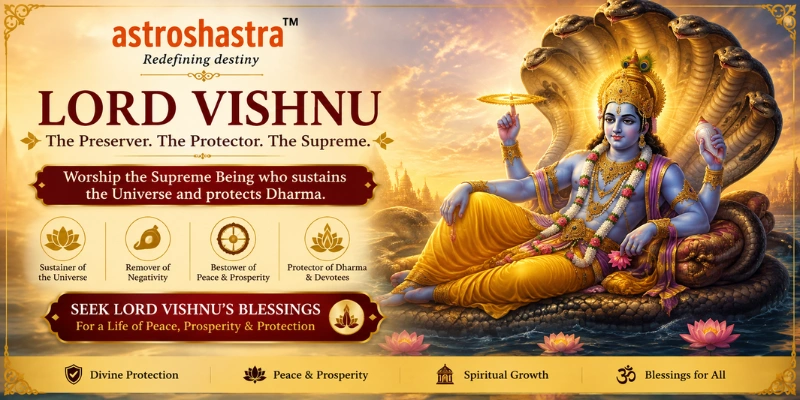
Discover everything about Lord Vishnu, Narayana, Hari and the divine traditions associated with Vishnu worship. Explore Vishnu's role as the preserver, his sacred forms, Dashavatara, Vishnu Sahasranama, Vishnu mantras, Shaligram Shila, Tulsi, Ekadashi, Vishnu Purana and traditional Vishnu worship.
Welcome to the Astroshastra Lord Vishnu Knowledge Hub. Explore Vishnu's divine forms, Dashavatara, sacred names, Vishnu Sahasranama, Shaligram, Vishnu Purana, mantras, worship traditions, Ekadashi and spiritual practices.
Lord Vishnu, also known as Narayana, Hari, Vasudeva, Janardana and Madhava, is one of the most revered deities in Hindu tradition. Vishnu is traditionally associated with preservation, protection, compassion, righteousness and the maintenance of cosmic order.
In Hindu traditions, Vishnu is one of the principal manifestations of the Divine and is particularly associated with preserving Dharma and restoring balance whenever righteousness declines.
Lord Vishnu is depicted in many sacred forms. His traditional iconography commonly shows him with four arms holding the Shankha, Chakra, Gada and Padma. He is often depicted resting upon Ananta Shesha and accompanied by Goddess Lakshmi.
Lord Vishnu represents preservation, protection and the continuity of cosmic order. His many incarnations are traditionally understood as divine manifestations that restore Dharma and protect devotees from destructive forces.
Lord Vishnu occupies an important place in Hindu philosophy, mythology and devotional traditions. He is revered as Narayana, the supreme protector and sustainer in many Vaishnava traditions.
Devotion to Vishnu is traditionally associated with Bhakti, Dharma, compassion, righteousness and surrender to the Divine. Vishnu worship may include mantra chanting, Vishnu Sahasranama, Puja, meditation, temple visits, Tulsi offerings and observance of sacred days such as Ekadashi.
Astroshastra's Vishnu Sahasranama resource describes Vishnu as the administrator of the universe and highlights the traditional practice of chanting his divine names.
Lord Vishnu is known by numerous names. Each name expresses a particular divine quality or aspect.
Narayana, Hari, Vishnu, Vasudeva, Janardana, Madhava, Govinda, Keshava, Damodara and Padmanabha are among the many names associated with Lord Vishnu.
Astroshastra provides a detailed resource containing the 1000 names of Lord Vishnu along with their traditional meanings.
Explore the 1000 Names of Lord Vishnu →
The Shankha is one of the most recognizable symbols associated with Lord Vishnu. It is traditionally connected with purity, divine sound and the proclamation of Dharma.
The Sudarshan Chakra is the divine discus traditionally held by Lord Vishnu. It represents divine power, protection, order and the destruction of forces that oppose Dharma.
The Gada or Kaumodaki is the divine mace of Lord Vishnu. It symbolizes strength, authority and the power of Dharma.
The lotus held by Vishnu represents purity, beauty, spiritual awakening and divine creation.
Lord Vishnu is traditionally depicted reclining upon Ananta Shesha, the cosmic serpent, in the Kshira Sagara, the cosmic ocean of milk.
This imagery is one of the most recognizable representations of Vishnu. It symbolizes divine preservation, cosmic order and the eternal nature of the Divine.
Goddess Lakshmi is traditionally regarded as the divine consort of Lord Vishnu. Their relationship is deeply associated with prosperity, abundance, preservation, harmony and divine grace.
Lakshmi and Vishnu are frequently worshipped together, especially during festivals and devotional ceremonies connected with prosperity and spiritual well-being.
The concept of Avatar is central to Vishnu traditions. Vishnu is traditionally believed to manifest in different forms to restore Dharma and maintain cosmic balance.
Matsya is the fish incarnation of Vishnu, traditionally associated with protecting life and sacred knowledge during the great flood.
Kurma, the tortoise incarnation, is associated with the churning of the ocean and supporting Mount Mandara.
Varaha, the boar incarnation, is traditionally associated with rescuing the Earth from the cosmic waters.
Narasimha, the half-man and half-lion incarnation, is celebrated for protecting devotee Prahlada and destroying Hiranyakashipu.
Vamana appears as a dwarf Brahmin and is traditionally associated with the story of King Bali and the restoration of cosmic order.
Parashurama is traditionally depicted as the warrior sage who appears to restore Dharma.
Lord Rama is one of Vishnu's most revered incarnations. His story is central to the Ramayana and represents Dharma, righteousness, duty and ideal conduct.
Lord Krishna is one of the most beloved manifestations of Vishnu. His teachings in the Bhagavad Gita emphasize Dharma, Karma Yoga, devotion and spiritual wisdom.
Buddha is included as an avatar in several traditional Dashavatara lists.
Kalki is traditionally described as the future avatar associated with the end of Kali Yuga and the restoration of righteousness.
Astroshastra's Vishnu resources discuss the Dashavatara tradition and stories of Vishnu's incarnations, including Matsya, Kurma, Varaha, Narasimha, Vamana and Parashurama.
Vishnu Sahasranama is the sacred collection of the 1000 divine names of Lord Vishnu. It is one of the most important devotional practices associated with Vishnu worship.
The names describe different qualities, attributes and manifestations of Lord Vishnu. Devotees traditionally recite or listen to the Sahasranama as part of prayer, meditation and spiritual practice.
Astroshastra provides an online Vishnu Sahasranama Path service for devotees who wish to have the traditional Paath performed on their behalf.
Book Vishnu Sahasranama Path Online →
Mantra chanting is an important part of Vishnu worship. One of the best-known Vishnu mantras is:
This is a widely revered mantra associated with Lord Vishnu and devotion to Vasudeva.
Devotees may also recite Vishnu Sahasranama or other traditional Vishnu stotras as part of their devotional practice.
Shaligram Shila holds a special place in Vaishnava traditions. Astroshastra describes Shaligram as a sacred stone worshipped as a divine form of Lord Vishnu.
Shaligrams are naturally occurring stones associated with the Gandaki River region of Nepal and are traditionally recognized by their natural markings and chakra-like formations.
Different forms of Shaligram are traditionally associated with different manifestations of Lord Vishnu, including Narayana, Narasimha, Sudarshan, Lakshmi Narayan and other forms.
Explore Authentic Shaligram Shilas →
Tulsi holds a particularly sacred position in Vishnu worship. Tulsi leaves are traditionally offered to Lord Vishnu and are closely associated with Vaishnava devotional practices.
Astroshastra also features the traditional story of Shaligram and Tulsi Vivah, describing the sacred union between Shaligram, the form of Lord Vishnu, and Tulsi.
Read the Story of Shaligram and Tulsi Vivah →
Ekadashi is an important devotional observance in many Vaishnava traditions. Devotees traditionally observe fasting, prayer, mantra chanting and Vishnu worship on Ekadashi Tithi.
Astroshastra's religious resources include Ekadashi observances and stories dedicated to Lord Vishnu.
The traditional purpose of Ekadashi is devotional discipline, spiritual purification and remembrance of the Divine.
The Vishnu Purana is one of the eighteen Mahapuranas and is an important text within Hindu religious literature.
Astroshastra's Vishnu Purana resource explores cosmology, creation, Dharma, sacred geography, Vishnu's divine nature and Vaishnava philosophy.
The Vishnu Purana stories also contain accounts of Krishna, Prahlada, Dhruva and the Dashavatara.
Read the Vishnu Purana Introduction →
The story of Prahlada and Hiranyakashipu is one of the most celebrated devotional stories associated with Lord Vishnu.
Prahlada remained devoted to Vishnu despite severe opposition from his father Hiranyakashipu. Vishnu ultimately manifested as Narasimha to protect his devotee.
The story is traditionally understood as a powerful example of devotion, faith and the triumph of Dharma over arrogance and injustice.
The story of Dhruva is another important devotional narrative associated with Lord Vishnu.
Dhruva's determination, devotion and spiritual discipline ultimately lead him toward divine grace and a permanent place in the sky as the Pole Star according to traditional Hindu narratives.
Lord Vishnu may be worshipped through different devotional traditions according to regional, family and temple practices.
Common elements may include Vishnu mantras, Tulsi leaves, flowers, incense, lamps, devotional songs, Vishnu Sahasranama, Puja and temple visits.
Devotees may worship Vishnu for spiritual growth, devotion, peace, protection, Dharma and divine grace.
Lord Vishnu is worshipped in countless temples throughout India and around the world. Major Vaishnava pilgrimage traditions include temples associated with Narayana, Rama, Krishna, Venkateshwara and other forms of Vishnu.
Vishnu temples are important centers of devotional practice, ritual worship, festivals, mantra chanting and spiritual tradition.
The central symbolism of Lord Vishnu is preservation. His avatars demonstrate the principle that Dharma must be protected whenever cosmic balance is disturbed.
The stories of Rama, Krishna, Narasimha, Vamana and the other avatars communicate different lessons about courage, devotion, righteousness, humility, duty and divine grace.
Traditional Vishnu-oriented practices may include chanting Vishnu mantras, reciting Vishnu Sahasranama, offering Tulsi leaves, observing Ekadashi, reading Vishnu Purana, visiting Vishnu temples and maintaining a regular devotional practice.
These practices should be understood as spiritual and devotional traditions rather than guaranteed solutions to worldly problems.
From Vishnu Sahasranama and the 1000 Names of Vishnu to Dashavatara, Vishnu Purana, Shaligram Shila, Tulsi, Ekadashi and traditional Vishnu worship, discover the complete Vishnu knowledge collection at Astroshastra.
Explore Vishnu KnowledgeLord Vishnu is one of the most revered deities in Hindu tradition and is traditionally associated with preservation, protection, Dharma and cosmic balance.
Vishnu, Narayana, Hari, Vasudeva, Janardana, Madhava, Govinda, Keshava, Damodara and Padmanabha are among the many names associated with Lord Vishnu.
Vishnu Sahasranama is the sacred collection of the 1000 names of Lord Vishnu. It is widely recited as a devotional practice.
Om Namo Bhagavate Vasudevaya is one of the most widely known mantras associated with Lord Vishnu and Vasudeva.
The traditional Dashavatara are Matsya, Kurma, Varaha, Narasimha, Vamana, Parashurama, Rama, Krishna, Buddha and Kalki.
Shaligram is a sacred natural stone traditionally worshipped as a divine form of Lord Vishnu in Vaishnava traditions.
Tulsi is considered especially sacred in Vaishnava traditions and is traditionally offered during Lord Vishnu worship.
Ekadashi is the eleventh lunar day and is an important devotional observance in many Vaishnava traditions, often involving fasting, prayer and Vishnu worship.
The Vishnu Purana is one of the eighteen Mahapuranas and contains teachings, mythology, cosmology, Dharma and stories associated with Lord Vishnu.
Narasimha is the half-man, half-lion incarnation of Lord Vishnu, traditionally associated with protecting the devotee Prahlada and restoring Dharma.
Learn about Parsva Ekadashi, its spiritual significance, Vrat Vidhi, Puja rituals, Lord Vishnu Mantra, Parana, Ekadashi ...
Read More
Discover why Shaligram is worshipped as Lord Vishnu in Hinduism. Learn about the spiritual significance, origin, benefit...
Read More
Discover the divine story of Shaligram and Tulsi Vivah. Learn how Goddess Tulsi (Vrinda) became the sacred Tulsi plant, ...
Read More
Discover the significance of Anant Chaturdashi, its Vrat and Puja Vidhi, Anant Sutra tradition, Lord Vishnu Mantra, ritu...
Read More
Learn about Aja Ekadashi, its religious significance, Vrat Vidhi, Puja rituals, Aja Ekadashi Vrat Katha, Lord Vishnu Man...
Read More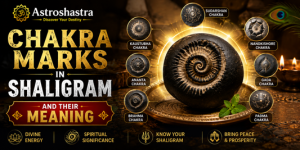
Discover the meaning of chakra marks in Shaligram stones. Learn how different chakra patterns identify various forms of ...
Read More