


Benefits of Heera Shankh: Spiritual, Vastu & Astrological Significance of Diamond Conch
Discover the benefits of Heera Shankh in Vedic astrology and Vastu Shastra. Learn how this sacred conch attracts wealth,...
Read More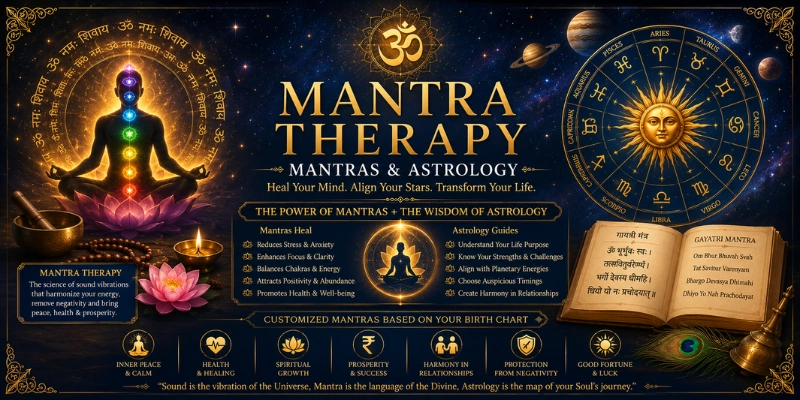
Mantras are among the most ancient spiritual practices of India. Through the disciplined repetition of sacred sounds, syllables and phrases, mantra practice is traditionally used to cultivate concentration, inner calm, devotion and spiritual awareness. In Vedic astrology, specific mantras are also associated with planetary energies and are traditionally recommended according to an individual's horoscope.
A mantra is a sacred sound, syllable, word or phrase traditionally repeated during meditation, prayer or spiritual practice. The Sanskrit word is associated with the idea of using sacred sound as an aid for contemplation and mental focus.
Mantra practice has a special place in the Vedic spiritual tradition. The sound, pronunciation, rhythm, intention and concentration used during chanting are traditionally considered important aspects of the practice.
At Astroshastra, we explore the connection between mantras and astrology, including planetary mantras, Nakshatra mantras, zodiac mantras, Beej mantras and different traditional methods of Japa.
In Vedic astrology, planets represent different areas of life and different qualities of human experience. When a horoscope indicates planetary challenges, traditional Jyotish practices may include mantra recitation as one of several spiritual remedies.
Planetary mantras are traditionally associated with the nine Navagrahas. Regular Japa is believed within the traditional system to cultivate a focused connection with the corresponding planetary energy.
The appropriate mantra, its pronunciation, number of repetitions, timing and method of practice may vary according to the purpose and the individual's spiritual or astrological tradition.
Mantra therapy is traditionally based on the repeated use of sacred sound with attention, faith and concentration. Repetition can provide the mind with a single point of focus, making mantra practice a useful component of meditation and spiritual discipline.
The traditional understanding of mantra emphasizes not only the sound itself but also intention, pronunciation, concentration, consistency and meaning.
Mantra practice should therefore be approached with patience rather than as a quick solution. Different traditions prescribe different mantras and methods, and advanced practices may require guidance from a qualified teacher.
Regular mantra practice is traditionally associated with mental discipline, spiritual awareness and a greater sense of inner steadiness. Many practitioners incorporate chanting into their daily meditation or prayer routine.
Traditional mantra practice describes different ways of performing Japa. The method chosen can depend upon the mantra, purpose and spiritual tradition being followed.
The mantra is repeated softly, generally with minimal audible sound. The lips may move while the words remain inaudible to others.
The mantra is mentally repeated without audible speech. This method places emphasis on internal concentration and awareness.
The mantra is recited audibly. Depending upon the tradition, the volume may range from soft to a clearly audible chant.
A simple and consistent routine is often more practical than attempting a complicated practice. Choose an appropriate mantra according to your purpose and tradition and maintain a regular schedule.
Mantras are traditionally classified in different ways depending upon their structure, purpose, deity, planetary association and spiritual tradition. Some commonly discussed categories include:
One of the most interesting applications of mantra practice is its relationship with Vedic astrology. Jyotish traditions associate particular mantras with planetary energies, Nakshatras and other astrological factors.
For example, planetary mantra practices may be selected when a person wishes to undertake a traditional spiritual remedy connected with Sun, Moon, Mars, Mercury, Jupiter, Venus, Saturn, Rahu or Ketu.
However, an astrological remedy should ideally be selected after examining the complete horoscope rather than choosing a mantra only from the Sun Sign. House placement, planetary strength, conjunctions, aspects, Nakshatra and Dasha can all be relevant in a detailed Jyotish assessment.
Continue your study of traditional mantra practices through the Astroshastra Mantra Knowledge Center. Explore Beej Mantras, planetary mantras, Nakshatra mantras, zodiac mantras, Gayatri Mantras and other aspects of mantra practice.
Explore Sacred Mantras, Their Types, Applications & Spiritual Benefits
Astroshastra has tried to explain the Concept and types of Mantras
with the assortment of Mantras which one can use in his daily life
and get benefits from them. Watch Astrology, Vastu, Remedies & Spiritual Guidance Videos
Astroshastra Video Library
Discover the benefits of Heera Shankh in Vedic astrology and Vastu Shastra. Learn how this sacred conch attracts wealth,...
Read More
Discover powerful mantras for planets in Vedic astrology. Learn Navgraha mantras for Sun, Moon, Mars, Mercury, Jupiter, ...
Read More
Explore planetary changes in October 2026, including Venus retrograde, Sun and Mercury transits, Jupiter's entry into Le...
Read More.png)
Discover the benefits of Lakshmi Ganesh Yantra, its spiritual significance, puja vidhi, placement rules, and how to wors...
Read More
Discover how numerology consultation can help you understand your personality, career, relationships, business prospects...
Read More
Discover how your birth Nakshatra influences luck, fortune, career, wealth, relationships and opportunities. Learn the r...
Read More