


Powerful Mantras for Planets: Vedic Remedies to Strengthen Navgrahas
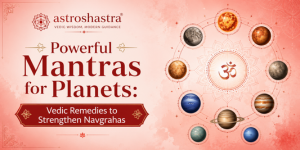
Discover powerful mantras for planets in Vedic astrology. Learn Navgraha mantras for Sun, Moon, Mars, Mercury, Jupiter, ...
Read More
Mantras are not a single category of sacred chants. In traditional Indian spiritual practice, they are classified according to their structure, purpose, deity, energy, method of chanting and intended spiritual application. Understanding these divisions helps a practitioner approach a mantra with greater clarity and respect.
Some mantras are primarily devotional, while others are associated with meditation, peace, protection, planetary influences, knowledge, prosperity or spiritual purification. There are also specialized mantra traditions that require detailed instruction and should be approached under appropriate guidance.
Mantras can be classified in several different ways. A single mantra may belong to more than one category depending upon the tradition in which it is studied. For example, a mantra may simultaneously be a devotional mantra, a deity mantra and a Japa mantra.
Mantras may be used for peace, purification, protection, prosperity, knowledge, spiritual growth and other traditional purposes.
Many mantras are dedicated to specific deities such as Shiva, Vishnu, Ganesha, Lakshmi, Durga, Saraswati and Hanuman.
Jyotish traditions associate particular mantras with the Navagraha or nine planetary influences.
Mantras may range from a single sacred syllable to longer prayers and elaborate mantra formulations.
Mantras may be recited aloud, softly or mentally depending upon the practice and tradition.
Different schools of Hindu spiritual practice preserve their own mantra traditions, methods and interpretations.
Shanti Mantras are traditionally associated with peace, harmony, purification and the removal of disturbances. They are commonly recited at the beginning or conclusion of spiritual study, meditation and religious ceremonies.
The repeated invocation of Shanti represents the traditional aspiration for peace at different levels of existence.
Explore Shanti MantrasGayatri Mantras are traditionally associated with prayer, illumination, wisdom and spiritual contemplation. The most widely known example is the Savitri or Gayatri Mantra dedicated to Savitr.
The mantra expresses a traditional prayer for divine illumination and the awakening of higher understanding.
Learn About Gayatri MantrasLord Ganesha is traditionally invoked before important activities, ceremonies and spiritual practices. Ganesha Mantras are associated with auspicious beginnings, wisdom and the removal of obstacles.
The syllable गं (Gam) is traditionally regarded as a Beej Mantra associated with Lord Ganesha.
Shiva Mantras are among the most widely practiced devotional mantras in Hindu spiritual traditions. They are traditionally associated with devotion, inner transformation, meditation and spiritual awareness.
The Panchakshara Mantra, Om Namah Shivaya, is traditionally regarded as a central Shiva mantra and is widely practiced through Japa and meditation.
Vishnu and Narayana Mantras are traditionally used in Vaishnava devotional practices. They are associated with devotion, preservation, surrender and contemplation of the divine.
This eight-syllable mantra is traditionally known as the Ashtakshara Mantra and is an important mantra in Vaishnava traditions.
Goddess Lakshmi is traditionally worshipped as the deity of prosperity, abundance, auspiciousness and well-being. Lakshmi Mantras are commonly used during devotional worship and Lakshmi-related spiritual practices.
The Beej syllable श्रीं (Shreem) is traditionally associated with Lakshmi and auspiciousness.
Goddess Saraswati is traditionally associated with knowledge, learning, wisdom, speech, music and the arts. Saraswati Mantras are therefore commonly included in educational and devotional practices.
ऐं (Aim) is traditionally associated with Saraswati-related mantra practices.
Durga Mantras are traditionally associated with divine strength, courage, protection and Shakti worship. They are widely used in devotional practices dedicated to Goddess Durga.
The Beej syllable दुं (Dum) is traditionally associated with Durga-related mantra practices.
Hanuman Mantras are traditionally associated with devotion, courage, strength and dedication. Hanuman worship occupies an important place in many Hindu devotional traditions.
Devotees commonly recite Hanuman Mantras as part of prayer, meditation and devotional Japa.
In Jyotish traditions, specific mantras are associated with the Navagraha or nine planetary influences. Planetary Mantras may be used as part of traditional spiritual remedies after considering the individual's horoscope and the condition of the relevant planet.
| Planet | Sanskrit Mantra | Transliteration |
|---|---|---|
| ☀ Surya | ॐ ह्रां ह्रीं ह्रौं सः सूर्याय नमः ॥ | Om Hraam Hreem Hraum Sah Suryaya Namah |
| ☾ Chandra | ॐ श्रां श्रीं श्रौं सः चन्द्राय नमः ॥ | Om Shraam Shreem Shraum Sah Chandraya Namah |
| ♂ Mangala | ॐ क्रां क्रीं क्रौं सः भौमाय नमः ॥ | Om Kraam Kreem Kraum Sah Bhaumaya Namah |
| ☿ Budha | ॐ ब्रां ब्रीं ब्रौं सः बुधाय नमः ॥ | Om Braam Breem Braum Sah Budhaya Namah |
| ♃ Brihaspati | ॐ ग्रां ग्रीं ग्रौं सः गुरवे नमः ॥ | Om Graam Greem Graum Sah Gurave Namah |
| ♀ Shukra | ॐ द्रां द्रीं द्रौं सः शुक्राय नमः ॥ | Om Draam Dreem Draum Sah Shukraya Namah |
| ♄ Shani | ॐ प्रां प्रीं प्रौं सः शनैश्चराय नमः ॥ | Om Praam Preem Praum Sah Shanaishcharaya Namah |
| ☊ Rahu | ॐ भ्रां भ्रीं भ्रौं सः राहवे नमः ॥ | Om Bhraam Bhreem Bhraum Sah Rahave Namah |
| ☋ Ketu | ॐ स्रां स्रीं स्रौं सः केतवे नमः ॥ | Om Sraam Sreem Sraum Sah Ketave Namah |
Japa means the repeated recitation of a mantra. It is one of the most widely practiced forms of mantra discipline. Japa may be performed using a Mala, through soft recitation or mentally.
A traditional Japa Mala commonly contains 108 beads. The number 108 has a long-standing symbolic importance in Indian spiritual traditions, although the prescribed number of repetitions can vary according to the mantra and the particular practice.
Beej or Bija Mantras are compact sacred syllables traditionally associated with particular deities, energies or spiritual principles. They are frequently incorporated into longer mantras.
| Beej | Sanskrit | Traditional Association |
|---|---|---|
| Om | ॐ | Primordial sacred sound |
| Gam | गं | Ganesha |
| Shreem | श्रीं | Lakshmi and auspiciousness |
| Aim | ऐं | Saraswati and knowledge |
| Hreem | ह्रीं | Shakti and spiritual transformation |
| Kreem | क्रीं | Shakti-related traditions |
| Dum | दुं | Durga-related practices |
| Hum | हूं | Protective and transformative practices |
Vedic astrology also associates the 27 Nakshatras with specific deities and traditional mantra practices. Nakshatra Mantras may be used in spiritual practices according to the individual's birth Nakshatra or for specific astrological purposes.
Because Nakshatra-based mantra selection can depend upon the birth chart and the purpose of the remedy, it is advisable to identify the correct Nakshatra and Pada before selecting a specialized practice.
Explore Nakshatra MantrasSome traditional astrological practices also recommend mantras in connection with the twelve zodiac signs. Such practices may be considered alongside the ruling planet, Nakshatra and complete birth horoscope.
A zodiac-based mantra should therefore not automatically be treated as a substitute for personalized horoscope analysis. The condition and strength of the relevant planetary influences may change the appropriate remedial approach.
Explore Zodiac MantrasChoosing a mantra should ideally depend upon the purpose of the practice and the spiritual tradition being followed. A devotional mantra may be selected according to one's chosen deity, while a planetary mantra may be considered in relation to a horoscope.
For general meditation, simple and widely established mantras may be appropriate. For specialized practices involving particular deities, Tantric traditions, planetary remedies or specific Sadhana, guidance from a knowledgeable practitioner is recommended.
Not every mantra should be treated as a general-purpose chant. Traditional mantra systems contain specialized practices that may involve particular pronunciation, initiation, preparation, discipline, time, place and procedure.
Mantras intended for spiritual purification, devotion, meditation and peace are generally approached differently from specialized ritual traditions. Practitioners should avoid experimenting with advanced practices without understanding their traditional framework.
Astroshastra recommends approaching mantra practice with respect, correct pronunciation and a clear understanding of the purpose of the practice.
Mantra Sadhana is traditionally understood as a disciplined approach to mantra practice. It is not simply the mechanical repetition of words. Regularity, concentration, devotion, pronunciation and awareness are important elements of a meaningful practice.
The deeper purpose of mantra practice is traditionally connected with turning the attention inward. Through repeated remembrance and contemplation, the practitioner develops greater awareness of the sound, meaning and spiritual principle represented by the mantra.
Whether one follows a devotional mantra, Beej Mantra, Gayatri Mantra, Shanti Mantra, planetary mantra or Nakshatra Mantra, the practice is best approached with consistency and respect for the tradition from which it originates.
Explore Sacred Mantras, Their Types, Applications & Spiritual Benefits
Authentic Vedic Lucky Charms for Wealth, Protection, Success, Protection & Prosperity


Explore hand-picked articles related to this topic to deepen your astrological knowledge.
Discover powerful mantras for planets in Vedic astrology. Learn Navgraha mantras for Sun, Moon, Mars, Mercury, Jupiter, ...
Read More
Discover the benefits of Heera Shankh in Vedic astrology and Vastu Shastra. Learn how this sacred conch attracts wealth,...
Read More
Discover why Goddess Lakshmi loves cleanliness according to Hindu traditions. Learn the spiritual significance of a clea...
Read More
Discover the meaning of chakra marks in Shaligram stones. Learn how different chakra patterns identify various forms of ...
Read More.png)
Discover how Daan (charity) improves your horoscope in Vedic astrology. Learn which donations help reduce planetary dosh...
Read More
Discover astrology remedies that actually work for career, marriage, health, finances, and planetary doshas. Learn effec...
Read More