



Significance of Shravan Maas: Spiritual Importance, Rituals, Fasting and Divine Blessings
Discover the significance of Shravan Maas in Hinduism, its spiritual importance, rituals, fasting traditions, Lord Shiva...
Read More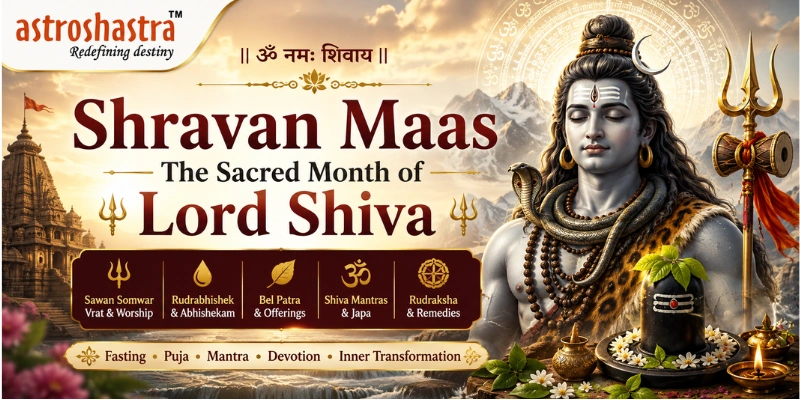
Discover the spiritual significance of Shravan Maas, also known as Sawan, and learn about Lord Shiva worship, Shravan Somwar Vrat, Rudrabhishek, Shiva Mantras, Bel Patra, fasting, Kanwar Yatra, Rudraksha and traditional Sawan rituals and remedies.
Shravan Maas, also known as Sawan, is one of the most sacred months in the Hindu devotional calendar. The month is especially associated with Lord Shiva and is traditionally observed through fasting, prayer, Shiva Puja, Rudrabhishek, mantra chanting, temple visits and acts of charity.
Shravan is a period when devotees turn their attention toward spiritual discipline and devotion. Mondays during this month, known as Shravan Somwar or Sawan Somwar, are particularly important for Shiva worship.
Astroshastra's detailed Shravan Month – Significance, Rituals & Spiritual Importance guide explains the traditional importance of the month, fasting, Shiva Lingam Abhishekam, mantra chanting, pilgrimage and Shravani Mela.
Explore our complete collection of Shravan and Sawan resources, including fasting, Shiva worship, Rudrabhishek, mantras, Bel Patra, Shravan Somwar and traditional Sawan practices.
Shravan is traditionally regarded as an especially auspicious period for Lord Shiva worship. One of the best-known traditional associations comes from the story of Samudra Manthan, during which the deadly poison Halahala emerged and threatened creation.
According to the traditional story, Lord Shiva consumed the poison to protect the universe. His throat became blue, giving him the name Neelkanth. Devotees associate the offering of water and other sacred substances to Shiva with cooling and worshipping this form of Mahadev.
Astroshastra's article Why Lord Shiva Loves Shravan: The Spiritual Significance of the Holiest Month explores this traditional connection between Shravan, Lord Shiva, Jal Abhishek and Shiva worship.
Shravan Somwar refers to the Mondays that fall during Shravan Maas. Monday is traditionally associated with Lord Shiva, and Mondays during Shravan are considered especially important for Shiva devotees.
Devotees may observe a Shravan Somwar Vrat, visit a Shiva temple, perform Abhishekam, offer Bilva leaves, chant Shiva mantras and spend time in prayer and meditation.
For a complete step-by-step guide, read Complete Shravan Somwar Vrat Guide – Puja Vidhi, Rules, Benefits & Significance .
Fasting is a devotional practice followed by many devotees, but it is not the only way to observe Shravan Somwar. Prayer, mantra chanting, Shiva Puja, meditation, charity and sincere devotion can also form part of one's observance. Fasting practices should be adapted according to individual health and family or regional traditions.
Shravan worship can take many forms. The exact practices vary according to regional customs, family traditions and individual devotional practices.
Offer prayers to Lord Shiva with devotion and sincerity.
Offer clean water or Gangajal to the Shiva Lingam.
Offer fresh Bilva or Bel Patra as part of traditional Shiva worship.
Chant Om Namah Shivaya or another Shiva mantra with devotion.
Light a lamp and conclude worship with prayer or Aarti.
Acts of service, donation and helping those in need are traditional expressions of devotion.
Rudrabhishek is one of the most important Shiva worship practices associated with Shravan. It involves ritual bathing or Abhishekam of the Shiva Lingam while offering prayers and chanting Shiva mantras.
Commonly used offerings may include water, Gangajal, milk, curd, honey, ghee, sugar, Bilva leaves, flowers, sandalwood and other items according to the tradition being followed.
If you wish to perform the ritual at home, read How to Perform Rudrabhishek at Home During Shravan – Complete Vedic Guide .
Mantra chanting is an important part of Shravan devotion. The most widely known Shiva mantra is Om Namah Shivaya.
Devotees may also chant the Maha Mrityunjaya Mantra, Shiva Gayatri, Rudra Mantra and other Shiva-oriented prayers according to their tradition.
For a detailed explanation of Shiva mantras, meanings and traditional chanting practices, read Powerful Shiva Mantras to Chant in Shravan Maas .
Shravan is an excellent time for devotees to deepen their remembrance of Lord Shiva through the recitation of his sacred names.
The 108 Names of Lord Shiva, also known as Shiva Ashtottara Shatanamavali, describe different attributes and manifestations of Mahadev.
Read the complete 108 Names of Lord Shiva with Meanings on Astroshastra.
Bel Patra, or Bilva leaves, are among the most traditional offerings associated with Lord Shiva. Devotees commonly offer fresh Bilva leaves during Shiva Puja, especially on Mondays, Shravan Somwar and other important Shiva observances.
The three leaflets of the Bilva leaf are traditionally given different symbolic interpretations in Shiva worship, and the offering is made as an expression of devotion and reverence.
Learn more about the traditions and significance of this sacred offering in Importance of Bel Patra in Shiv Puja – Spiritual Significance, Benefits & Rituals .
Shravan is traditionally considered a period of spiritual discipline. Many devotees consciously simplify their lifestyle, observe dietary restrictions and focus on prayer and positive conduct.
Practices vary considerably between communities and families. Rather than treating every custom as a universal rule, devotees should follow the traditions appropriate to their family, regional practice and personal circumstances.
For a detailed discussion, read Things You Should Avoid During Shravan Maas – Important Dos and Don'ts in Sawan .
Rudraksha has a longstanding traditional association with Lord Shiva and Rudra. Many devotees consider Shravan an especially appropriate period for beginning or deepening Rudraksha-related spiritual practices.
Rudraksha may be used during mantra japa, meditation and devotional practices. The appropriate Mukhi Rudraksha depends on the individual's purpose and, where astrology is involved, the complete birth chart should be considered.
Explore the One Mukhi Rudraksha and learn more about the traditional connection between Rudraksha and Lord Shiva.
Shravan is also an important period for devotees who undertake traditional Shiva-oriented Yantra and mantra practices. The Shiva Yantra is associated with Shiva worship, while the Mahamrityunjaya tradition is connected with prayers for protection, strength, health and spiritual well-being.
Explore Shiva Yantra and Mahamrityunjaya Yantra for more information about these traditional spiritual practices.
Shravan is traditionally a major pilgrimage period for devotees of Lord Shiva. Many devotees visit Shiva temples, offer water to the Shiva Lingam, perform Puja and participate in local religious celebrations.
Astroshastra's guide to Temples of Lord Shiva in India explores famous Shiva temples and their spiritual and cultural significance.
You can also explore the 12 Jyotirlingas of Lord Shiva and discover the sacred pilgrimage tradition associated with these important Shiva temples.
Shravan is also associated with large devotional gatherings, pilgrimages and the Kanwar tradition. During the Shravani Mela, devotees undertake pilgrimage, offer prayers and carry sacred water for Jalabhishek at Shiva temples.
Read the complete Shravani Mela – Devotional Significance, Rituals & Spiritual Benefits to learn more about this important Shravan observance.
Shravan forms an important part of the broader monsoon devotional period. Astroshastra's Varsha Shravan-Bhadrapada Festival explores the spiritual significance of the monsoon months, including Shravan worship, fasting, pilgrimage, Kanwar Yatra and devotional celebrations.
A devotee does not necessarily need an elaborate ritual to observe Shravan. A simple, sincere daily practice can include:
1. Wake up and bathe before beginning worship.
2. Clean your Puja space.
3. Offer clean water to the Shiva Lingam.
4. Offer fresh Bel Patra where traditionally practiced.
5. Light a lamp and incense.
6. Chant Om Namah Shivaya.
7. Spend a few minutes in meditation or prayer.
8. Perform Aarti according to your tradition.
9. Practice kindness, charity and self-discipline.
The deeper meaning of Shravan extends beyond fasting and ritual. It provides an opportunity to cultivate devotion, discipline, simplicity, compassion and self-awareness.
The traditional symbolism of Shiva encourages devotees to move away from excessive attachment and toward inner awareness. Shravan can therefore be approached as a period of reflection, prayer and spiritual renewal.
Whether one performs a complete Somwar Vrat, visits a Shiva temple, chants a mantra, offers water to the Shivling, wears Rudraksha or simply remembers Mahadev with devotion, the central idea is sincere spiritual practice.
Continue exploring Astroshastra's Shravan and Sawan resources:
Shravan Maas, also known as Sawan, is a sacred month in the Hindu calendar that is especially associated with Lord Shiva worship, fasting, prayer, Abhishekam and spiritual practices.
Shravan is traditionally regarded as an especially auspicious period for Shiva worship. Devotees observe fasting, Jalabhishek, mantra chanting, temple visits and other devotional practices.
Shravan Somwar refers to the Mondays occurring during Shravan Maas. These Mondays are traditionally considered especially auspicious for Lord Shiva worship.
Om Namah Shivaya is one of the most widely chanted Shiva mantras. Devotees may also chant the Maha Mrityunjaya Mantra and other Shiva mantras according to their tradition.
Yes. A simple home practice may include offering water to the Shiva Lingam, offering Bilva leaves, lighting a lamp and chanting Shiva mantras with devotion.
Common traditional offerings include water, Gangajal, Bilva leaves, flowers, milk and other substances used in Abhishekam, depending on the worship tradition being followed.
Many devotees traditionally begin or deepen their Rudraksha practice during Shravan. Rudraksha is associated with Lord Shiva and is commonly used for mantra chanting and meditation.
Fasting is a common devotional practice but is not the only way to observe Shravan. Prayer, mantra chanting, Shiva Puja, charity and spiritual discipline can also form part of the observance.
Explore Lord Shiva, sacred mantras, Shravan Somwar, Rudrabhishek, Rudraksha, Shiva temples and traditional Sawan practices through the Astroshastra Knowledge Hub.
Explore Lord ShivaTraditionally associated with Lord Shiva and spiritual consciousness.
A sacred geometric symbol traditionally associated with Lord Shiva worship.
Traditionally associated with the Mahamrityunjaya form of Lord Shiva.
A traditional Shiva worship practice associated with the Mahamrityunjaya Mantra.
Explore the divine energies of Hindu deities and discover their spiritual significance, blessings, mantras, and worship traditions.
Discover the significance of Shravan Maas in Hinduism, its spiritual importance, rituals, fasting traditions, Lord Shiva...
Read More
Discover the important things to avoid during Shravan Maas according to Hindu traditions. Learn the spiritual significan...
Read More
Discover the importance of Bel Patra in Shiv Puja, its spiritual significance, mythological stories, rules for offering ...
Read More
Learn how to perform Rudrabhishek at home during the holy month of Shravan with this complete step-by-step guide. Discov...
Read More
Learn everything about Shravan Somwar Vrat including its significance, fasting rules, puja vidhi, mantras, offerings, be...
Read More
Explore planetary changes in October 2026, including Venus retrograde, Sun and Mercury transits, Jupiter's entry into Le...
Read More