



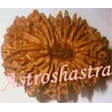
Monday Astrological Remedies – Powerful Chandra, Moon & Monday Remedies
Discover powerful Monday remedies for Planet Moon including Chandra Mantra, Shiva Puja, Pearl, Two Mukhi Rudraksha, Chan...
Read More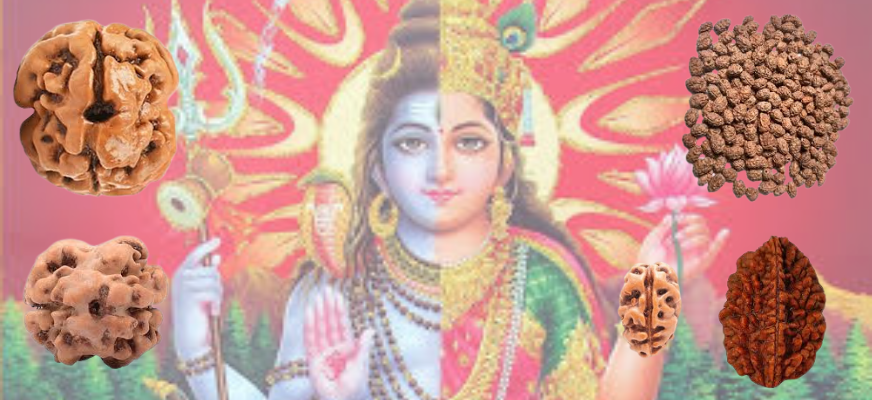
2 Mukhi Rudraksha, also known as Dwimukhi Rudraksha or Two Mukhi Rudraksha, is traditionally associated with Ardhanarishvara, the divine representation of Shiva and Shakti in one form.
In traditional Rudraksha astrology, 2 Mukhi Rudraksha is associated with the Moon (Chandra). It is therefore commonly discussed in relation to emotional harmony, relationships, balance and the qualities traditionally represented by the Moon.
This guide explains the traditional significance of 2 Mukhi Rudraksha, its association with Ardhanarishvara and the Moon, traditional benefits, astrological considerations, who may choose it, how it is worn, its mantra, Puja and how to identify an authentic bead.
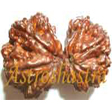
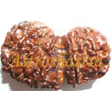
2 Mukhi Rudraksha is a Rudraksha bead traditionally identified by two natural faces or Mukhi lines. The Sanskrit term Dwimukhi refers to two Mukhi.
Rudraksha beads are traditionally used in Hindu spiritual practices, including prayer, meditation and Japa. Each Mukhi is traditionally associated with particular deities, planets and spiritual themes.
2 Mukhi Rudraksha has a distinctive place in these traditions because of its association with the principle of unity represented by Shiva and Shakti.
The principal deity traditionally associated with 2 Mukhi Rudraksha is Ardhanarishvara. Ardhanarishvara represents Shiva and Shakti as complementary aspects of one divine form.
The symbolism of Ardhanarishvara is closely connected with unity, balance and the harmonious relationship between masculine and feminine principles.
For devotees, this symbolism makes 2 Mukhi Rudraksha particularly meaningful for contemplation on harmony, relationships and spiritual balance.
Learn more about Hindu deities through the Astroshastra Gods and Goddesses section.
In traditional Rudraksha astrology, 2 Mukhi Rudraksha is associated with the Moon or Chandra.
The Moon represents the mind, emotions, sensitivity, nurturing qualities, comfort and the ability to respond to experiences in Vedic astrology.
Because of this association, 2 Mukhi Rudraksha is traditionally considered when the focus is on emotional harmony, relationships and mental balance.
To understand the Moon and other planetary influences, visit: Planets in Astrology .
For the specific relationship between planets and Rudraksha, explore: Rudraksha According to Planets .
The traditional symbolism of 2 Mukhi Rudraksha is centred around unity and harmony. The two natural faces are symbolically connected with complementary forces coming together.
Its association with Ardhanarishvara also makes it relevant to traditional discussions of relationships, cooperation and balance.
For spiritual practitioners, the bead may serve as a reminder of the importance of harmony within oneself and in one's relationships with others.
These are traditional spiritual and astrological associations and should not be interpreted as scientifically established medical effects.
Traditional Rudraksha practices describe several qualities associated with 2 Mukhi Rudraksha. These should be understood within their spiritual and astrological context.
2 Mukhi Rudraksha may appeal to devotees, spiritual practitioners and people who appreciate the traditional symbolism of Ardhanarishvara.
It may also be considered by people interested in traditional Rudraksha astrology, particularly when the Moon is an important factor in the individual's horoscope.
However, an astrological recommendation should ideally consider the complete birth chart rather than selecting a Rudraksha only from a general zodiac recommendation.
Because 2 Mukhi Rudraksha is traditionally associated with the Moon, its astrological symbolism is naturally connected with Cancer (Karka), the zodiac sign ruled by the Moon.
Some traditional Rudraksha recommendations may also consider the position and strength of the Moon in the complete horoscope rather than relying only on the Sun sign.
Learn more about the twelve zodiac signs: Sunsigns in Astrology .
The Moon rules three Nakshatras in Vedic astrology: Rohini, Hasta and Shravana.
Therefore, Moon-related Nakshatra considerations may be relevant when following a Nakshatra-based Rudraksha selection method.
However, Nakshatra-based recommendations can vary according to the tradition being followed.
Learn about all 27 Nakshatras: Nakshatras in Astrology .
You can also explore: Rudraksha According to Nakshatra .
The Moon's position in the birth horoscope is traditionally considered when assessing Moon-related themes. In Vedic astrology, the Moon is associated with the mind, emotions, mother, comfort, habits and sensitivity.
The house occupied by the Moon can provide additional information about the area of life where these themes may become prominent.
Learn more about the twelve horoscope houses: Houses in Horoscope .
The symbolism of Ardhanarishvara makes 2 Mukhi Rudraksha particularly interesting in traditional discussions of relationships and harmony.
The two complementary aspects represented by Shiva and Shakti can be understood as a symbol of cooperation, balance and mutual respect.
For this reason, some practitioners traditionally choose 2 Mukhi Rudraksha when their spiritual intention involves harmony within personal relationships.
It should be understood as a spiritual or symbolic practice rather than a guaranteed solution to relationship problems.
The Moon's traditional association with the mind and emotions gives 2 Mukhi Rudraksha a particular place in discussions about emotional harmony.
Some practitioners use Rudraksha during meditation or prayer as a reminder to cultivate calmness, awareness and balance.
Rudraksha should not, however, be considered a treatment for mental or physical health conditions.
Authenticity is an important consideration when purchasing a 2 Mukhi Rudraksha. The bead should have naturally formed Mukhi lines rather than artificially carved or modified lines.
No single traditional home test should be treated as absolute proof of authenticity.
Read our detailed: Rudraksha Purity and Authenticity Guide .
2 Mukhi Rudraksha can traditionally be worn as a pendant, incorporated into a Mala or used in a suitable bracelet depending on the preference of the wearer.
Some practitioners prefer to begin wearing Rudraksha after cleansing, prayer and mantra recitation.
Because 2 Mukhi is associated with Ardhanarishvara and the Moon, Monday is commonly considered meaningful in traditions involving Shiva and Moon worship.
Practices vary between spiritual traditions, so individuals following a specific lineage should follow its guidance.
For general information, visit: Rules for Wearing Rudraksha .
Devotees may perform Puja before wearing a 2 Mukhi Rudraksha. Traditional preparation may include cleansing, offering water or other devotional offerings, prayer and mantra recitation.
The exact procedure differs among traditions and families.
Read: Rudraksha Puja and Mantras .
Mantra recitation is traditionally associated with Rudraksha worship. Different traditions may prescribe different mantras for 2 Mukhi Rudraksha.
A commonly used Shiva mantra is:
Moon-related worship may also include traditional Chandra mantras. If you follow a particular spiritual lineage or have received mantra initiation, follow the mantra prescribed by your teacher or tradition.
Silver is traditionally associated with the Moon in Indian astrological traditions. For this reason, 2 Mukhi Rudraksha is sometimes mounted in silver settings.
The choice of metal can nevertheless depend on personal preference, design, tradition and the intended use of the Rudraksha.
A 2 Mukhi Rudraksha can be worn as a pendant for people who prefer a neck-worn form of Rudraksha.
Astroshastra offers different Rudraksha pendant designs and devotional settings.
Explore: Rudraksha Pendants .
2 Mukhi Rudraksha can also be incorporated into Mala designs. A Mala may be preferred by people who wish to combine wearing Rudraksha with traditional Japa or meditation practice.
Explore: Rudraksha Mala .
A 2 Mukhi Rudraksha can also be used in bracelet designs. A bracelet provides a compact and convenient way of wearing Rudraksha.
Explore: Rudraksha Bracelets .
| Aspect | Traditional Association |
|---|---|
| Rudraksha | 2 Mukhi / Dwimukhi |
| Deity | Ardhanarishvara – Shiva and Shakti |
| Planet | Moon / Chandra |
| Zodiac Association | Cancer / Karka |
| Moon-ruled Nakshatras | Rohini, Hasta and Shravana |
| Primary Symbolism | Unity, harmony, balance and complementary energies |
| Common Traditional Uses | Meditation, prayer, Japa and devotional wearing |
When purchasing a 2 Mukhi Rudraksha, authenticity and natural formation should be given priority.
2 Mukhi Rudraksha is one of the traditional Mukhi classifications of Rudraksha. Other Mukhi beads have their own traditional deity, planetary and spiritual associations.
If you are comparing different Mukhi Rudraksha, begin with our comprehensive: Rudraksha Beads Guide .
Explore 2 Mukhi Rudraksha and related traditional Rudraksha products at Astroshastra.
Explore 2 Mukhi Rudraksha2 Mukhi Rudraksha, also known as Dwimukhi Rudraksha, is traditionally identified by two natural faces or Mukhi and is associated with Ardhanarishvara.
2 Mukhi Rudraksha is traditionally associated with Ardhanarishvara, the combined form of Shiva and Shakti.
In traditional Rudraksha astrology, 2 Mukhi Rudraksha is associated with the Moon or Chandra.
Because of its traditional Moon association, 2 Mukhi Rudraksha is commonly connected with Cancer or Karka, the zodiac sign ruled by the Moon.
Traditional practices associate 2 Mukhi Rudraksha with unity, harmony, relationships, emotional balance and the symbolism of Shiva and Shakti.
Devotees, spiritual practitioners and people interested in traditional Rudraksha astrology may choose 2 Mukhi Rudraksha. Personalised astrological selection should consider the complete horoscope.
Om Namah Shivaya is a widely used Shiva mantra. Specific mantras associated with 2 Mukhi Rudraksha can vary according to spiritual tradition.
Many traditional practices consider Monday meaningful for Shiva and Moon-related worship. The exact wearing practice can vary according to tradition.
Yes. 2 Mukhi Rudraksha can traditionally be worn as a pendant or incorporated into a Mala or bracelet.
The natural two-Mukhi formation and physical characteristics of the bead should be examined. For rare or expensive beads, professional authentication is recommended.
No. Rudraksha is traditionally used for spiritual, devotional and astrological purposes and should not be considered a substitute for medical diagnosis or treatment.
Discover 2 Mukhi Rudraksha beads available in different sizes at Astroshastra.
VIEW 2 MUKHI COLLECTION
Discover powerful Monday remedies for Planet Moon including Chandra Mantra, Shiva Puja, Pearl, Two Mukhi Rudraksha, Chan...
Read More
Discover the connection between your Nakshatra and lucky numbers in Vedic Astrology. Learn how Nakshatra lords, planetar...
Read More
Learn how to choose an auspicious Business Opening Muhurat using Tithi, Nakshatra, Lagna, Panchang, planetary positions,...
Read More
Discover which Nakshatra is considered the luckiest in Vedic Astrology. Learn why Pushya Nakshatra is highly auspicious,...
Read More
Discover the Shubh Muhurat for starting a long-distance journey. Learn how Tithi, Nakshatra, Rahu Kaal, Choghadiya, week...
Read More
Kundli Matching and Marriage Muhurat answer two different questions before marriage. Learn why compatibility analysis an...
Read More