


Bagalamukhi Yantra: Benefits, Significance, Uses and How to Worship It
Discover the significance and benefits of Bagalamukhi Yantra for protection, overcoming obstacles, controlling negative ...
Read MoreThe Gayatri Mantra is traditionally understood as a prayer to the divine radiance of Savitr. The practitioner contemplates that sacred light and prays that it may inspire and illuminate the intellect.
The traditional Mahavyahritis invoke the three realms or planes of existence in the Vedic formulation.
We contemplate that supreme and worthy divine radiance of Savitr.
We meditate upon the divine effulgence that is worthy of contemplation.
May that divine light inspire and guide our intellect and understanding.
Beginners can approach Gayatri Mantra chanting as a simple and disciplined meditation practice. A calm environment and attentive pronunciation can help make the practice more meaningful.
Sit in a clean, peaceful place where you can practice without unnecessary interruptions.
Maintain a comfortable posture and keep the body relaxed.
Take a few slow breaths and bring your attention inward.
Recite the mantra clearly and maintain a steady rhythm.
Keep awareness of the prayer for illumination and higher understanding.
Sit quietly for a few moments after chanting and observe the calmness of the mind.
Traditional Gayatri practice is closely associated with the three Sandhya periods of the day. These are traditionally understood as transitional periods between night and day, day and midday, and day and evening.
Traditionally associated with sunrise and the beginning of the day's spiritual practice.
The midday Sandhya is another traditional period for contemplation and prayer.
Evening practice traditionally marks the transition from day toward night.
For a beginner, maintaining a consistent daily practice can be more useful than worrying excessively about achieving a perfect schedule. Traditional practices may have specific rules depending upon lineage and initiation.
The appropriate number of repetitions can vary according to the practitioner's tradition, purpose and level of practice. Gayatri Mantra may be incorporated into daily prayer, meditation or Japa.
There is no need for a beginner to force a large number of repetitions. A smaller number performed consistently, attentively and with correct pronunciation may be a more practical starting point.
Japa Mala is traditionally used to count repetitions of a mantra. A commonly used Mala contains 108 beads along with a larger Guru or Meru bead.
During Japa, each repetition can be counted using one bead. The practitioner may continue around the Mala while maintaining attention on the mantra.
108 repetitions are widely used in Hindu and other Indian spiritual traditions for mantra Japa.
Traditional spiritual literature and practitioners associate Gayatri Mantra practice with contemplation, prayer, clarity and spiritual discipline. These benefits should be understood within the context of traditional spiritual practice rather than as medical treatment.
Regular contemplative practice may encourage greater awareness and attentiveness.
Repetition of a mantra provides a focused object for meditation and prayer.
Maintaining a regular Japa routine can encourage consistency in spiritual practice.
The mantra encourages contemplation of divine illumination and higher understanding.
A dedicated period of chanting can become a calm and reflective part of the day.
Regular prayer can deepen a practitioner's connection with their chosen spiritual tradition.
The Gayatri Mantra is traditionally associated with Savitr, the divine solar principle. This relationship makes the mantra particularly meaningful within practices connected with light, illumination and spiritual awakening.
Surya worship in Vedic tradition also emphasizes gratitude toward the Sun as a fundamental source of light and life. Gayatri practice and Surya-related prayer may therefore be incorporated into a disciplined morning spiritual routine according to one's tradition.
The Gayatri metre and formulation have inspired many traditional deity-specific Gayatri Mantras. These mantras follow the general pattern of contemplation and prayer for divine inspiration.
Om Ekadantaya Vidmahe
Vakratundaya Dhimahi
Tanno Dantih Prachodayat
Om Tatpurushaya Vidmahe
Mahadevaya Dhimahi
Tanno Rudrah Prachodayat
Om Narayanaya Vidmahe
Vasudevaya Dhimahi
Tanno Vishnuh Prachodayat
Om Katyayanaya Vidmahe
Kanyakumari Dhimahi
Tanno Durgih Prachodayat
Om Mahalakshmyai Cha Vidmahe
Vishnupatnyai Cha Dhimahi
Tanno Lakshmih Prachodayat
Om Vagdevyai Cha Vidmahe
Kamarajaya Dhimahi
Tanno Devi Prachodayat
Om Anjaneyaya Vidmahe
Vayuputraya Dhimahi
Tanno Hanumat Prachodayat
| Gayatri Mantra | Beej Mantra |
|---|---|
| Generally expressed as a longer prayer or mantra formulation. | Usually consists of a compact sacred seed syllable. |
| Traditionally associated with contemplation and illumination. | Traditionally associated with particular deities, principles or energies. |
| Often follows the Gayatri-style prayer structure. | Frequently incorporated into longer mantras. |
| Example: Gayatri Mantra. | Examples include ॐ, गं, श्रीं and ऐं. |
Chanting extremely quickly can make it difficult to maintain awareness of pronunciation and meaning.
Sanskrit pronunciation deserves attention, particularly when practicing a traditional mantra.
Japa is traditionally about focused repetition, not merely completing a numerical target.
Spiritual benefits should not be confused with medical treatment or used as a replacement for professional care.
The Gayatri Yantra is traditionally used as a sacred geometric representation associated with Gayatri worship. It may be used alongside prayer, meditation and mantra practice according to one's spiritual tradition.
Those interested in incorporating a Yantra into their spiritual practice can explore the Astroshastra Gayatri Yantra collection.
Explore Gayatri YantraThe Gayatri Mantra is a revered Vedic mantra traditionally associated with Savitr and is expressed as a prayer for divine illumination and inspiration of the intellect.
ॐ भूर्भुवः स्वः । तत्सवितुर्वरेण्यं । भर्गो देवस्य धीमहि । धियो यो नः प्रचोदयात् ॥
It is traditionally understood as a prayer to contemplate the divine radiance of Savitr and seek inspiration and illumination of the intellect.
Traditional practice associates Gayatri Mantra with the three Sandhya periods, particularly around sunrise, midday and sunset. Specific practices can vary according to tradition.
Gayatri Mantra is traditionally included in regular spiritual practice. Beginners can establish a simple, consistent routine according to their tradition and personal circumstances.
The number varies according to the practice. 108 repetitions are commonly used for Japa, while beginners may choose a smaller number such as 11 or 21 repetitions.
Yes. Mala Japa is a traditional method of counting mantra repetitions. A 108-bead Mala is commonly used for Japa practice.
Traditional practice associates Gayatri Mantra with prayer, contemplation, concentration, spiritual discipline and the pursuit of clarity and higher understanding.
Yes. The mantra is traditionally associated with Savitr, the divine solar principle, and is closely connected with themes of light and illumination.
Gayatri Yantra is a sacred geometric representation traditionally associated with Gayatri worship and may be used alongside mantra and meditation practices.
Explore Sacred Mantras, Their Types, Applications & Spiritual Benefits
Authentic Vedic Lucky Charms for Wealth, Protection, Success, Protection & Prosperity


Explore hand-picked articles related to this topic to deepen your astrological knowledge.
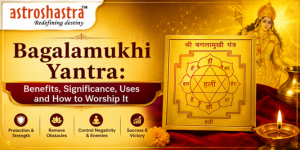
Discover the significance and benefits of Bagalamukhi Yantra for protection, overcoming obstacles, controlling negative ...
Read More
Discover the most powerful Shiva mantras to chant during Shravan Maas. Learn their meanings, benefits, correct chanting ...
Read More
Discover the meaning and spiritual significance of Om Namah Shivaya, one of the most powerful Shiva mantras. Learn its b...
Read More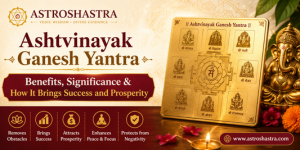
Discover the spiritual power of the Ashtvinayak Ganesh Yantra. Learn its meaning, benefits, ???? method, and how this sa...
Read More
Discover powerful mantras for planets in Vedic astrology. Learn Navgraha mantras for Sun, Moon, Mars, Mercury, Jupiter, ...
Read More
Learn about Parsva Ekadashi, its spiritual significance, Vrat Vidhi, Puja rituals, Lord Vishnu Mantra, Parana, Ekadashi ...
Read More