Benefits of Shaligram Shilas
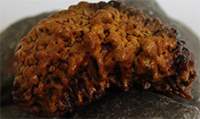
The marks made by the shell of the ammonite give a Shaligram its characteristic appearance, with the pattern often resembling and representing the 'Sudarshan Chakra' or the discus with a sharp-toothed edge which rests on the index finger of Lord Vishnu. Shaligram stones come in dfferent colors such as red, blue, yellow, green and black. Of these, the yellow, blue and black varieties are considered more sacred. The yellow and golden-colored Shaligrams are considered most auspicious and are believed to bestow great wealth and prosperity on its worshippers. Some benefits of Shaligram Shila's are given below:1. Worship Shree Shaligram for six values of life: Righteous living, Wealth, Protection, good health, pleasures and Spiritual .
2. The Shaligram is the most sacred stone worshipped by the Vaishnavas and is used to worship Vishnu in an abstract form i.e., God without form as a 'Saligrama'. The use of the Shaligram is similar to the use of 'Lingam' as abstract symbol of Lord Shiva.The Shaligram is found in river Gandaki near Muktinath in Nepal.
3. There are numerous popular beliefs concerning salagrama. Salagrama alongside Tulasi leaves and conch (samkha), placed in one plate is regarded as most meritorious.
4. Any religious observance, gift, consecration, obsequies, and worship should preferably be done in association with a salagrama.
5. Regarding the obsequies or the last rites (sraddha), it is usual to conduct such ceremonies in front of a salagrama. For that would ensure the departed spirit reaching Vishnu's abode directly: and subsequent death ceremonies would become unnecessary.
6. When the dying person is made to sip a little of the water in which the salagrama-stone is bathed, he will be freed from all sins, and will reach the heavenly abode of Vishnu. And death itself when it occurs in the presence of a salagrama-stone will pave the way for Vishnu's realm, for Vishnu is present in that stone.
7. The rites of expiation of sins (prayaschitta) becomes effective more by drinking the water in which these stones are washed than by gifts or fasting or by observances of various kinds.
8. In times of solar or lunar eclipse, whatever ritual is undertaken becomes all the more effective when done in front of a salagrama-stone so says Hemadri.
9. It was practice in the olden days to ask the witness to hold a salagrama in hand while testifying in a court of law; if he uttered utter falsehood, he was believed to suffer immensely and long as a punishment.
10. Merely looking at a salagrama stone would wash away the sins of the beholder, even as the mere sight of a lion would make the antelopes run for their lives in the forest.
Why Shaligram Shila Is Considered Sacred
In traditional Hindu worship, Shaligram is revered as a sacred representation associated with Lord Vishnu. Devotees value Shaligram Shila not merely for its natural appearance, but for its spiritual symbolism and its connection with Vishnu worship. The characteristic markings found on a natural Shaligram are traditionally associated with the Sudarshan Chakra.
The importance of Shaligram is also connected with devotional practices involving Tulasi leaves, conch worship and other forms of Vishnu puja. For devotees seeking to understand the spiritual significance of Shaligram, its traditional role in worship is an important part of its identity.
Traditional Benefits Associated with Shaligram
Traditional texts and devotional beliefs associate Shaligram worship with several dimensions of spiritual life, including righteousness, prosperity, protection, health, fulfilment and spiritual growth. The specific symbolism may vary according to the form, markings and tradition associated with a particular Shaligram.
Yellow and golden-coloured Shaligrams are traditionally regarded as especially auspicious and are associated with wealth and prosperity. Devotees may therefore choose to learn about the different varieties of Shaligram before selecting one for their personal worship practice.
Shaligram in a Devotional Home
A Shaligram Shila is traditionally kept in a clean and respectful place and worshipped according to the devotee's established spiritual practice. Those interested in keeping Shaligram at home may also benefit from learning about its identification, puja mantras, traditional methods of keeping Shaligram and the different types described in traditional sources.
Frequently Asked Questions About Shaligram
What is Shaligram Shila?
Shaligram Shila is a naturally occurring sacred stone traditionally revered in Hinduism as a representation associated with Lord Vishnu and especially worshipped in the Vaishnava tradition.
What are the traditional benefits of Shaligram?
Traditional beliefs associate Shaligram worship with righteousness, prosperity, protection, good health, fulfilment and spiritual development. These are devotional beliefs rather than scientifically established effects.
Why are Shaligram markings considered important?
The natural markings of Shaligram are traditionally interpreted according to their form and are often associated with the Sudarshan Chakra and different manifestations of Lord Vishnu.
Are yellow and golden Shaligrams considered auspicious?
The traditional information on this page states that yellow and golden-coloured Shaligrams are considered especially auspicious and are associated with wealth and prosperity.
Where is Shaligram traditionally found?
The traditional account on this page identifies the Gandaki River near Muktinath in Nepal as the place associated with Shaligram.
Explore Authentic Shaligram Shilas
Discover Shaligram Shilas and learn more about their traditional forms, significance, identification and devotional practices at Astroshastra.
Explore Shaligram Collection