Colours in Vaastu Shastra
Discover the traditional significance of colours in Vaastu Shastra and learn how colour choices for your home, rooms and surroundings can be aligned with directions and the Janma Rashi of the occupants.
Why Colours Matter in Vaastu
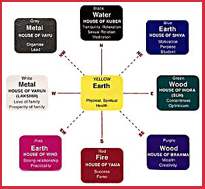
Colour is one of the simplest and most visible elements that can be introduced into a living or working environment. Traditional Vaastu considers colours as an important part of the overall atmosphere of a space.
Colours can influence the visual character of a room and can be introduced through walls, furniture, curtains, carpets, furnishings, clothing and other decorative elements.
Traditional Vaastu literature also associates different colours with directions, rooms and the Janma Rashi or Moon-sign of the owner. The purpose is to create an environment that is aesthetically pleasing while remaining compatible with the traditional Vaastu approach.
How Colours Can Be Used in a Space
Colours can be incorporated into a property in many different ways. They do not have to be restricted to wall paint. A balanced colour scheme can also be created through furniture, curtains, carpets, fabrics and decorative objects.
Walls
Select wall colours according to the character of the room, its direction and the traditional colour recommendations.
Furniture
Furniture and furnishings can introduce complementary shades without changing the entire structure of a room.
Fabrics
Curtains, carpets, cushions and other fabrics can be used to introduce suitable colours.
Decor
Decorative elements can be used to introduce colour in a subtle and flexible manner.
Zodiac Signs and Traditional Colours
According to the traditional material on this page, colour schemes may also be considered in relation to the Janma Rashi or Moon-sign of the owner. The following colour associations are preserved from the original Astroshastra content.
Colours According to Janma Rashi
The traditional approach allows different shades and hues to be used for interiors and exteriors according to the Janma Rashi or Moon-signs of the house owners.
Gemini and Pisces Combination
The original material gives an example in which the owner's Janma Rashi is Mithuna or Gemini and the spouse's Janma Rashi is Meena or Pisces. Their respective lords are Mercury and Jupiter.
In this example, green shades may be used for the exteriors and yellow shades for interiors in their varied hues to create a visually pleasing and astrologically compatible environment.
Colours According to Directions
Direction is another important consideration in the traditional colour recommendations. Different areas of a property can be decorated using shades associated with the respective direction.
North-East
Yellow, cream and related light hues.
North
Light hues of green.
North-West
White.
West
Grey shades.
South-East
Varied colours.
South
Red shades and hues.
For a broader understanding of directional principles, explore our Vastu Directions guide.
Choosing Colours for Different Rooms
Colours can also be selected according to the function and atmosphere of a room. The original Astroshastra material gives the following traditional recommendations.
Study Room
GreenGreen is traditionally suggested for study spaces.
Kitchen & Dining
OrangeOrange is suggested for kitchen and dining areas.
Meditation & Prayer
WhiteWhite is traditionally recommended for meditation and prayer spaces.
Living & Discussion
Cream & YellowCream and yellow hues are suggested for living and discussion areas.
Bedroom
BlueBlue is traditionally suggested for bedrooms.
How to Apply Vaastu Colour Principles
Understand the Space
Identify the room, its purpose and its direction before selecting the dominant colour.
Consider the Direction
Use the traditional directional colour recommendations as a starting point.
Consider Janma Rashi
Where appropriate, the Moon-sign or Janma Rashi of the owner may also be considered.
Balance the Shades
Different shades and hues can be combined instead of relying on one strong colour throughout the property.
Vaastu Colour Planning Is About the Complete Environment
Colour planning does not necessarily mean repainting an entire property. The traditional approach can be incorporated through smaller design choices such as curtains, carpets, furniture, fabrics and decorative elements.
This makes colour one of the more flexible elements of Vaastu application. A room can be gradually adjusted through its colour palette while retaining its existing structure and character.
Want to Understand the Colours for Your Property?
Colour selection can be considered along with the direction, purpose of the room and the Janma Rashi of the occupants. Explore the wider Vastu resources at Astroshastra or consult a Vastu expert for guidance specific to your property.
Colours in Vaastu – FAQs
Why are colours important in Vaastu?
Traditional Vaastu considers colour an important element of the visual and environmental character of a property. Colours may be selected according to directions, rooms and, in some traditional approaches, the Janma Rashi of the occupants.
Which colour is suitable for a North room?
The traditional material on Astroshastra suggests light hues of green for North rooms.
Which colour is suitable for a North-East room?
Shades and hues of yellow, including cream-like shades, are traditionally suggested for the North-East.
Which colour is traditionally suggested for the bedroom?
Blue is traditionally suggested for bedrooms in the source material.
Which colour is suggested for a study room?
Green is traditionally suggested for study rooms.
Which colours are suggested for a prayer or meditation room?
White is traditionally recommended for meditation and prayer spaces.
Can colours be selected according to zodiac sign?
Yes. The traditional material on this page associates specific colours with each Janma Rashi or Moon-sign.
Do I need to repaint my entire house to apply Vaastu colours?
Not necessarily. Colours can also be introduced through furniture, curtains, carpets, fabrics and decorative elements.


